
A text message exchange, raw and unfiltered, has ripped the veil off the increasingly toxic relationship between the White House press office and the journalists tasked with covering it.
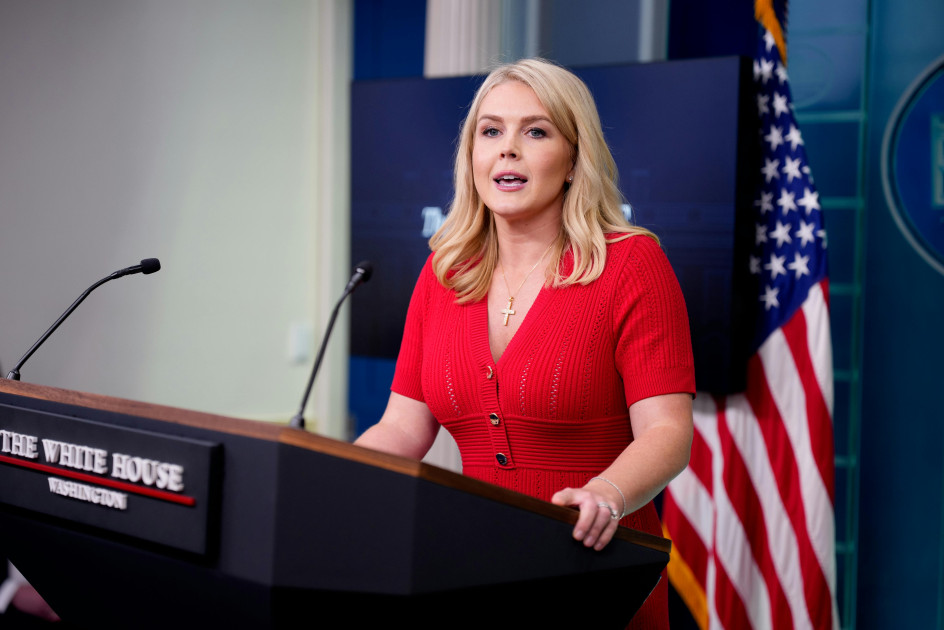
When a Huffington Post reporter asked a pointed question about an upcoming presidential summit, the response from Press Secretary Karoline Leavitt was not a policy explanation, but a playground taunt: “Your mom did.”
This extraordinary exchange is more than just a moment of unprofessionalism. It is a stark symptom of a deeper breakdown in the constitutional relationship between the presidency and the free press, a relationship built on a fragile foundation of access and accountability.
The Leavitt-Dáte Exchange
- What’s Happening: White House Press Secretary Karoline Leavitt clashed with Huffington Post reporter S.V. Dáte via text message over a question about the upcoming Trump-Putin summit in Budapest.
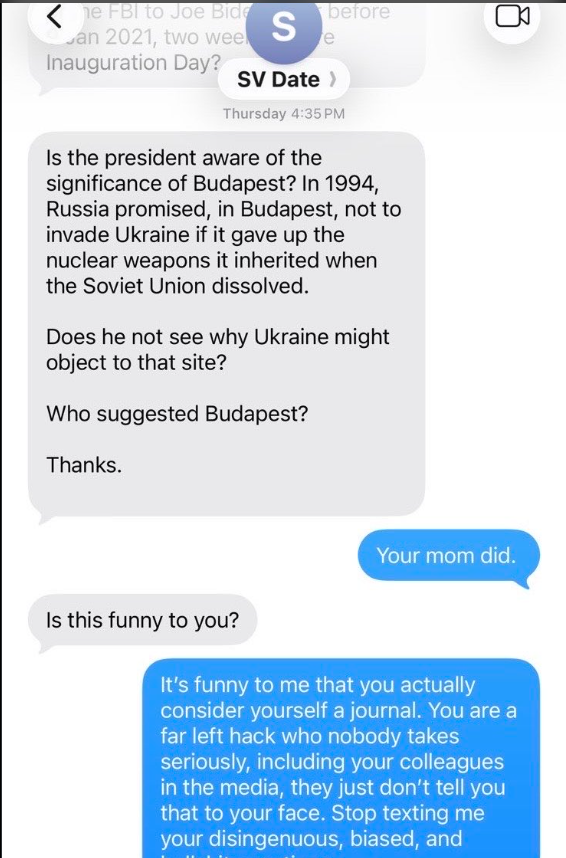
- The Exchange: Dáte asked about the controversial choice of Budapest, given its historical significance to Ukraine. Leavitt responded, “Your mom did,” later telling him to stop sending “bulls— questions.”
- The Fallout: Leavitt publicly released the texts, calling Dáte a “left-wing hack” and an “activist.” Dáte wrote a sarcastic article about the exchange.
- The Constitutional Issue: The incident highlights the fundamental tension between the First Amendment’s protection of a free press asking critical questions and the Executive Branch’s power to manage its message and control access.
The Question Behind the Taunt
The exchange began with a legitimate, if pointed, question from reporter S.V. Dáte. He asked Press Secretary Karoline Leavitt if President Trump was aware of the historical significance of Budapest, the chosen location for his upcoming meeting with Russian President Vladimir Putin.
Specifically, Dáte referenced the 1994 Budapest Memorandum. In that agreement, Russia (along with the U.S. and U.K.) promised to respect Ukraine’s sovereignty and borders in exchange for Ukraine giving up the nuclear weapons it inherited after the Soviet Union’s collapse. Holding a summit there now, as Russia occupies Ukrainian territory, carries heavy symbolic weight.
Dáte: “Is the president aware of the significance of Budapest?… Does he not see why Ukraine might object to that site? Who suggested Budapest?” Leavitt: “Your mom did.”
When Dáte pressed further, Leavitt ended the exchange: “Stop texting me your disingenuous, biased, and bulls— questions.”
A Defense Based on Bias
Leavitt took to social media to defend her response, posting screenshots of the exchange and launching a full-throated attack on the reporter’s credibility.
“S.V. Dáte of the Huffington Post is not a journalist interested in the facts. He is a left-wing hack who has consistently attacked President Trump for years… Activists who masquerade as real reporters do a disservice to the profession.” – Karoline Leavitt on X
She pointed to Dáte’s history of critical reporting on the administration and his openly anti-Trump social media posts as evidence that his question was not asked in good faith, but was instead a biased attack disguised as journalism. Dáte, for his part, wrote a sarcastic article mocking Leavitt’s response as “your tax dollars at work.”

The Constitutional Collision: A Free Press vs. A Powerful President
This ugly spat is a microcosm of a fundamental tension built into our constitutional system.
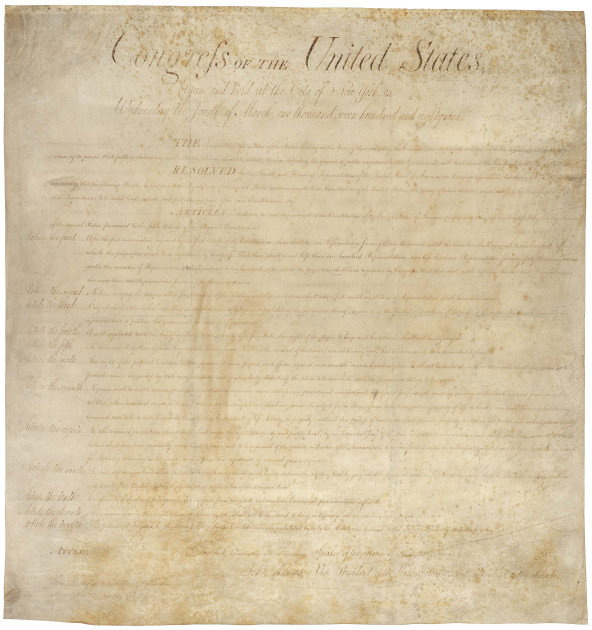
The First Amendment guarantees freedom of the press. This isn’t just about the right to publish; it includes the right to gather news, which requires asking tough, critical questions of those in power. The press is often called the “Fourth Estate,” serving as a crucial, independent check on the government.
At the same time, the President, under Article II, has the power and responsibility to communicate his policies and actions to the public. The White House Press Secretary is the primary conduit for this communication. There is no constitutional requirement for the press secretary to answer every question, nor is there a requirement for them to engage only with reporters they deem “objective.”
“This clash highlights a core constitutional tension: the press’s right to ask uncomfortable questions versus the executive’s power to control its message and choose how, and with whom, it engages.”
When Norms Break Down
What has broken down here is not the law, but the unwritten norms that have traditionally governed the relationship between the White House and the press corps. For decades, despite often intense animosity, there has generally been a baseline level of professional respect and engagement.
The Leavitt-Dáte exchange, characterized by personal insults and outright refusal to engage on substance, reflects a near-total collapse of those norms.
It signals an administration that increasingly views critical segments of the press not as legitimate watchdogs, but as partisan opponents to be attacked and delegitimized, rather than engaged. This approach may score political points with the President’s base, but it comes at a profound cost to the public’s ability to get clear, factual information from its own government – a cornerstone of a healthy constitutional republic.