
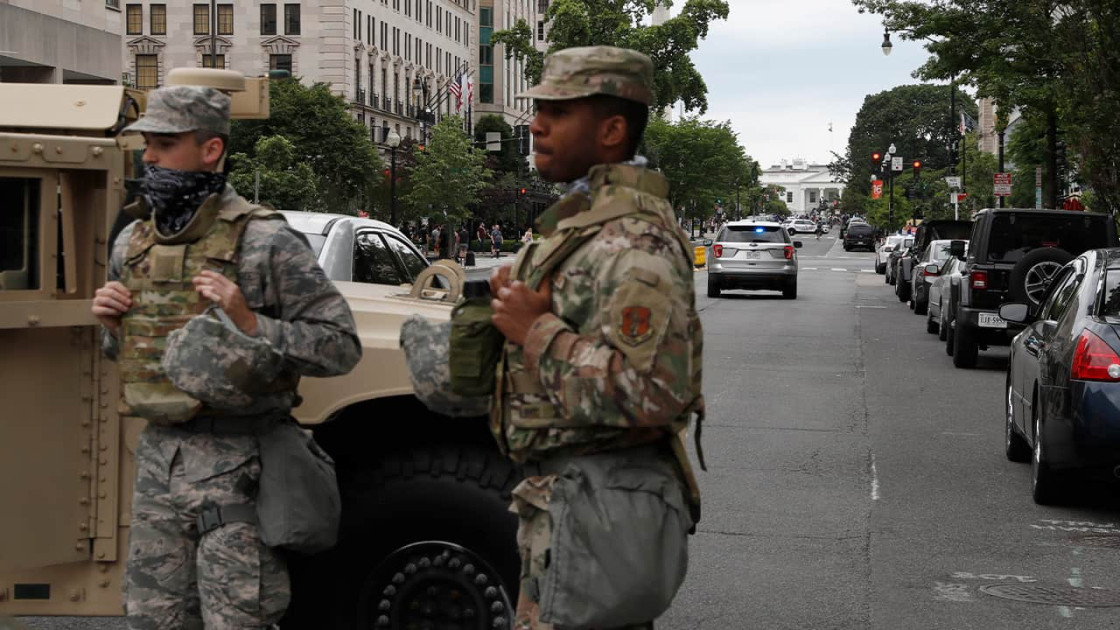
The sight of uniformed, armed soldiers on American streets is one of the most jarring and constitutionally fraught images in a republic.
In recent months, President Donald Trump has repeatedly moved to make that sight a reality in cities like Portland and Chicago, sparking a fierce legal and political war with state and local leaders who have called the deployments a dangerous “military occupation.”
This is not just a debate over policy. It is a profound constitutional conflict that tests the 150-year-old wall separating the U.S. military from civilian law enforcement and raises fundamental questions about the limits of presidential power.
At a Glance: The National Guard Standoff
- What’s Happening: President Trump is repeatedly attempting to deploy the National Guard and other federal forces into major, Democrat-led cities against the wishes of local leaders.
- The Flashpoints: Legal and political battles are raging over recent or planned deployments in Portland, Chicago, and Los Angeles.
- The Legal Battle: The administration is invoking the Insurrection Act to bypass the Posse Comitatus Act, a long-standing federal law that normally forbids using the military for domestic law enforcement.
- The Courts’ Reaction: Federal judges have so far blocked some of these deployments, citing these powerful legal firewalls and warning against a slide toward “martial law.”
- The Constitutional Issue: A major Federalism and Separation of Powers crisis over the President’s Commander-in-Chief power and the historical prohibition against using the military as a domestic police force.
A Campaign to Restore ‘Law and Order’
The pattern of deployments is a key part of the President’s second-term agenda. Citing a need to quell violent protests, support immigration enforcement, and restore “law and order,” the administration has moved to assert federal control in a series of Democrat-led cities.
In Washington D.C., the President federalized the local police force. In Los Angeles and Chicago, he has ordered or threatened to send in the National Guard. Most recently, he attempted to deploy National Guard troops from California and Texas to Portland, Oregon, to respond to protests near a federal courthouse and ICE facility.
This has been met with universal and furious opposition from state and local leaders. “There is no insurrection in Portland, no threat to national security,” said Oregon Governor Tina Kotek.
The Constitutional Firewall: The Posse Comitatus Act
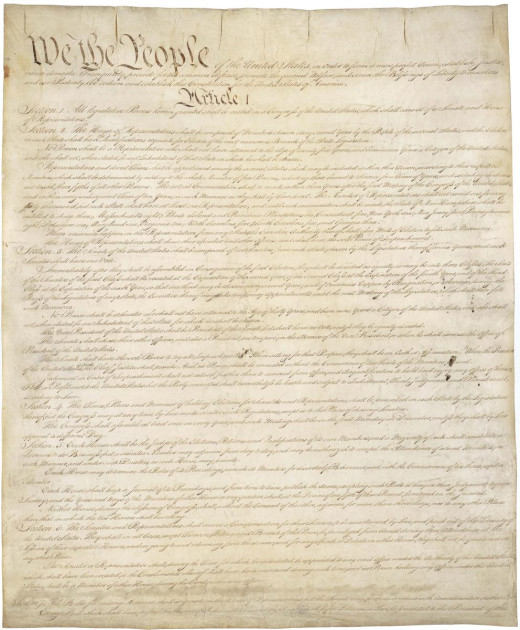
The primary legal obstacle to the President’s plans is a crucial federal law passed in 1878: the Posse Comitatus Act.
Passed in the bitter aftermath of the Reconstruction era, when federal troops were used to occupy the former Confederate states, the act makes it a felony to use the U.S. Army or Air Force to perform the tasks of civilian law enforcement on American soil.
“Passed after the Civil War, the Posse Comitatus Act is a fundamental pillar of American liberty, a legal wall designed to keep the military out of civilian life.”
This law is the codification of a core American principle: the deep distrust of a standing army being used against the nation’s own citizens.
The ‘Break Glass’ Exception: The Insurrection Act
There is, however, a powerful exception to this rule: the Insurrection Act of 1807.
This law gives the President the extraordinary and rarely used power to deploy active-duty troops domestically to suppress a rebellion or to enforce federal laws when he deems that state and local authorities are unable or unwilling to do so.
The Trump administration has argued that this statute gives the President the authority he needs for these deployments.
Historically, however, the Insurrection Act has been used only in the most extreme circumstances, such as by President Eisenhower to enforce desegregation in Little Rock, Arkansas, or by President George H.W. Bush during the 1992 Los Angeles riots – and in that case, it was at the request of the state’s governor.
“The Insurrection Act is one of the most potent and constitutionally dangerous tools a President possesses. Invoking it to deal with local protests or crime is a radical departure from how this emergency power has been historically used.”
‘Not Martial Law’: The Courts Push Back
As the administration has pushed the boundaries of these laws, the federal judiciary has begun to push back.
In a pair of recent rulings, U.S. District Judge Karin Immergut – a Trump appointee – has temporarily blocked the administration from sending National Guard troops to Portland. In one powerful rebuke, she wrote, “This is a nation of constitutional law, not martial law.”
Another federal judge previously found that the administration’s use of National Guard troops in Los Angeles was also illegal. These rulings represent the judicial branch stepping in to enforce the statutory limits that Congress has placed on the President’s constitutional power as Commander-in-Chief.
Why Now? A Portrait of a City on Edge
The administration’s justification for a potential deployment to Portland is rooted in a recent resurgence of violent protests targeting federal property.
According to reports from the Department of Homeland Security, the Mark O. Hatfield U.S. Courthouse and a local ICE facility have been subjected to nightly attacks over the past several weeks, involving commercial-grade fireworks, Molotov cocktails, and organized attempts to breach the buildings’ perimeters.
Federal officers have reported dozens of injuries, and the administration argues that local police, constrained by city leadership, have been unwilling or unable to intervene, leaving federal property and personnel undefended.
This creates, in the administration’s view, a state of “insurrection” against federal authority that legally triggers the Insurrection Act.
A Pattern of Perceived Chaos
The threatened deployment to Chicago is part of a different, though related, narrative. The White House has repeatedly highlighted the city’s high murder rate and a series of brazen “smash-and-grab” robberies as evidence that the city is in a state of lawless crisis.
While Governor Pritzker and Mayor Johnson have pushed back, arguing that overall violent crime is trending downward, the administration points to the shocking nature of the crimes and the public’s perception of fear.
The recent launch of “Operation Midway Blitz” – a large-scale ICE enforcement action in the city – was also met with protests, which the administration uses as further evidence that local leaders are prioritizing the protection of undocumented immigrants over the enforcement of federal law and public safety.
In both Portland and Chicago, the administration’s core argument is the same: local Democratic leadership has failed, and federal intervention is the only remaining option to restore order.
A Test of Foundational Principles
The ongoing legal battles over these deployments are about more than just protests in one city. They are a fundamental test of the American tradition of civilian-led policing and the constitutional principle of federalism.
The President is asserting an expansive view of his power to intervene in the affairs of states and cities he deems to be failing. The courts, so far, are reasserting the long-standing legal wall that separates the military from Main Street.
The outcome of this struggle will define the balance of power between the White House, the states, and the courts for years to come.