
Ian Sams Admits He Only Met with the President TWICE
When the White House speaks, who is actually talking? A bombshell revelation from a congressional investigation this week has made that question the center of a profound constitutional crisis.
The very spokesman tasked with defending former President Joe Biden’s mental fitness has testified under oath that he only met with the president in person twice during his entire tenure.
This is not a story about an out-of-the-loop staffer. It is a story about the very nature of presidential power. The testimony of former spokesman Ian Sams raises fundamental questions about who was truly in command of the executive branch, and whether the awesome power of the presidency was being wielded not by a single, accountable individual as the Constitution demands, but by a committee of unelected aides.
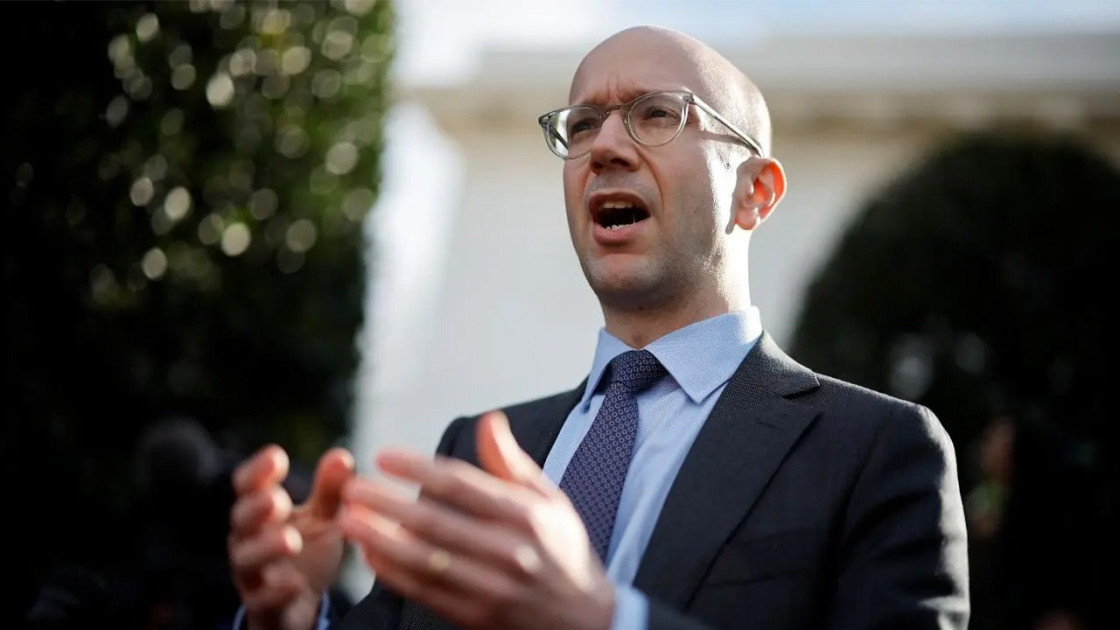
The Spokesman Who Didn’t Speak to the President
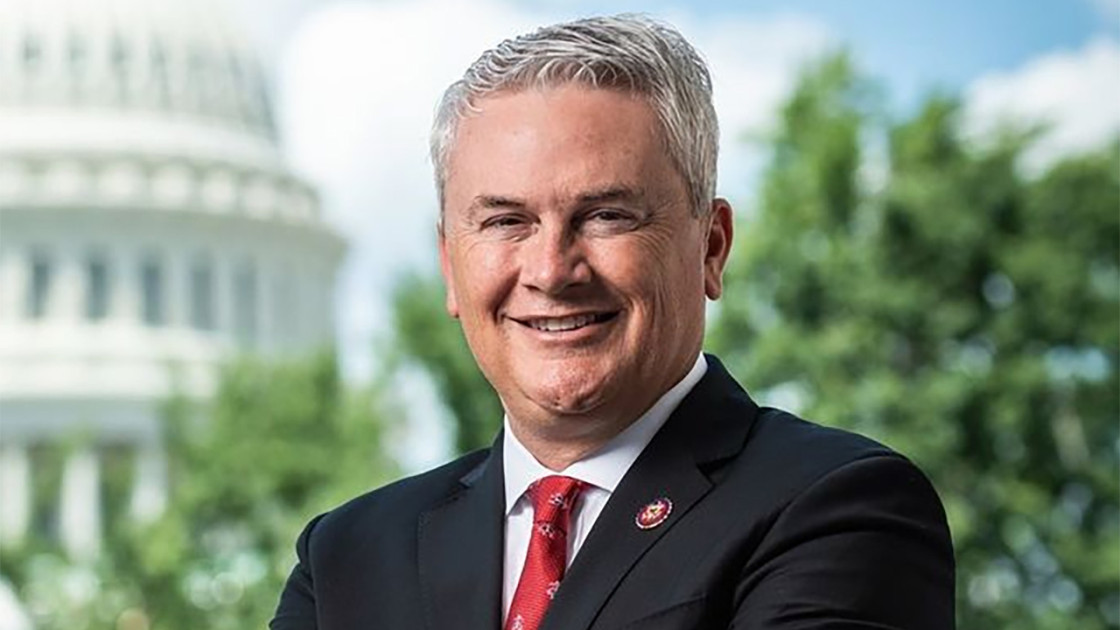
The revelation came from House Oversight Committee Chairman James Comer following a closed-door interview with Ian Sams. Sams’s job at the White House was to be the point person for pushing back against congressional investigations and, crucially, against any questions about the former President’s health and capacity.
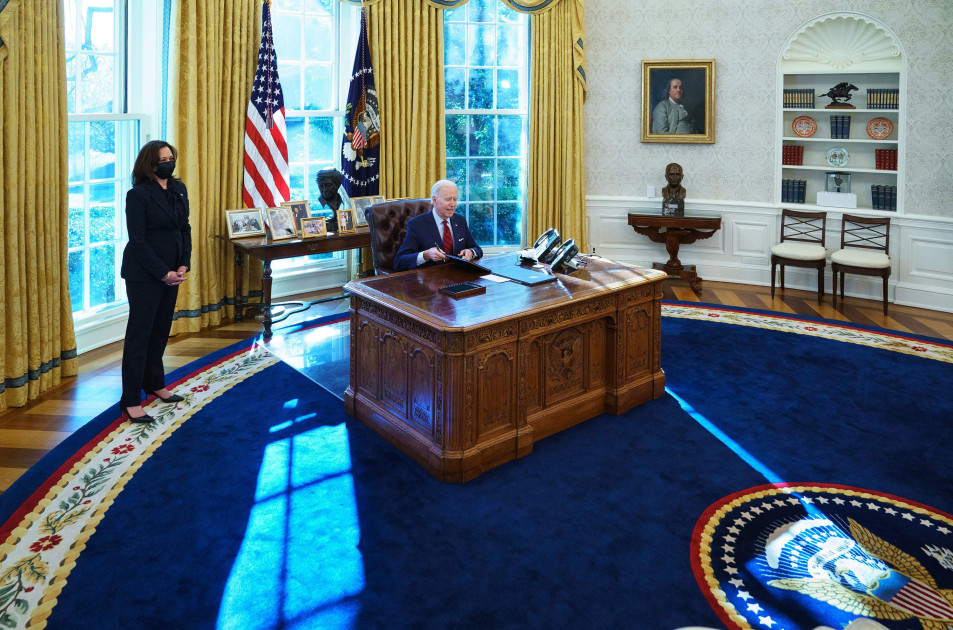
Yet, as Chairman Comer revealed, Sams testified to having only four total interactions with President Biden. Despite this near-total lack of direct contact, Sams was the official who publicly dismissed the findings of Special Counsel Robert Hur’s report as “wrong” and blasted congressional inquiries as “crazy, discredited conspiracy theories,” insisting to the media that the President was “sharp.”
“When we ask questions, ‘When you said this, did Joe Biden tell you that?’… ‘Well, no.’ So it raises serious concerns and serious questions about who was calling the shots in the White House,” Comer stated.
A Constitutional Crisis of Delegation
This testimony strikes at the heart of Article II of the Constitution, which vests “The executive Power” in a President. This is the principle of the unitary executive – a system designed to ensure that there is a single, accountable individual in charge.
Sams’s testimony is powerful evidence that this constitutional principle may have been broken. He reportedly told the committee that he “received much of his direction from the White House Counsel and Biden’s inner circle.”
If the President’s official talking points on his own fitness were being crafted and disseminated by a committee of unelected staffers, with no direct input from the President himself, then who was truly wielding the executive power?
This suggests the existence of a “committee presidency,” an arrangement that is constitutionally suspect because it diffuses accountability and obscures who is making the decisions.
The Implosion of Public Trust
Beyond the constitutional structure, the most significant damage is to the public trust. The role of a presidential spokesman is to convey the President’s thoughts and decisions to the American people.
If that spokesman has no direct access to the President, then the entire exercise is a public relations facade designed to manage perceptions, not to convey truth.
This testimony is a key piece in the larger puzzle of the investigation into the former president’s final year in office. It provides a powerful context for the questions surrounding the use of an autopen to sign thousands of official documents, including a mass grant of clemency.
It suggests a system was in place to insulate the President and deliberately create a public narrative about his capacity that was disconnected from the internal reality.
The American people do not elect a staff; they elect a President. The question of “who was truly calling the shots” is not a partisan talking point; it is a fundamental constitutional inquiry. This testimony suggests that for a period of time, the voice of the White House may not have been the voice of the President – a situation that represents a quiet but profound crisis for our republic.