
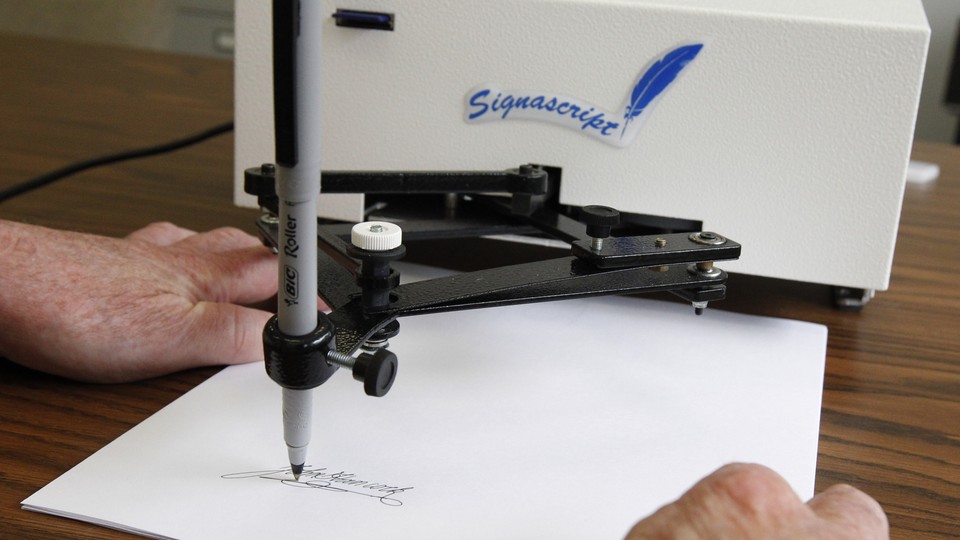
At the center of a sprawling White House investigation lies a seemingly mundane piece of technology: the autopen. The Trump administration has launched a formal inquiry into former President Joe Biden’s use of this automated signing machine, a probe that will review over a million documents from the National Archives. While framed by political questions about the former president’s health, this investigation raises a far more profound constitutional issue.
This is not a story about a machine. It is a story about the very nature of presidential power. When a machine signs a law or a pardon, who is truly making the decision? The investigation forces us to confront a critical question: Does the use of an autopen for substantive duties violate the Constitution’s vesting of all executive power in a single, accountable individual?
The Power of a Signature: An Article II Question
Article II of the Constitution is explicit: “The executive Power shall be vested in a President of the United States of America.” This creates what is known as the unitary executive—a single person who holds the ultimate authority and accountability for the actions of the entire branch.
The presidential signature is the physical manifestation of that singular power; it is the final, personal act that transforms a bill into a law or a recommendation into a command.
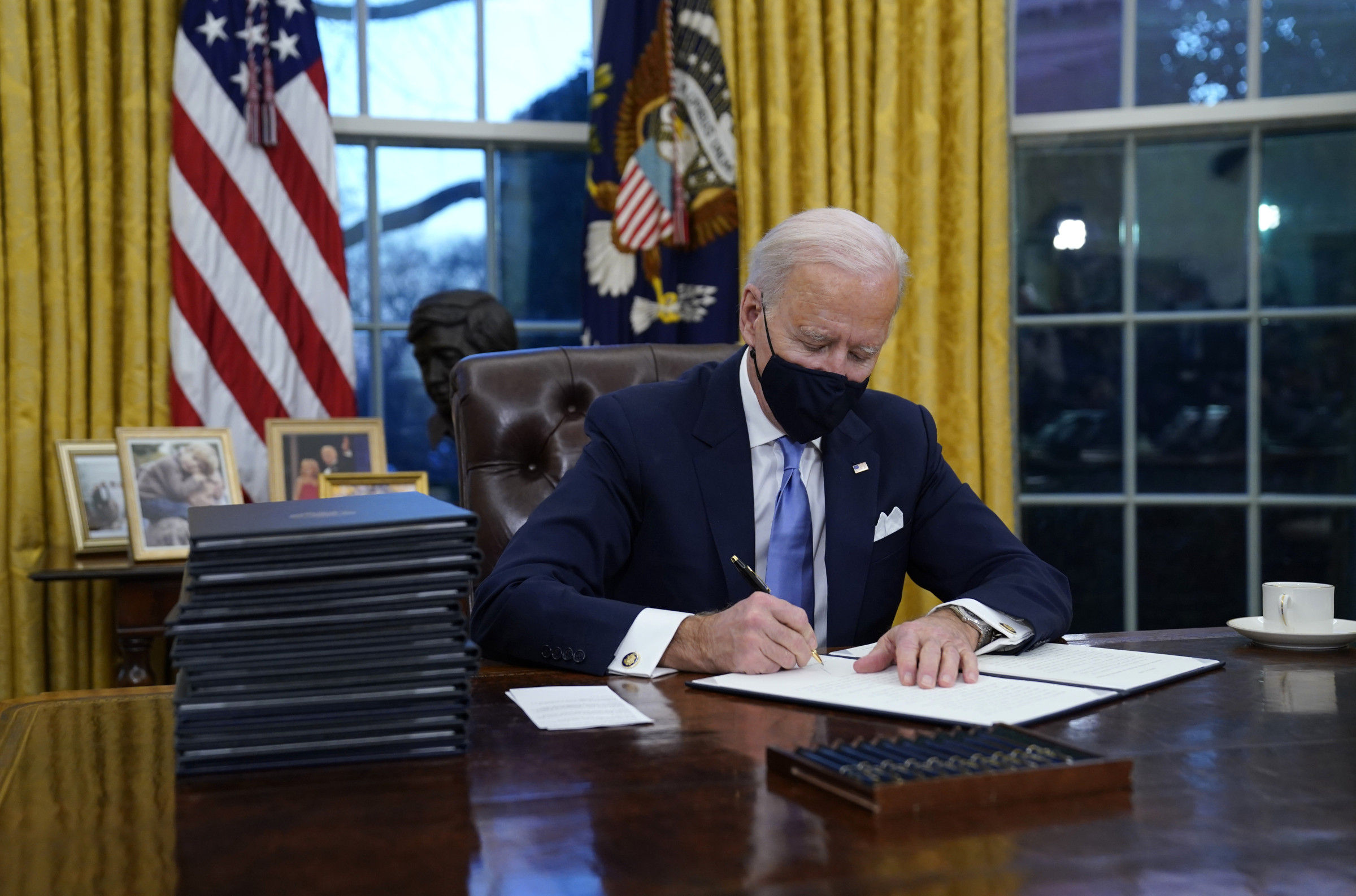
The autopen complicates this principle. While presidents for decades have used these machines for routine correspondence, the investigation is focused on its use for substantive, discretionary acts. The core constitutional question is one of delegation.
Can the physical act of signing be delegated for convenience, without also delegating the legal and moral power of the decision itself? As one official put it, the central question is whether “unelected staffers, radical staffers, use the power of this machine to radically transform America?”
A Test of the Clemency Power
The most constitutionally potent example at the heart of this investigation is the use of the autopen for a mass grant of clemency in President Biden’s final weeks in office. The power “to grant Reprieves and Pardons,” also found in Article II, is one of the president’s most personal, quasi-monarchical, and unchecked authorities.
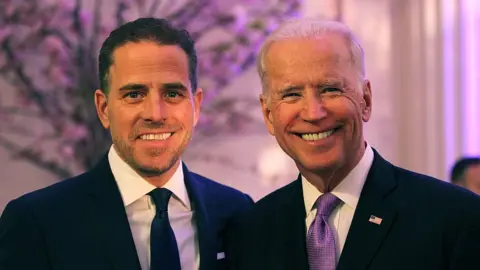
The investigation is focused on a striking contrast: in a spree of over 1,500 acts of clemency, the only pardon reportedly signed by hand was for the President’s son, Hunter Biden. The rest were signed by machine. This raises a critical question about process.
The former president told the New York Times he “made every decision,” yet the same report noted he “did not individually approve each name” in the categorical pardons.
This is the crux of the investigation: was there a specific, personal presidential directive for each of the 1,500 acts of clemency, or was there a general policy that was then executed by staff using the autopen? If it is the latter, it would represent an unprecedented delegation of the President’s most personal constitutional power.
A Crisis of Capacity or a Question of Process?
While the investigation is clearly fueled by political concerns over the former president’s health and capacity, the constitutional question it raises is one of process, regardless of the president’s condition.
As one official involved in the probe explained, the goal is to determine, “What did the former president direct, versus what he did not.”
The lack of a clear, legally defined policy for the official use of the autopen is a vulnerability for the presidency itself. A president’s signature is, as an official noted, “one of the most important signatures in the world.”
Ensuring that any signature – whether by hand or by machine – is a true and direct reflection of the president’s contemporaneous will is essential for the rule of law. This investigation, whatever its political motivations, could force a necessary clarification of those rules for all future administrations.

Ultimately, the White House probe into the autopen forces a confrontation with a uniquely 21st-century problem: how to maintain the 18th-century principle of a single, accountable executive in an age of sprawling bureaucracy and powerful technology. The American people elect a president, not a committee of staffers or a machine. Ensuring that the line between presidential convenience and an unconstitutional delegation of authority is clearly drawn is a challenge that the Constitution demands we answer.