
In the remote, neutral territory of Anchorage, Alaska, the leaders of the world’s two largest nuclear powers are meeting face-to-face. The stakes could not be higher.
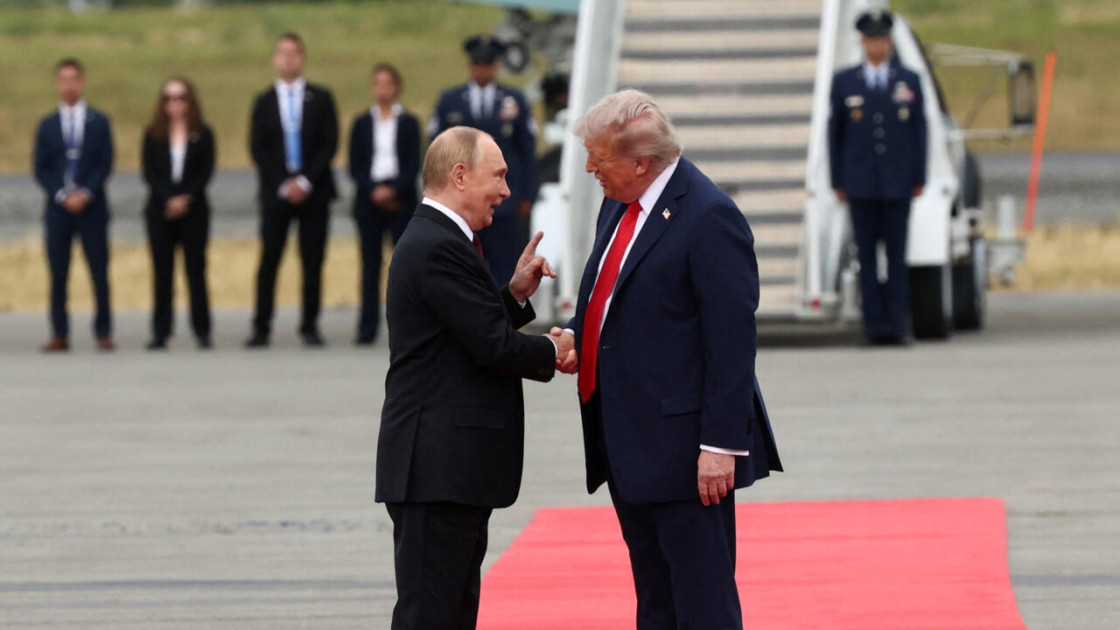
President Donald Trump and Russian President Vladimir Putin have begun a high-stakes summit aimed at finding a diplomatic end to the brutal, years-long war in Ukraine.
This meeting – the first between the two leaders since Russia’s full-scale invasion – is more than just a negotiation. It is a profound test of personal diplomacy and a powerful exercise of presidential authority that could reshape the future of Europe and the global balance of power.
The Trump-Putin Summit: What We Know
- What’s Happening: President Trump and Vladimir Putin are holding their first face-to-face summit since the 2022 invasion of Ukraine.
- Where: Joint Base Elmendorf-Richardson in Anchorage, Alaska.
- The Goal: To find a diplomatic path to end the war in Ukraine.
- The Controversy: The summit is shadowed by Trump’s previous proposals for a “land for peace” deal and new speculation about a potential “minerals deal” with Russia involving occupied Ukrainian territory.
- The Constitutional Issue: A powerful exercise of the President’s foreign policy powers under Article II, but any formal treaty to end the war would require ratification by the Senate.
A Summit Years in the Making
The meeting in Anchorage is a massive diplomatic undertaking. Flanked by their top diplomats – Secretary of State Marco Rubio for the U.S. and Foreign Minister Sergey Lavrov for Russia – the two leaders are expected to talk for anywhere from four to seven hours.
This is a summit built on President Trump’s long-held belief in the power of direct, leader-to-leader negotiation. It’s a high-risk, high-reward strategy that bypasses traditional diplomatic channels in favor of a personal attempt to find a breakthrough.
The Two Deals Shadowing the Talks
While the stated goal is peace in Ukraine, the talks are shadowed by two deeply controversial potential deals.
The first is the “land for peace” proposal that President Trump has floated in the past. This would involve a ceasefire in which Russia would be allowed to keep the Ukrainian territory it has conquered – about one-fifth of the country. Ukrainian President Volodymyr Zelenskyy has steadfastly rejected any deal that cedes Ukrainian territory.
The second is a potential “minerals deal.” The occupied territories of eastern Ukraine contain vast, multi-trillion-dollar deposits of critical minerals like lithium, coal, and rare-earth metals. The presence of top economic officials from both countries in Anchorage has fueled intense speculation that a deal could be struck to allow for the extraction and sale of these resources, a move critics fear would directly fund Russia’s war machine.
“While the stated goal is peace in Ukraine, the subtext is about territory and treasure. Two potential deals – one for land, one for minerals – loom large over these historic talks.”
The President’s Power to Make Peace
The President’s ability to fly to Alaska and sit down with a major adversary is one of the most significant powers granted to the office by the Constitution.
Under Article II, the President is the nation’s chief diplomat and Commander-in-Chief, giving him the primary authority to conduct foreign policy. This power allows him to engage in high-stakes personal diplomacy, a tool used by presidents from Roosevelt at Yalta to Reagan at Reykjavik.
But this presidential power has a powerful constitutional check.
While President Trump can reach a personal agreement with Putin, any formal, legally binding peace treaty that redraws borders or makes lasting security guarantees must be ratified by a two-thirds supermajority vote in the U.S. Senate, as required by the Treaty Clause.
“The President has the undisputed power to talk, to negotiate, and to offer a handshake. But the Constitution gives the Senate the final word on any formal treaty that would turn that handshake into the law of the land.”
A World in Suspense
The meeting in Anchorage is a bold gamble on the power of top-down, personal diplomacy. President Trump is betting that he can succeed where traditional efforts have failed and forge a deal to end Europe’s largest land war since World War II.
The world – especially the leaders in Kyiv and at NATO headquarters in Brussels – now waits in suspense to see what terms will be proposed. The outcome will not only determine the fate of Ukraine but will also set the course for America’s relationship with Russia, its alliance with Europe, and the global balance of power for years to come.