
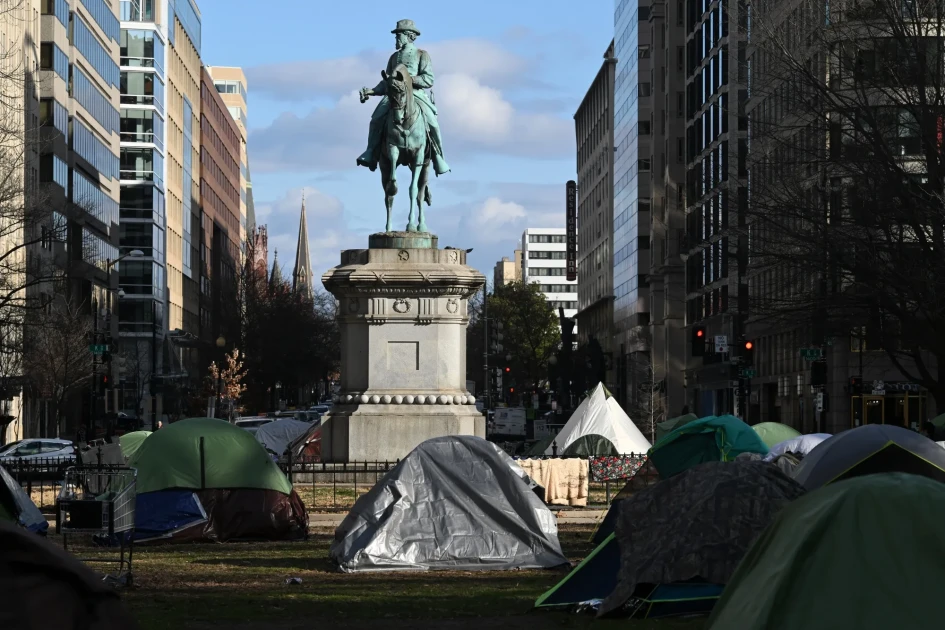
The Trump administration has declared a new front in its effort to restore “law and order” in the nation’s capital. Federal authorities, now in control of the D.C. police, will begin to forcibly clear homeless encampments, giving those living on the streets a stark choice: enter a shelter or face fines and jail time.
This is not just a new public safety policy; it is the direct and immediate consequence of a recent, landmark Supreme Court decision that has redefined the constitutional rights of the unhoused. The administration’s actions in D.C. are the first major test of this new legal reality, sparking a profound constitutional and moral debate about the criminalization of poverty and the meaning of the Eighth Amendment.
A Supreme Court Green Light
To understand what is happening on the streets of Washington, one must first understand what happened at the Supreme Court. Last year, the Court’s conservative majority ruled in a pivotal case that laws punishing people for sleeping in public do not constitute “cruel and unusual punishment” under the Eighth Amendment, as long as some form of shelter is available.
The Court’s reasoning was that such laws regulate the act of public camping, not the status of being homeless. This decision provided a constitutional green light for cities and, now, the federal government to take a more aggressive, enforcement-based approach to homelessness. The long-standing legal argument that it is unconstitutional to punish someone for an unavoidable consequence of their status has been significantly weakened.
Washington D.C. as the First Test Case
The Trump administration is now using Washington, D.C., with its unique constitutional status under federal control, as the first and most aggressive testing ground for this newly affirmed legal power. The policy being implemented is a direct application of the Court’s ruling: offer a shelter bed, and if the person refuses, the act of remaining on the street becomes a punishable offense.
This is why advocates are sounding the alarm. As Jesse Rabinowitz of the National Homelessness Law Center warned, “what starts in D.C. will spread to the rest of the country, and that should terrify everyone.” The administration is creating a playbook that other municipalities across the nation, empowered by the Supreme Court’s precedent, may soon follow.
A Nation’s Competing Visions: Housing vs. Handcuffs
This enforcement-first policy represents one side of a deep, philosophical divide in America. The administration’s view is that encampments are a sign of societal decay and a threat to public order that must be cleared. This approach aligns with a belief that the threat of the criminal justice system can be used to compel individuals into treatment for substance abuse or mental health issues.
Advocacy groups and critics argue that this completely misdiagnoses the problem. “Homelessness is not a criminal issue. It is an economic issue,” said Ann Oliva, CEO of the National Alliance to End Homelessness. They argue that the crisis is caused by a severe lack of affordable housing and that criminalizing the unhoused is not only cruel but counterproductive, creating barriers to employment and stability.
The Supreme Court has made its decision, and the administration is now acting upon it. The constitutional debate over whether it is “cruel and unusual” to punish a person for being homeless in public has, for now, been settled in favor of the government’s police power. The real-world consequences of that legal decision are now playing out on the streets of our nation’s capital. The long-term test will not be whether this policy successfully “cleans up” the city, but what it costs in terms of human dignity and whether it reflects the values of a republic that pledges “liberty and justice for all.”
What Happens When We Start Jailing Citizens For Homelessness?
The central and most pressing debate over this new policy is whether it will actually improve public safety or ultimately make the situation worse. Proponents and critics offer two completely different and irreconcilable visions of the outcome.
Proponents of the measure argue that a more forceful approach is a necessary step to reclaim public spaces for all citizens. They contend that by clearing encampments and compelling individuals into shelter or treatment, the policy will directly reduce instances of public drug use, petty theft, and general disorder, making parks and sidewalks feel safer for families and businesses. This view holds that providing a clear choice between shelter and arrest is the only effective way to break the cycle of street crime and connect vulnerable people with services.
Critics, however, warn of the opposite long-term effect. They argue that criminalizing the status of being homeless, rather than addressing its root economic causes, will ultimately make crime worse. Giving a person a criminal record, they contend, creates an almost insurmountable barrier to finding a job and securing housing, trapping individuals in a cycle of poverty and desperation that can fuel, rather than reduce, criminal activity.
Ethically and civically, the shift is even more damaging. It transforms the government’s role from providing a safety net to using the force of law to remove the visible presence of its most vulnerable citizens. This ultimately erodes the principle of compassion that must underpin any just and constitutional republic.