
In a Sunday night social media post that sent shockwaves through global capitals, President Donald Trump has drawn a new and formidable line in the sand. The White House has declared that any country aligning itself with what it calls the “Anti-American policies” of the BRICS bloc of nations will be hit with an additional 10% tariff.
This is not a minor policy tweak. It is a monumental shift in American foreign and economic policy, one that seeks to use the raw power of tariffs to force nations to choose between economic partnership with the United States and strategic alignment with a growing bloc of its rivals.
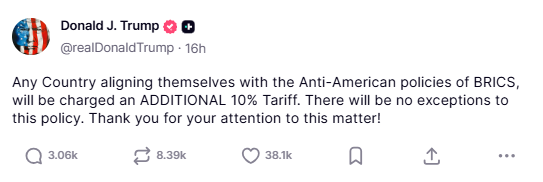
The move immediately raises profound constitutional questions about the scope of presidential power, and it sets the stage for a new era of economic uncertainty that will directly impact American consumers and businesses.
What is BRICS and Why Does It Matter?
Before diving into the constitutional battle, it’s crucial to understand the target of this new policy. The BRICS group started as an informal alliance of emerging economies – Brazil, Russia, India, and China – seeking to create a counterweight to the Western-dominated global financial system.
What began as a small club has exploded into a major geopolitical force. The bloc has since expanded to include South Africa, and more recently, welcomed global players like Saudi Arabia, the UAE, Iran, and Egypt.
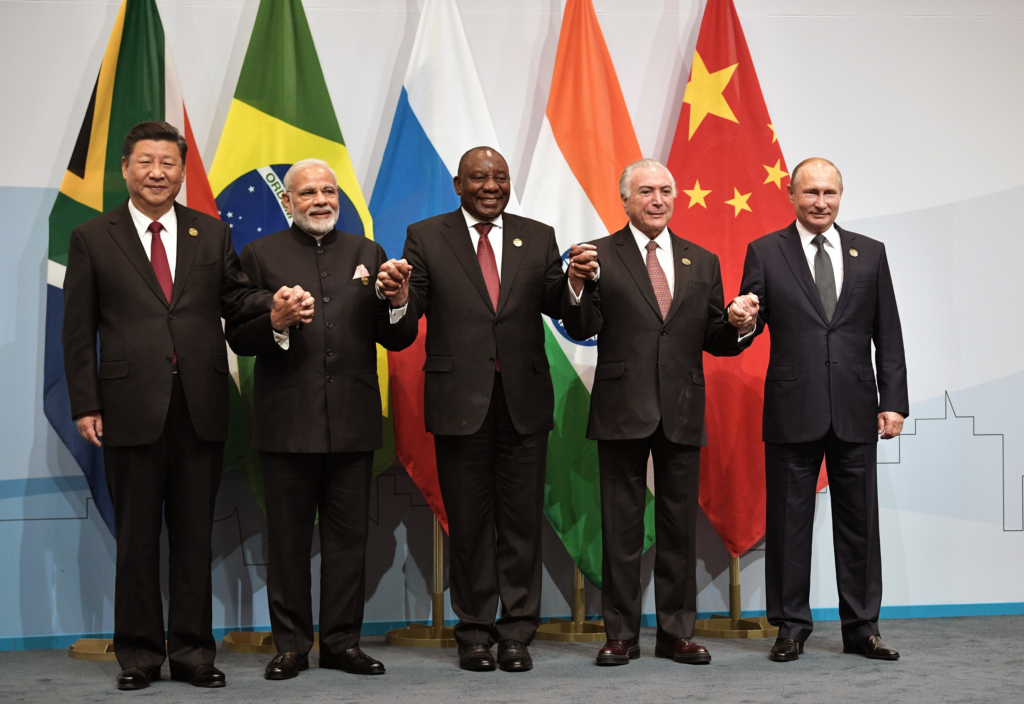
For years, Washington has watched with growing unease as this bloc has worked to conduct trade outside the U.S. dollar and has provided a diplomatic home for nations, like Russia and Iran, that are openly hostile to American interests. The administration’s new policy is a direct attempt to halt the bloc’s momentum and force neutral countries to pick a side.
The President’s Power to Wage Economic War
Can the President unilaterally impose such a sweeping tariff? The answer lies in a complex web of constitutional powers and authorities delegated by Congress over many decades.
The Constitution, in Article I, Section 8, explicitly gives Congress the power to “lay and collect Taxes, Duties, Imposts and Excises” and to “regulate Commerce with foreign Nations.”
However, over time, Congress has passed laws that hand significant portions of this authority to the President, allowing him to act swiftly on matters of trade and national security. Key among these is the Trade Expansion Act of 1962, particularly Section 232, which allows the President to impose tariffs without a vote from Congress if an investigation finds that certain imports “threaten to impair the national security.”
“This is a dramatic use of powers delegated by Congress, testing the very limits of what a President can do in the name of national security.”
The administration is framing alignment with the BRICS bloc – which includes strategic adversaries like China, Russia, and Iran – as a direct national security threat, thereby triggering these presidential powers.
The Risks of a Constitutional Showdown
Critics, however, argue this is a dangerous overreach and a distortion of the authority Congress intended to grant. They contend that “aligning” with a diplomatic bloc is not the same as importing a product that threatens a specific U.S. industry, like steel or aluminum.
This move is certain to face legal challenges, which will force the courts to once again grapple with a profound constitutional question: How much of its core power can Congress give away to the President?
This is the central tension of the “delegation doctrine.” While the Supreme Court has historically given the President wide latitude in foreign policy and national security, a move this broad could invite a new level of judicial scrutiny.
“At what point does a President’s use of delegated trade authority become an unconstitutional seizure of Congress’s power to tax and regulate commerce?”
The Fallout for the American Consumer
Beyond the constitutional debate, the economic risks of this policy are immense and will be felt directly by American families.
Tariffs are taxes, and they are ultimately paid not by foreign countries, but by the American companies that import goods and, ultimately, by the consumers who buy them. An additional 10% tariff on goods from major trading partners who are also BRICS members, like India or Brazil, would mean higher prices on everything from auto parts and electronics to coffee and clothing.
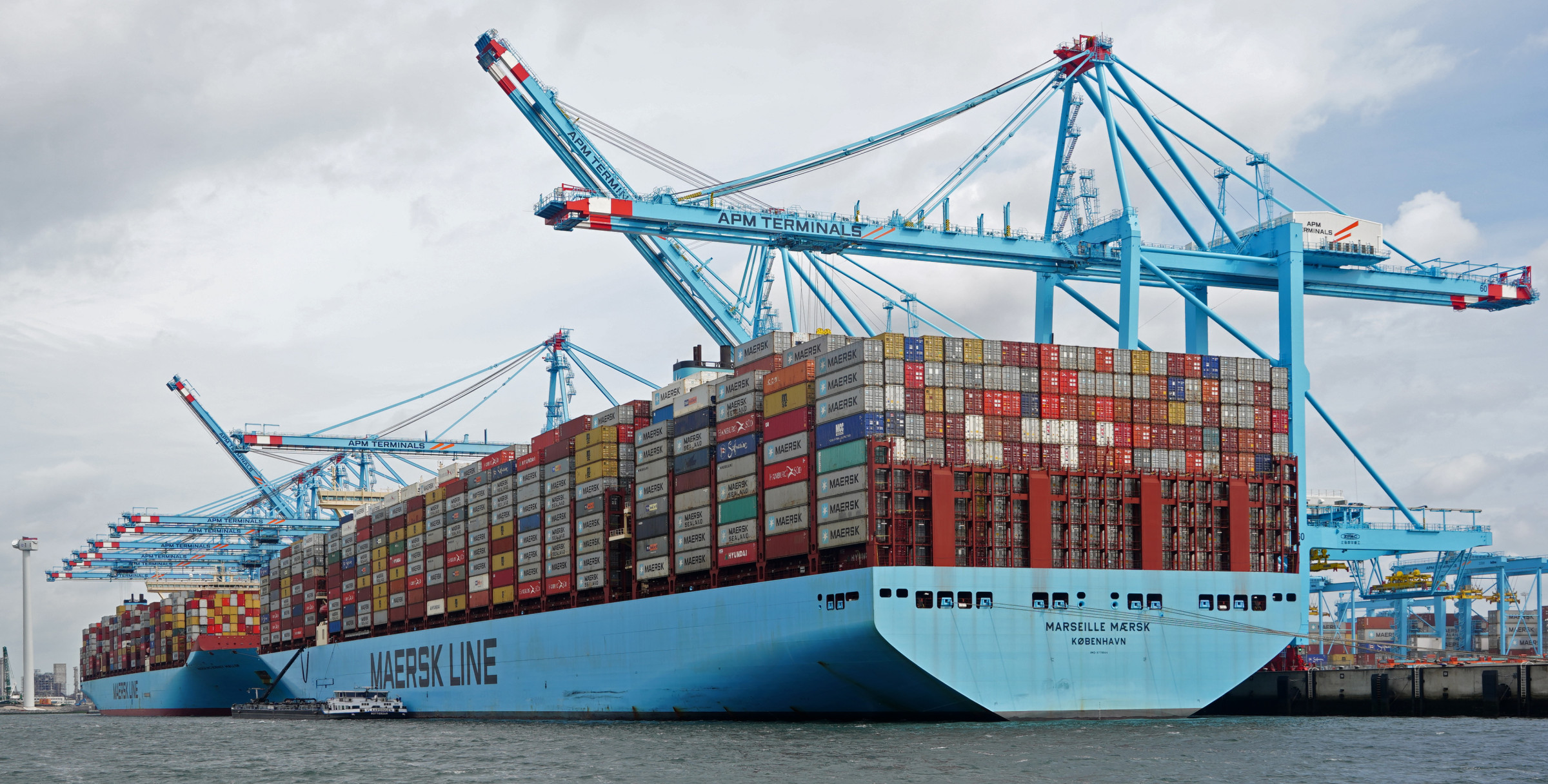
Economists warn that this could trigger a new wave of inflation and could spark retaliatory tariffs from the targeted nations. If other countries impose their own 10% tariffs on American products, U.S. farmers, manufacturers, and tech companies could see their access to global markets slammed shut, leading to lost revenue and potential job cuts.
A New Economic World Order?
This policy is a high-stakes gamble. The administration is betting that the threat of losing access to the U.S. market will be enough to stop the momentum of the BRICS bloc and force nations to remain within the American economic orbit.
The risk, however, is that it could have the opposite effect. Nations facing a punitive tariff from the U.S. may decide to double down on their relationships with BRICS, accelerating the very trend the policy is meant to stop. This could lead to the fracturing of the global economy into two competing, hostile camps, creating a new kind of economic Iron Curtain.
The decision represents a clear choice: to use economic integration as a tool of diplomacy, or to use economic confrontation as a weapon of foreign policy. The consequences of this choice – for America’s economy, its foreign relations, and its constitutional balance of power – will be felt for years to come.