
Kilmar Abrego Garcia walked out of a Tennessee jail on Friday, released on bond to await his criminal trial in Maryland. For a moment, it seemed like a victory for the legal process. But that moment was fleeting, as the Trump administration immediately unveiled a shocking new plan: not to try him in a U.S. court, but to deport him to Uganda.
This is not just another twist in a complex immigration case. It is a new and constitutionally alarming frontier in the battle over executive power.
The administration’s attempt to use a “third-country deal” to remove a man who is currently under federal indictment is a direct assault on the principles of due process and the separation of powers.
A Legal Saga of Twists and Turns
The case of Kilmar Abrego Garcia has been a year-long constitutional drama. After being deported to El Salvador in what the administration itself later called an “administrative error,” a months-long legal and political battle ensued to bring him back to the United States.
Upon his return, however, he was immediately arrested on old human smuggling charges. Now, after a federal magistrate judge ordered his release on bond to prepare for that trial, the executive branch is attempting to short-circuit the entire judicial process by physically removing him from the country altogether.

An End-Run Around Due Process
This is the core constitutional crisis. Kilmar Abrego Garcia is currently under indictment and awaiting a criminal trial in the U.S. legal system. He, like every person facing charges in our country, is presumed innocent and is guaranteed the right to a trial by the Fifth and Sixth Amendments.
Homeland Security Secretary Kristi Noem referred to Kilmar Abrego Garcia as a “monster” and a “horrible human being” in comments made in July and August 2025. This was in response to Abrego Garcia’s wrongful deportation to El Salvador and his subsequent release from federal custody in the U.S., where he is facing human smuggling charges.

The administration’s plan to deport him to Uganda before that trial can take place is a profound violation of his due process rights. It is an attempt by the executive branch to prevent the judicial branch from carrying out its constitutional function.
A man cannot be simultaneously prosecuted by the U.S. government and deported by it.
One action makes the other a legal impossibility. This is a direct power play by the executive to render a pending court case moot by removing the defendant.
The “Safe Third Country” Question
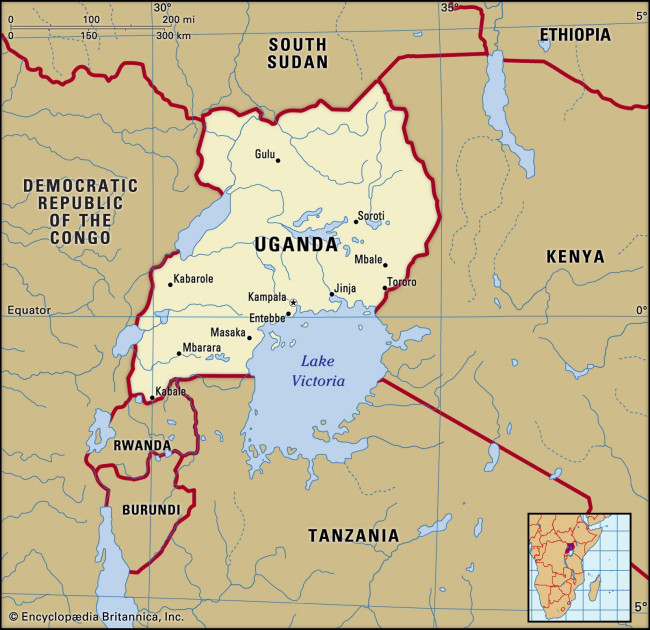
The mechanism for this proposed removal is a deal the U.S. has reportedly struck with Uganda to accept third-party deportations. This brings into focus the legal concept of a “safe third country” agreement. International and U.S. law allow for such arrangements, but they are meant to be transparent agreements with countries that have robust and fair asylum systems.
The administration’s secretive, one-off “deal” with Uganda raises serious questions. Is Uganda, a country with its own significant human rights challenges, truly a “safe” country for a Salvadoran national with a history of being targeted by gangs?
Or is this a transactional arrangement designed to dispose of a single, politically inconvenient person who has become a thorn in the administration’s side?
The case of Kilmar Abrego Garcia is no longer just about immigration. It has become a crucial test of the separation of powers and the sanctity of our judicial process. The plan to deport a man to a third country before he can face his criminal trial in a U.S. court is a dangerous and unprecedented move.
It is a test of whether the executive branch can defy the judiciary by simply removing the subject of a case from its jurisdiction entirely.