
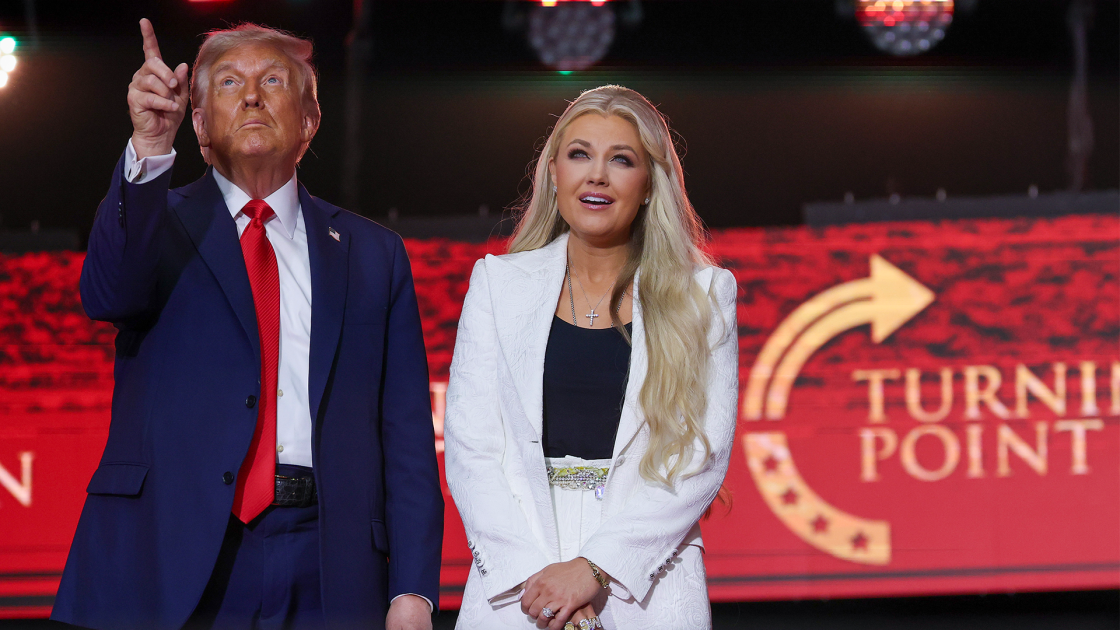
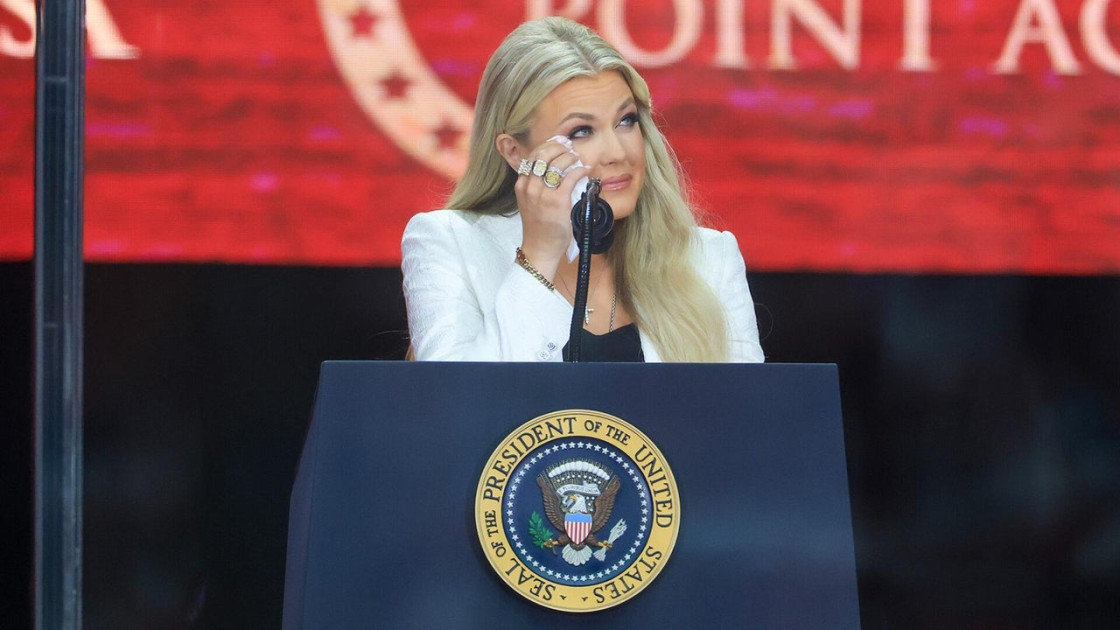
In a stadium filled with tens of thousands of mourners on Sunday, the President of the United States stepped to the podium to eulogize his fallen friend and ally, Charlie Kirk.
But what followed was not a traditional eulogy.
It was a complex and jarring speech that blended profound grief with political threats, a vow for a federal crackdown on crime, and a stunning, off-script admission of hatred for his political opponents. The President’s address was a powerful and revealing display of his two constitutional roles – as a nation’s unifier and a party’s warrior – colliding in real time.

At a Glance: Trump’s Memorial Speech
- What’s Happening: President Trump delivered a lengthy and deeply personal eulogy at the public memorial service for assassinated conservative activist Charlie Kirk.
- The Core Message: He framed the assassination as an attack on his entire movement, declaring, “The gun was pointed at him, but the bullet was aimed at all of us.”
- The Policy Vow: He directly linked the killing to his plan for a federal crackdown on crime in Chicago, Kirk’s hometown area, vowing to have “Charlie very much in mind when we go.”
- The Striking Aside: In a remarkable moment, Trump broke with Kirk’s Christian ethos of forgiveness, stating plainly, “I hate my opponent.”
- The Constitutional Issue: The speech was a powerful and jarring blend of the President’s role as a unifying Head of State in a time of grief and a partisan Head of Government using the tragedy to advance a political and policy agenda.
‘The Bullet Was Aimed at All of Us’
President Trump began his speech by eulogizing Kirk as a “missionary with a noble spirit,” a man “violently killed because he spoke for freedom and justice, for God, country, for reason, and for common sense.”
He then quickly pivoted, transforming the murder of one man into a symbolic assault on the entire conservative movement.
“The gun was pointed at him, but the bullet was aimed at all of us. That bullet was aimed at every one of us. Charlie was killed for expressing the very ideas that virtually everyone in this arena… deeply believed in.” – President Donald Trump
This framing is a powerful political tool, harnessing the collective grief and anger of his supporters and directing it toward a shared sense of persecution. It defines the assassination not as the act of one “radicalized, cold-blooded monster,” as Trump called the killer, but as an attack on their very way of life.
A Crackdown in Kirk’s Name
The President then immediately channeled that sentiment into a policy promise, directly linking the assassination to his administration’s ongoing and controversial push to use federal power to address crime in major American cities.
He touted his federal takeover of the police in Washington D.C. and a new operation in Memphis, and then turned his attention to Kirk’s hometown.
“We’re going to go do Chicago, and we’re going to have Charlie very much in mind when we go into Chicago, and we’ll get that one straight.” – President Donald Trump
This statement transforms the eulogy into a policy announcement, vowing a federal intervention in a major city and naming it, in essence, for a fallen political ally. This continues to test the constitutional boundaries of federalism and the use of federal forces for local law enforcement.
A Stark Disagreement: ‘I Hate My Opponent’
In one of the most remarkable and unscripted moments of the speech, President Trump directly contrasted his own worldview with that of the man he was eulogizing.
After praising Kirk for not hating his opponents, the President paused. “That’s where I disagreed with Charlie,” he said.
“I hate my opponent. And I don’t want the best for them… Erika, you can talk to me and the whole group, but maybe they can convince me that that’s not right, but I can’t stand my opponent.” – President Donald Trump
This candid admission, followed by a shrugging apology to Kirk’s widow, Erika, was a stunning departure from the unifying tone typical of a presidential eulogy.
A President’s Two Hats
Presidential eulogies are traditionally a time for a President to act solely as Head of State. In this constitutional role, the president is expected to be a non-partisan comforter-in-chief, a symbolic leader who speaks for the entire nation in a moment of shared grief.
President Trump’s speech was a rare and jarring fusion of this role with his other constitutional hat: that of Head of Government. In this role, the president is the inherently political leader of his party, driving a specific and often divisive policy agenda.
By blending solemn remembrance with policy threats and partisan animosity, the President has once again redefined the norms of the modern presidency. For his supporters, it was likely a powerful and authentic expression of strength in a time of grief. For his critics, it was a disturbing use of a national tragedy to advance a political agenda.