
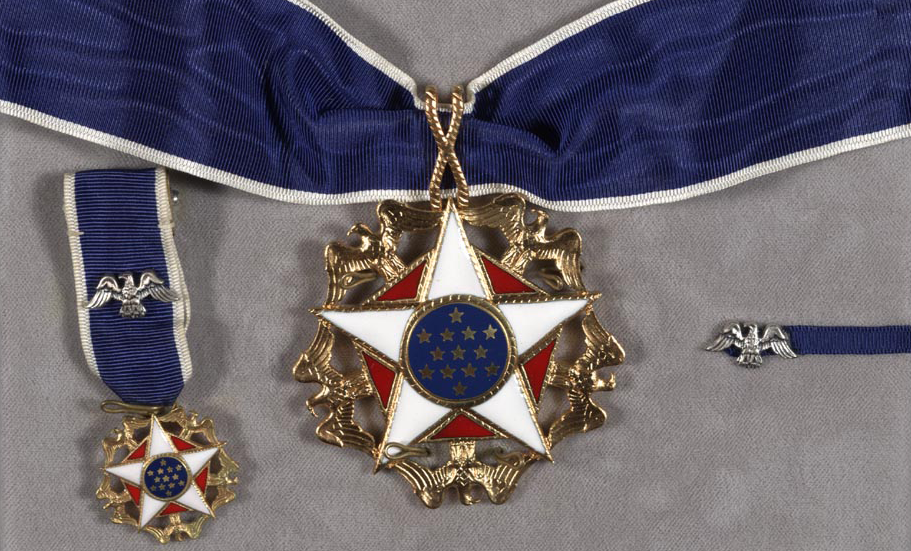
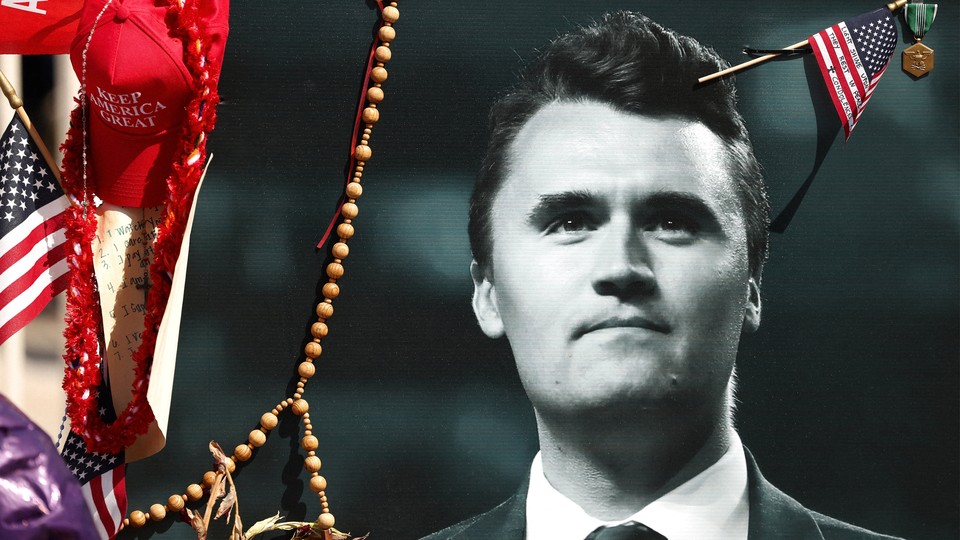
President Trump stood in the Rose Garden Tuesday and posthumously awarded Charlie Kirk the Presidential Medal of Freedom on what would have been the conservative activist’s 32nd birthday.
Kirk’s widow Erika accepted the award, sharing through tears what their 3-year-old daughter wanted to tell her father: “Happy birthday, Daddy. I want to give you a stuffed animal.”
It was a deeply emotional moment made more powerful by how Kirk died – assassinated five weeks ago while talking to students at a Turning Point USA event in Utah. Trump called him “irreplaceable” and credited him with helping win the 2024 election.
But behind the ceremony and the grief lies a question about presidential power that nobody’s asking: what constitutional standards govern who receives the nation’s highest civilian honor, and can presidents use it to cement political legacies and shape historical narratives?
At a Glance
- Charlie Kirk was assassinated September 10, 2025, while attending a TPUSA event at Utah Valley University
- Trump posthumously awarded Kirk the Presidential Medal of Freedom on what would have been his 32nd birthday
- The ceremony was moved to the Rose Garden to accommodate the large crowd wanting to attend
- Kirk’s widow Erika accepted the award and was named CEO of Turning Point USA after his death
- At stake: how presidential Medal of Freedom choices shape historical memory and political movements
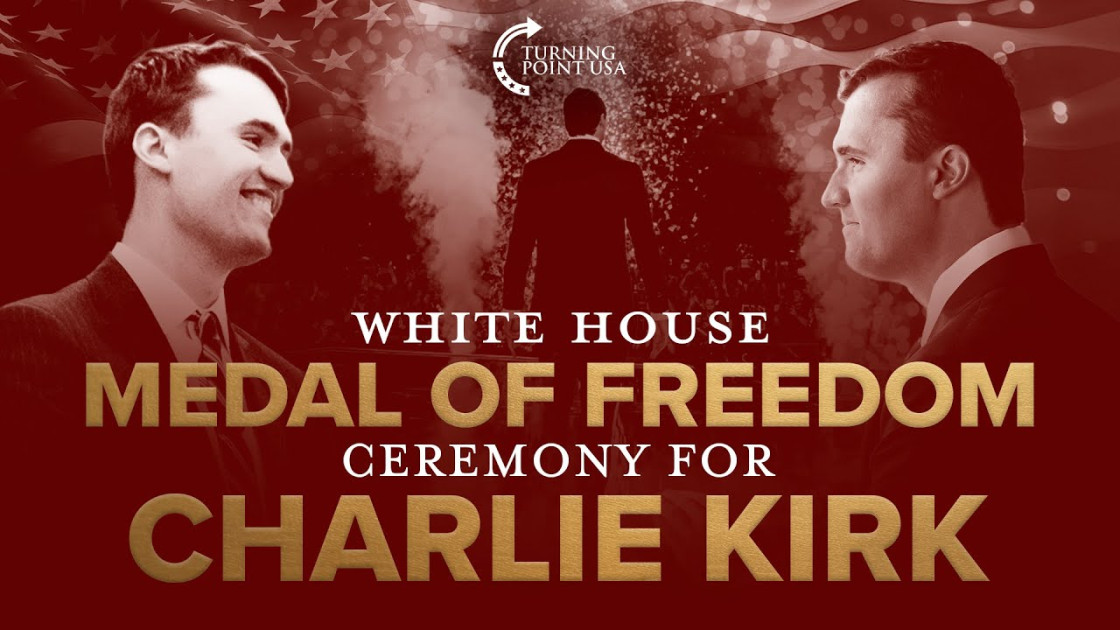
The Assassination That Shocked Conservative America
Charlie Kirk was 31 years old when he was shot and killed September 10 while sitting under a tent chatting with students at a Turning Point USA event on the Utah Valley University campus. A single shot struck him in the neck. He died at the scene, leaving behind his wife Erika and two young children including a 3-year-old daughter.
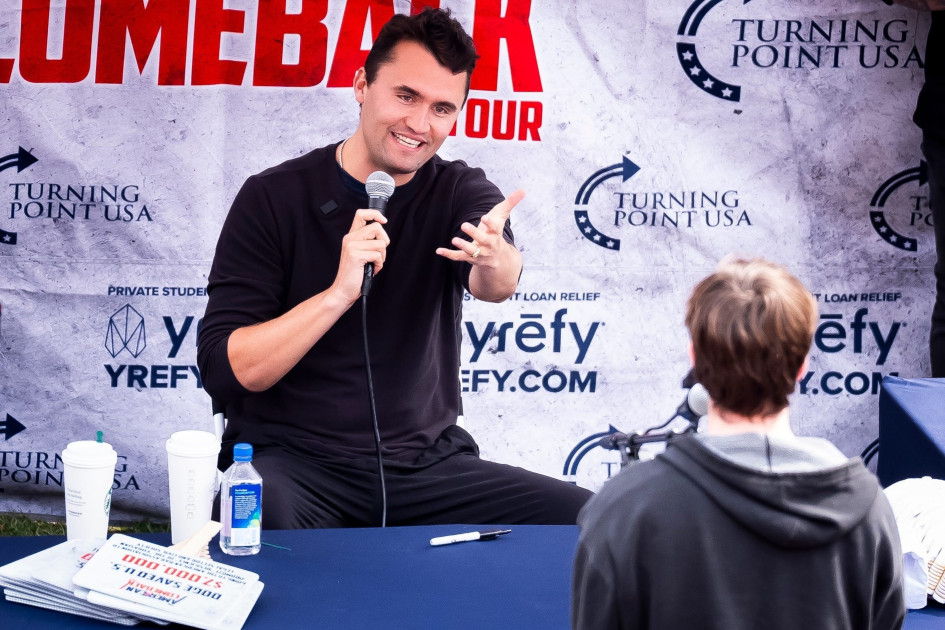
Kirk had founded Turning Point USA as a college student and built it into one of the most influential conservative youth organizations in the country.
His podcast, The Charlie Kirk Show, reached millions. He was a prominent Trump supporter who mobilized young voters and became a leading voice in the conservative movement’s effort to counter progressive activism on college campuses.
His assassination sent shockwaves through conservative circles. Trump announced within weeks that he would posthumously award Kirk the Medal of Freedom, calling him “a giant of his generation, a champion of liberty and an inspiration to millions and millions of people.”
“Five weeks ago, our nation was robbed of this extraordinary champion. He was assassinated in the prime of his life for boldly speaking the truth, for living his faith and relentlessly fighting for a better and stronger America.” – President Donald Trump
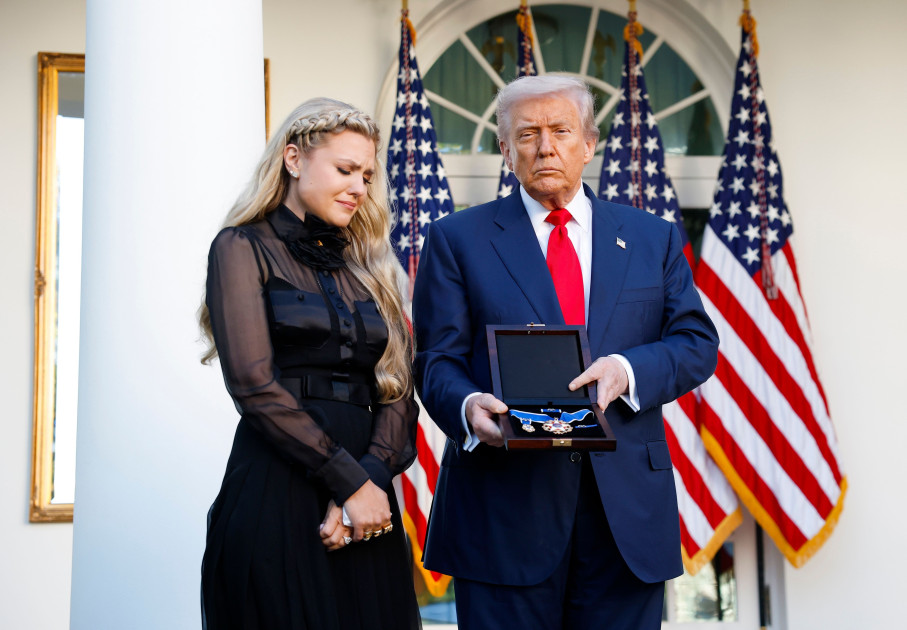
The Emotional Ceremony
Trump had planned to hold the ceremony inside but moved it to the Rose Garden hours before it began because the crowd was “so big and enthusiastic.” He noted that weather forecasts predicted rain, but “God was watching” and brought sunshine instead. “I was telling Erika God was watching, and he didn’t want that for Charlie. That’s really beautiful. Couldn’t be more beautiful today.”
Erika Kirk accepted the medal on her husband’s behalf, telling the assembled crowd: “You are the heartbeat of this future movement. Everything Charlie built – you guys are the legacy holders of that. You’re living his mission with him. I know that freedom will endure.”
She shared that she had asked their 3-year-old daughter what she would want to say to her father on his birthday. Through tears, Erika repeated: “She said, ‘Happy birthday, Daddy. I want to give you a stuffed animal. I want you to eat a cupcake with ice cream, and I want you to go have a birthday surprise. I love you.’”
The detail about stuffed animals carried special weight – Kirk had brought a stuffed animal of his daughter’s choosing on his podcast as a way to make her feel special when she watched him on air. Since his assassination, stuffed animals have remained next to his microphone and chair in The Charlie Kirk Show studio.
“He preferred quiet birthdays. I said, ‘Baby, I love your birthday because it’s the day that the world couldn’t go another day without you.’ Freedom is what Charlie fought for until his last breath, and it was written on his chest in those final minutes.” – Erika Kirk
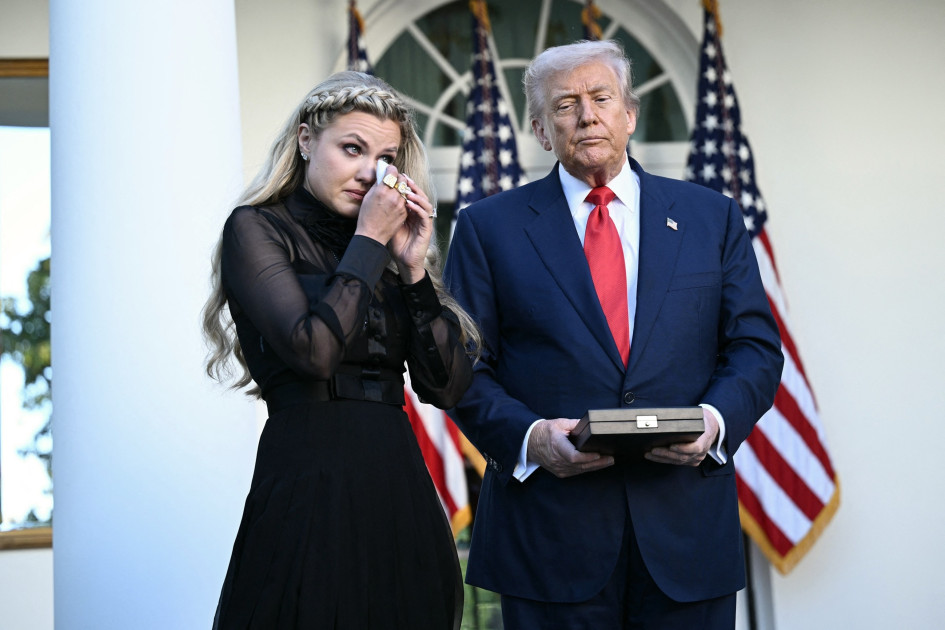
Trump’s Personal Stories About Kirk
Trump described Kirk as “indomitable” and “unstoppable,” sharing stories about what it was like to work with the young conservative activist. “Boy, when he had an idea in his head, he would call me, ‘Sir, please. You haven’t done it yet,’” Trump said.
The president said he would reply, “Charlie, relax. Just relax,” but noted that usually didn’t happen. “He didn’t relax. He called me the next day again, and it got done. He was indomitable, and always will be. He’s really irreplaceable. Nobody’s going to replace him. You can’t replace that kind of person and that kind of talent.”
Trump also credited Kirk with helping him win the 2024 election. “He said, ‘You’re gonna win, sir.’ I said, ‘you know, I’m running against 17 senators and lot of tough people and governors.’ He said, ‘No, you’re gonna win.’” Trump added that Kirk “helped make it happen” by mobilizing citizens to vote.
“Without him, maybe you’d have Kamala standing here today. That would not be good. With his help, in 2024, we won more people than any Republican by far in the history of our country.”
The Constitutional Authority Behind the Medal
The Presidential Medal of Freedom is the nation’s highest civilian honor, but it has no statutory definition or fixed criteria. Presidents have nearly unlimited discretion in deciding who receives it. The executive order establishing the medal says it’s awarded to individuals who have made “an especially meritorious contribution to the security or national interests of the United States, world peace, cultural or other significant public or private endeavors.”
That’s deliberately vague, giving presidents enormous flexibility. There’s no congressional oversight, no requirement for public input, and no appeals process. The President decides, and that’s final.
This means Medal of Freedom choices inevitably reflect presidential priorities and political values. John F. Kennedy awarded it to artists and intellectuals. Reagan gave it to conservative icons and anti-communist leaders. Obama honored civil rights pioneers and progressive activists. Trump has used it to recognize conservative media figures, political allies, and now a martyred leader of the conservative youth movement.
There’s nothing unconstitutional about this – the President has clear authority to grant honors and awards. But it does mean that Medal of Freedom recipients tell us as much about the president granting the honor as they do about the recipients themselves.
When Honors Become Political Statements
Kirk’s Medal of Freedom is both a personal honor for a young man who died violently and a political statement about the conservative movement’s place in American life. By awarding the nation’s highest civilian honor to someone who was assassinated while promoting conservative activism on a college campus, Trump is making Kirk a martyr for the movement.
That’s not inherently wrong – presidents have always used honors to shape historical narratives. But it does raise questions about how we remember this moment in history. Decades from now, when people look at the list of Medal of Freedom recipients, Charlie Kirk will be there alongside Rosa Parks, Martin Luther King Jr., Mother Teresa, and Neil Armstrong.
Critics might argue Kirk’s primary accomplishment was building a conservative youth organization and hosting a podcast – significant achievements, but not necessarily on the same level as civil rights leadership or scientific breakthroughs. Supporters would counter that Kirk mobilized a generation of young conservatives, defended free speech on college campuses, and died for his beliefs.
The Constitution gives presidents power to grant honors without oversight precisely because the Founders understood that recognizing achievement and service is inherently subjective and political.
Both perspectives are valid, which is exactly why Medal of Freedom choices are controversial. There are no objective criteria, only presidential judgment about who deserves recognition.
The Martyrdom Question
Kirk’s assassination transforms his Medal of Freedom into something more than recognition of accomplishment – it becomes acknowledgment of martyrdom. Erika Kirk specifically referenced this, saying freedom “was what Charlie fought for until his last breath, and it was written on his chest in those final minutes.”
Trump framed it similarly: “He was assassinated in the prime of his life for boldly speaking the truth, for living his faith and relentlessly fighting for a better and stronger America.”
That framing – that Kirk died because of his political beliefs – elevates his death beyond tragedy into martyrdom. It positions him as someone who gave his life for conservative principles, making him a symbolic figure for the movement going forward.
This is powerful political symbolism, but it also carries risks. Martyrdom narratives can inspire movements, but they can also harden divisions and make compromise more difficult. When political figures become martyrs, their ideas can become sacred and beyond criticism.
What the Founders Would Say
The Founders didn’t create a system of presidential honors – that came later. But they did think carefully about how republics recognize merit and achievement without creating aristocracies or hereditary privileges.
Washington was offered titles and honors after the Revolutionary War and rejected them, setting a precedent that American leaders wouldn’t accept aristocratic distinctions. The Constitution’s Emoluments Clause prohibits accepting titles of nobility from foreign powers.
But the Founders also understood that republics need ways to recognize service and achievement. They just wanted those recognitions to come from the people or their elected representatives, not from hereditary privilege.
The Medal of Freedom fits this framework – it’s granted by an elected president, not inherited or purchased. It carries prestige but no legal privileges or political power. Recipients can’t pass it to their children or use it to claim special status.
Jefferson might worry that presidential discretion over honors creates opportunities for political favoritism. Madison would probably argue Congress should have some role in establishing criteria. Hamilton would likely defend broad presidential discretion as necessary for effective executive leadership.
The Legacy Question
Erika Kirk told the assembled crowd they are “the legacy holders” of everything Charlie built. That’s true in the sense that Turning Point USA will continue its mission. She’s now CEO of the organization, ensuring institutional continuity.
But the Medal of Freedom adds federal recognition to that legacy. It places the government’s seal of approval on Kirk’s life and work. Future historians studying this period will see Kirk among the nation’s most honored civilians, which shapes how his role in conservative politics is remembered.
That’s the power of presidential honors – they don’t just recognize past achievement, they influence how that achievement is understood by future generations. Trump is ensuring that Charlie Kirk is remembered not just as a conservative activist who died tragically young, but as a national hero who gave his life for freedom.
“Every single day of this administration, we will continue to carry out the mission for which he lived. He lived for this country, lived for his wife and his family, but he lived for this country too.” – President Donald Trump
The Constitutional Reality
There’s no constitutional issue with Trump awarding Kirk the Medal of Freedom. Presidents have clear authority to grant civilian honors without congressional approval or oversight. The criteria are deliberately broad, giving presidents discretion to recognize whatever achievements they value.
But presidential honors are never purely about the recipients – they’re also about the presidents who grant them and the values they represent. Trump’s choice to honor Charlie Kirk posthumously tells us something about what this administration values: youth conservative activism, political courage in hostile environments, and willingness to fight for beliefs even at personal risk.
Whether Kirk’s accomplishments merit the nation’s highest civilian honor is subjective. What’s objective is that a 31-year-old father was killed for his political activism, leaving behind a young family and a movement he built from scratch. That’s a tragedy regardless of politics.
Trump’s decision to honor Kirk ensures he’ll be remembered not just by the conservative movement but by the nation. The Medal of Freedom guarantees that when historians write about this era, Charlie Kirk will be there – a young man who built something significant and died violently, honored by a president who valued his contribution to American political life.
The Constitution gives presidents this power because the Founders understood that recognition of service and achievement is inherently political and subjective. There’s no algorithm for greatness, no formula for determining who deserves honor. There’s only judgment – presidential judgment, informed by values and priorities that reflect the times we live in and the battles we’re fighting.
On what would have been his 32nd birthday, Charlie Kirk received that honor. His daughter wanted to give him a stuffed animal. Instead, the nation gave him its highest civilian award. Both gestures reflect love and loss – one from a child who doesn’t fully understand what happened, one from a president cementing a political legacy.