
The Department of Justice has formally targeted the state of Minnesota, demanding a trove of records related to its unique “vouching” system. The move signals that the DOJ is shifting its attention from the counting of ballots to the verification of the voters themselves, specifically challenging laws that prioritize access over strict identification.
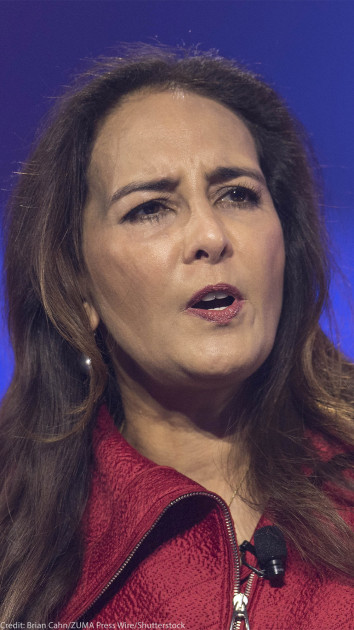
Assistant Attorney General Harmeet Dhillon sent a letter to Minnesota Secretary of State Steve Simon on Friday, citing “particular concern” with a state policy that allows a single registered voter to verify the residency of up to eight other people at the polls.
This probe opens a new legal front that could force states to choose between their own permissive registration laws and the federal government’s interpretation of the Help America Vote Act (HAVA).
What is “Vouching”?
Minnesota is one of the few states that allows “vouching” as a form of identification for same-day registration. Under state law, if a resident arrives at the polls without a photo ID or proof of residence, they can still register if a registered voter from the same precinct signs an oath confirming they live there.
Crucially, the law allows one person to vouch for up to eight other voters. Critics argue this creates a massive loophole for fraud, theoretically allowing a small group of bad actors to register dozens of ineligible people. Supporters argue it is a vital safety net for the poor, elderly, and students who may lack updated paperwork but are legitimate residents.
The “Driver’s Licenses for All” Connection
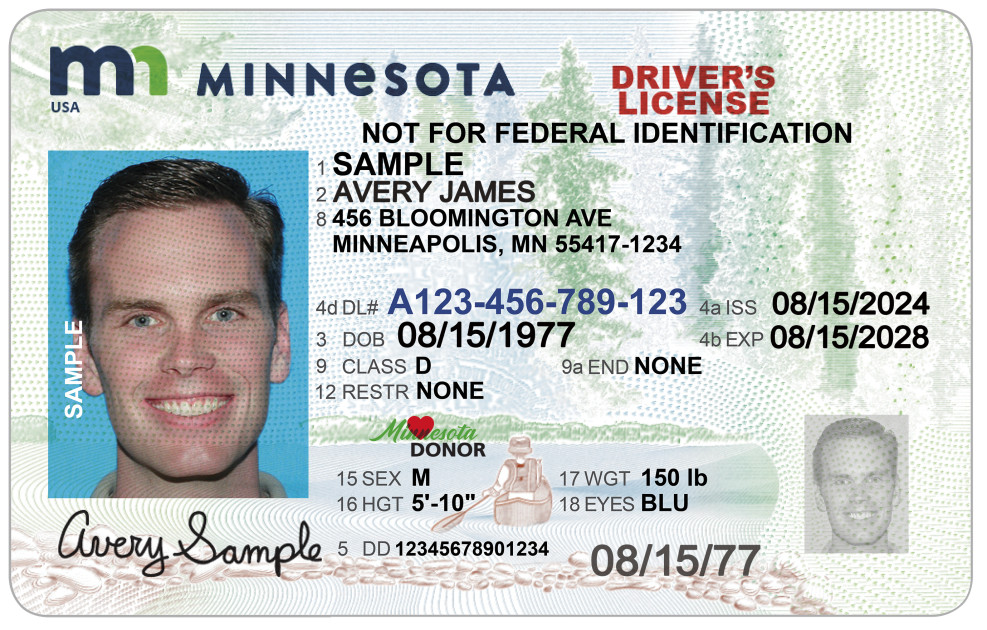
The DOJ’s scrutiny is not happening in a vacuum. It is directly linked to a 2023 law signed by Governor Tim Walz that granted driver’s licenses to residents regardless of immigration status. Because these licenses are identical to standard IDs—carrying no markings indicating non-citizenship—critics fear they could be used to register to vote.
Dhillon’s letter explicitly connects the dots, demanding records on “votes and registrations accepted on the basis of ‘vouching’… as well as other same-day registration procedures.” The implication is clear: The DOJ suspects that the combination of “Driver’s Licenses for All” and the “vouching” system creates a perfect storm where non-citizens could easily slip onto the voter rolls.
The Federal Hook: HAVA
By invoking the Help America Vote Act (HAVA), the DOJ is flexing its federal oversight muscle. HAVA sets minimum standards for voter identification in federal elections. The administration is likely building a case that Minnesota’s “vouching” system is so loose that it fails to meet these federal baselines for verification.
“The basis and purpose of this demand is to ensure Minnesota’s registration and voting practices are in compliance with federal law,” Dhillon wrote.
This is a warning shot to other states with similar “high-access” laws. If the DOJ successfully forces Minnesota to restrict or eliminate vouching, it would set a precedent that federal standards can override state-level experiments in voter access.
A Pattern of Pressure
This demand follows a broader pattern of the Trump administration using the executive branch to pressure blue states. Recently, a Trump official froze millions in Small Business Administration (SBA) aid to Minnesota, citing “endemic” fraud in the state’s welfare programs.
Now, by targeting the voting system, the administration is striking at the heart of Democratic power in the state. Minnesota consistently has the highest voter turnout in the nation, a statistic state officials attribute to policies like same-day registration and vouching. The DOJ’s inquiry suggests they view those same policies not as a gold standard of democracy, but as a systemic security risk.