
While the nation’s attention has been focused elsewhere, a series of federal court rulings and new political initiatives have quietly created fertile ground for the resurgence of “conversion therapy.” This is not a debate happening in the abstract; it is a real-world consequence of a shifting legal landscape.
The result is a new constitutional battleground. It is a conflict that pits the free speech rights of counselors against the state’s duty to protect its children, and its outcome will have profound consequences for thousands of families across the country.
The Constitutional Crossroads of Conversion Therapy
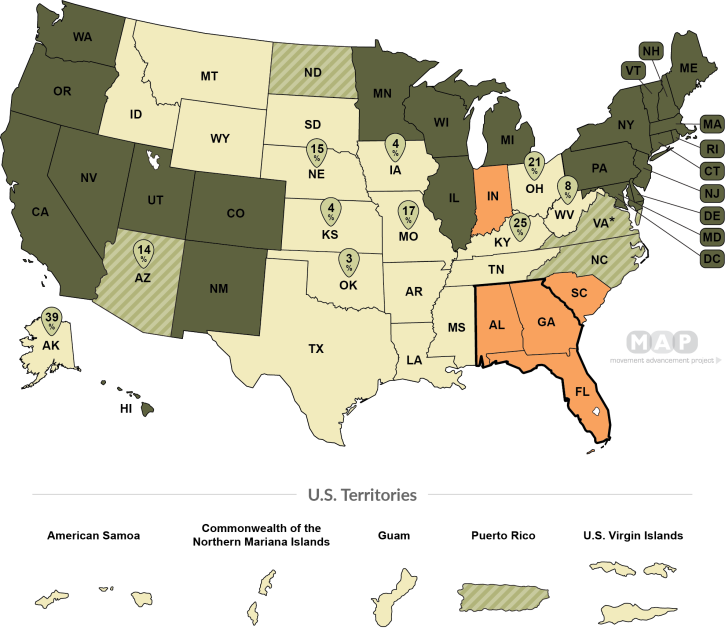
The United States is now a patchwork of laws on one of the most sensitive and divisive issues of our time: the practice of “conversion therapy” for minors. A map of America reveals a nation deeply split, where a child’s legal protection from efforts to change their sexual orientation or gender identity depends entirely on the state in which they live.
This is not a simple policy disagreement. It is a fundamental constitutional conflict that has torn through our federal courts and is now headed for an inevitable showdown at the Supreme Court.
This battle pits the First Amendment’s guarantee of free speech against a state’s power to protect its children, forcing our legal system to answer a profound question: Is therapy a form of protected speech, or is it professional conduct the government can regulate?
Free Speech vs. State Protection
The legal war over conversion therapy is a direct clash between two powerful constitutional principles. On one side are the states – now more than 20 – that have banned the practice for minors. They argue that this is a legitimate exercise of their “police power” to regulate licensed medical and mental health professionals and protect the public from harm.
Proponents of these bans point to the overwhelming consensus of every major medical and mental health organization in the country, including the American Medical Association and the American Psychological Association.
These groups have determined that the practice is not only ineffective but is profoundly harmful, leading to depression, anxiety, and increased risk of suicide.
From this perspective, banning conversion therapy is no different from a state banning a fraudulent or dangerous medical procedure.
On the other side of the conflict is the First Amendment. Opponents of these bans argue that therapy, particularly “talk therapy,” is a form of speech between a counselor and a client. They contend that a state law forbidding a therapist from helping a client achieve their desired personal goals is a violation of the counselor’s right to freedom of speech.
This argument was successfully used in the U.S. Court of Appeals for the Eleventh Circuit, which struck down local bans on the practice.

The Battle for Parental Rights
A second, equally powerful constitutional conflict revolves around the rights of parents. Opponents of the bans argue that parents, under the Due Process Clause of the Fourteenth Amendment, have a fundamental right to direct the upbringing and medical care of their children. If a parent believes this therapy is in their child’s best interest, they contend, the state cannot interfere with that deeply personal family decision.
The counter-argument is that while parental rights are robust, they are not absolute. The state, under the long-standing legal doctrine of parens patriae (“parent of the nation”), retains an interest in protecting children from demonstrable harm.
Proponents of the bans argue that when a practice is deemed dangerous by the entire mainstream medical community, the state’s duty to protect the child can, in this narrow circumstance, override the parents’ wishes.

The deep division between the federal circuit courts – with some upholding the bans and others striking them down – makes a Supreme Court showdown on this issue all but inevitable. The ultimate verdict will likely hinge on how the Court chooses to classify this practice.
Is it protected “speech” between a counselor and a client? Or is it harmful professional “conduct” that the state has a right to regulate?
How the Supreme Court answers that question will not only determine the fate of thousands of vulnerable children but will also draw a new, powerful line defining the limits of free speech and the power of the state in America. It is a constitutional question of the highest order, and the nation is now waiting for an answer.