
In the highly structured and famously quiet world of the federal judiciary, an open rebellion is brewing.
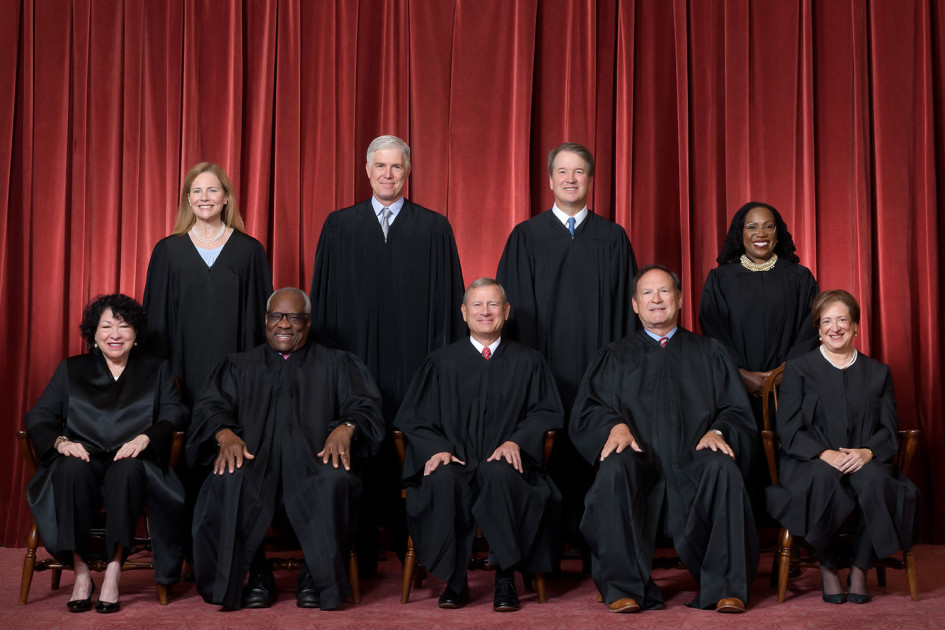
A dozen federal judges, speaking under the cloak of anonymity to protect themselves from reprisal, have taken the extraordinary step of publicly criticizing their own superiors: the justices of the U.S. Supreme Court.
They accuse the high court of abandoning them in the face of vicious political attacks, a charge that reveals a deep and dangerous fracture within the constitutional foundation of the rule of law.
A Judiciary in Turmoil
- What’s Happening: A group of 12 anonymous federal judges has spoken out in a news report, criticizing the U.S. Supreme Court.
- The Complaint: They say the Supreme Court is frequently overturning their rulings in politically charged cases involving the Trump administration via unexplained emergency orders (the “shadow docket”).
- The Fear: The judges feel “thrown under the bus,” arguing that the lack of explanation validates political attacks from the White House and has led to death threats. One judge warned, “somebody is going to die.”
- The Constitutional Issue: A major breakdown in the norms and comity of the Article III judiciary, raising profound questions about judicial independence and the legitimacy of the “shadow docket.”
‘They Don’t Have Our Backs’
The core of the judges’ grievance is a recurring and demoralizing pattern.
In high-profile cases involving the Trump administration’s most controversial policies, a lower court judge will issue a ruling that blocks a White House initiative. That judge is then immediately and publicly attacked by name by the President or senior officials as a politically motivated “activist.”
Soon after, the administration files an emergency application to the Supreme Court, which then swiftly overturns the lower court’s decision, often with no public hearing and no written explanation.
“It is inexcusable. They don’t have our backs.” – An anonymous federal judge.
The judges argue that this sequence of events leaves them powerless and delegitimized. The Supreme Court’s silent reversals, they say, create the public impression that the President’s attacks were justified and that the lower court judge was, in fact, out of line.
The ‘Shadow Docket’ and the Power of Silence
This controversy shines a harsh light on the Supreme Court’s increasing use of its emergency application process, often called the “shadow docket.”
Unlike the “merits docket” – which involves months of briefing, public oral arguments, and deeply reasoned, signed opinions – cases on the shadow docket are decided quickly and opaquely.
While the shadow docket has a legitimate purpose for dealing with urgent matters, critics from across the political spectrum have warned that the Court is now using it to make major, substantive rulings on the most contentious issues of the day without the transparency the public expects.
“When the Supreme Court reverses a decision with a detailed, signed opinion, it’s a legal dialogue. When it does so with a one-sentence order from the ‘shadow docket,’ lower court judges say it feels like a political rebuke.”
From Legal Rulings to Death Threats
The judges who spoke out made it clear that this is not just a matter of professional pride. They argue the Supreme Court’s actions have dangerous, real-world consequences.
One judge, who confirmed they have received credible death threats after ruling against the administration’s agenda, issued a chilling prediction. If the pattern of high-level political attacks followed by unexplained Supreme Court reversals continues, the judge warned, “somebody is going to die.”

A Dissent… from a Dissenter
The criticism was not entirely one-sided. One of the anonymous judges, an appointee of former President Barack Obama, acknowledged that some of his colleagues bear responsibility for the situation.
“The whole ‘Trump derangement syndrome’ is a real issue. As a result, judges are mad at what Trump is doing or the manner he is going about things; they are sometimes forgetting to stay in their lane.” – An anonymous, Obama-appointed federal judge.
This judge conceded that some lower court rulings against the administration have been poorly reasoned, inviting the Supreme Court to step in. “They are partially right to feel the way they feel,” the judge said of his frustrated colleagues.
A Crack in the Foundation
The judiciary, as established by Article III of the Constitution, is designed to be a stable, hierarchical pillar of government. This public airing of grievances reveals deep cracks in that foundation.
The dispute is a symptom of a judiciary under immense political pressure from the executive branch. The open conflict between the “inferior Courts” and the “one supreme Court” is a dangerous new development that threatens the very legitimacy and public trust that the entire judicial branch depends on to function as a co-equal branch of government.