
President Trump solved wars in the Middle East, cleaned up Washington’s streets, and is fighting tariff battles at the Supreme Court. But White House allies and Republican strategists say he’s made a critical mistake: he stopped talking about the issues that got him elected.
“People don’t think he’s lived up to his promises,” one White House ally said after Tuesday’s devastating GOP losses in Virginia and New Jersey. “You won on lowering costs, putting more money back into people’s pockets. And people don’t feel that right now.”
This isn’t just post-election finger-pointing – it’s a recognition that Trump may be repeating Joe Biden’s fatal error of insisting the economy is great while voters struggle with grocery bills. Underneath all the political analysis: when presidents focus on their legacy achievements instead of voters’ immediate concerns, does that represent a failure of democratic accountability, or just politicians being politicians?
At a Glance
- Republicans suffered major losses in Virginia and New Jersey gubernatorial races Tuesday night
- White House allies say Trump has stopped focusing on cost-of-living issues that won him the 2024 election
- Deputy Chief of Staff James Blair promises Trump will “talk a lot about cost of living” in the new year
- Critics compare Trump’s disconnect to Biden insisting the economy was strong while Americans struggled
- At stake: whether presidents are accountable to voters’ immediate concerns or free to pursue their own priorities
The Tuesday Night Disaster
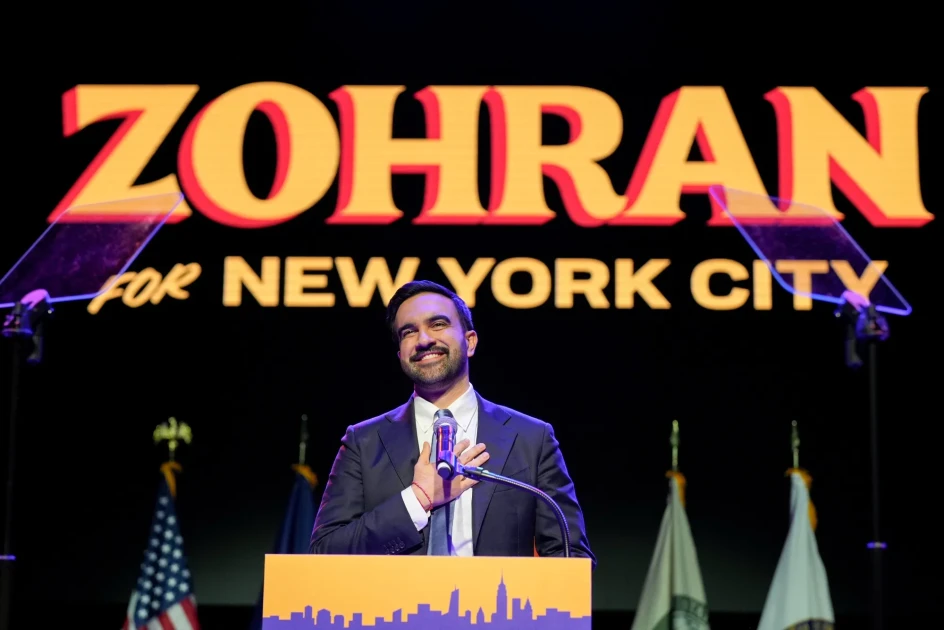
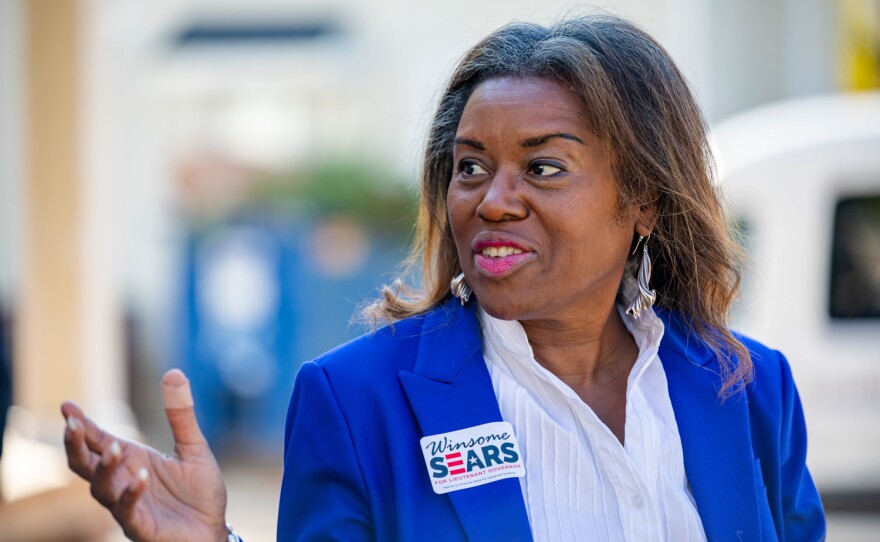
Republican gubernatorial candidates lost badly in Virginia and New Jersey Tuesday night. Lt. Gov. Winsome Earle-Sears, handpicked by Virginia Governor Glenn Youngkin, lost by margins that one Republican operative called a “blow to Youngkin’s national ambitions.” The losses weren’t just defeats – they were described as devastating enough to end years of Republican gains in Virginia and signal serious problems heading into the 2026 midterms.
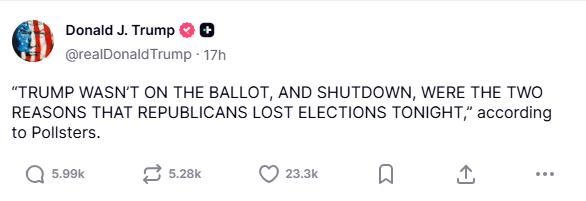
Trump immediately blamed the losses on two factors: he wasn’t on the ballot, and the government shutdown hurt Republicans. “TRUMP WASN’T ON THE BALLOT, AND SHUTDOWN, WERE THE TWO REASONS THAT REPUBLICANS LOST ELECTIONS TONIGHT,” he posted.
But White House allies and Republican strategists are telling a different story privately. They’re worried Trump has lost focus on the economic populism that won him the presidency and is instead emphasizing foreign policy achievements, DC aesthetics, and legal battles that don’t resonate with struggling voters.
“People don’t think he’s lived up to his promises. You won on lowering costs, putting more money back into people’s pockets. And people don’t feel that right now.” – White House ally
The Biden Comparison Nobody Wants to Make
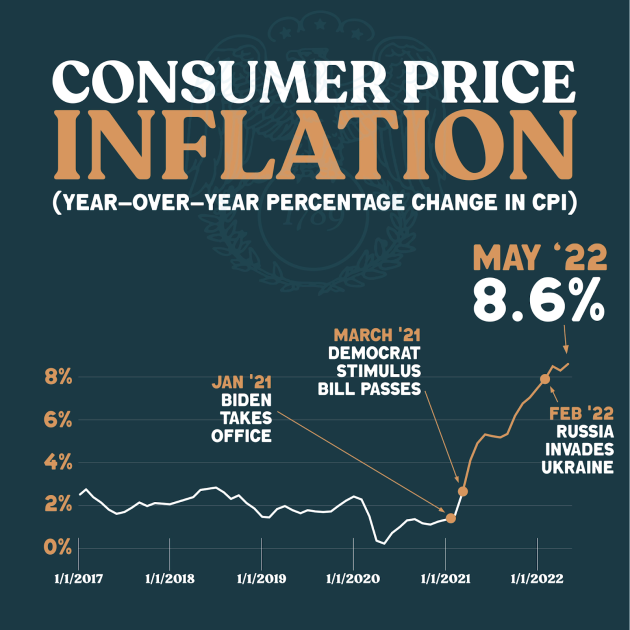
Multiple Republicans drew explicit parallels between Trump’s current approach and Biden’s fatal mistake in 2024. Biden insisted the economy was strong, pointed to positive macroeconomic indicators, and couldn’t understand why voters weren’t giving him credit for his accomplishments. Meanwhile, Americans were struggling with inflation, high prices, and declining purchasing power.
“This is the problem Biden had,” one White House ally said, noting that Biden insisted America was on the upswing while people were struggling to make ends meet.
The comparison is devastating because it suggests Trump is repeating exactly the mistake that allowed him to defeat Biden. Trump won in 2024 largely on promises to lower costs and put more money in people’s pockets. Now, allies worry he’s talking about everything except those kitchen-table economic issues.
“The President hasn’t talked about the cost of living in months,” said a person close to the White House. “People are still hurting financially and they want to know the White House is paying attention and trying to fix the problem as quickly as possible.”
The concern is that Trump is focused on “the wars he’s solved, the clean streets of D.C., the tariff case at the Supreme Court” while Americans grapple with rising costs of goods, inadequate food assistance benefits, and looming expiration of healthcare subsidies.
The Promised Pivot to Pocketbook Issues
James Blair, who served as political director for Trump’s 2024 campaign and now serves as White House deputy chief of staff, promised a course correction. “You’ll see the president talk a lot about cost of living as we turn into the new year,” Blair said.
“The president is very keyed into what’s going on, and he recognizes, like anybody, that it takes time to do an economic turnaround, but all the fundamentals are there, and I think we’ll see him be very, very focused on prices and cost of life.”
Steve Bannon echoed this, saying he expects Trump to focus not only on “affordability, but job creation, making sure that the Big Beautiful Bill is fully implemented, making sure that all these investments that have been talked about actually get made.”
“It’s now time to double and triple down on President Trump’s agenda. If you execute the agenda, we’re going to be in good shape. He’s got a populist agenda. He’s got a nationalist agenda. You’ve just got to get on with it,” Bannon said.
“Too much focus on foreign policy while people are hurting at home delivered exactly the results you’d expect.” – Person close to the White House
Vice President JD Vance picked up the theme Wednesday morning, posting that Republicans “need to focus on the home front.” He acknowledged “we inherited a disaster from Joe Biden and Rome wasn’t built in a day,” but added: “We’re going to keep on working to make a decent life affordable in this country, and that’s the metric by which we’ll ultimately be judged in 2026 and beyond.”
The Warning Signs That Were Ignored
The criticism that Trump’s focus has strayed isn’t just post-election recrimination. Some Republicans, including Rep. Marjorie Taylor Greene, have been warning for months that the White House was drifting away from the economic populism that powered Trump’s victory.
“Too much focus on foreign policy while people are hurting at home delivered exactly the results you’d expect,” one person close to the White House said – making clear this concern predated Tuesday’s losses.
The shutdown fight over Obamacare subsidies brought this tension into sharp relief. Democrats made healthcare affordability central to their shutdown messaging, warning that millions would face massive premium increases if enhanced subsidies expire. Republicans initially dismissed this as procedural gaming, but the electoral results suggest voters care deeply about healthcare costs.
Meanwhile, Trump has been emphasizing foreign policy achievements – the Gaza peace deal, ending wars, international negotiations – that matter less to voters struggling to afford groceries and worried about losing healthcare subsidies.
The Candidate Quality Excuse
Republicans are also blaming candidate quality for Tuesday’s losses. Trump’s elections guru Chris LaCivita wrote: “A Bad candidate and Bad campaign have consequences – the Virginia Governors race is example number 1.”
One Republican operative was brutal about the Virginia loss: “Glenn Youngkin’s handpicked candidate for governor failed horribly. And took out years of Republican gains in the Commonwealth. Thus – his national aspirations ended where Winsome Sears did.”
Blair acknowledged candidate quality matters but insisted better messaging can overcome it: “I think that with a lot of campaigning next year, with a lot of resources in the right districts for the right candidates, that is an overcomeable problem.”
But the candidate quality excuse only goes so far. If the problem is just bad candidates in blue states, that’s one thing. If the problem is that Trump’s messaging has drifted away from what won him the presidency, that’s a much bigger issue heading into 2026 midterms.
The Constitutional Accountability Question
Here’s the deeper question this exposes: what constitutional accountability do presidents have to focus on issues voters care about?
Technically, none. The President is elected for a four-year term and can prioritize whatever issues he wants during that term. If voters don’t like his priorities, they can vote for someone else next time. That’s the extent of constitutional accountability – elections every four years.
But the Framers assumed presidents would remain responsive to public opinion between elections because they’d care about their party’s electoral prospects and their own legacy. They’d want to be seen as successful, which requires addressing issues the public cares about.
What we’re seeing with Trump mirrors what happened with Biden: a president convinced his accomplishments matter more than voters’ daily concerns. Biden pointed to infrastructure investments, job creation, and economic recovery. Trump points to peace deals, border security, and regulatory reforms. Both are real achievements – and both miss what voters actually care about in their daily lives.
The Constitution creates electoral accountability every four years. It doesn’t require presidents to stay focused on issues voters care about between elections – it just assumes they will because ignoring voters has political costs.
What the Founders Would Say
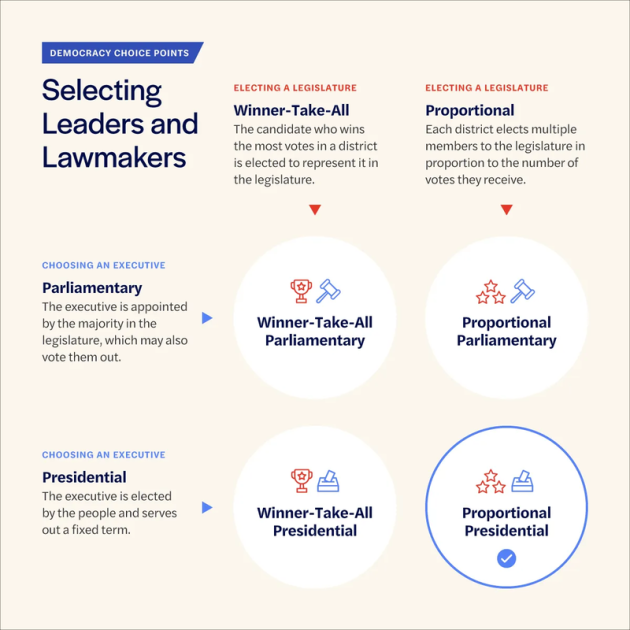
The Founders didn’t create a system where presidents are legally required to focus on whatever polls say voters care about most. They created a system where presidents have substantial discretion during their terms, checked by elections and by Congress’s power to pass or block legislation.
Madison would probably argue this is working as designed – Trump’s drift away from economic issues is creating political consequences through electoral losses, which will pressure him to adjust. That’s the feedback loop that keeps presidents accountable without requiring legal mechanisms to force them to prioritize certain issues.
Hamilton believed presidents needed to be able to act decisively without constant public opinion polling driving every decision. He’d probably defend Trump’s right to emphasize foreign policy achievements if that’s what the President believes matters most for the country.
Jefferson would focus on whether Trump is actually addressing people’s material conditions. He believed government’s purpose was protecting people’s ability to pursue happiness, which requires basic economic security. He’d probably say a president who ignores cost-of-living concerns while people struggle is failing at government’s most basic purpose.
The 2026 Midterm Stakes
The political stakes are obvious: if Republicans lose the House in 2026, Trump’s final two years in office become gridlocked. He’d face Democratic subpoenas, investigations, and obstruction of his agenda. That would effectively end his presidency’s productive period.
White House allies clearly understand this, which is why they’re pushing for Trump to refocus on economic issues. Blair’s promise that “you’ll see the president talk a lot about cost of living” starting in the new year suggests internal recognition that course correction is urgent.
But promising to talk about something and actually delivering results are different things. Voters didn’t punish Biden just for not talking about inflation – they punished him because inflation remained high and they didn’t believe his administration was doing enough about it.
If Trump pivots to talking more about cost of living but can’t show tangible progress – lower prices, more affordable healthcare, better wages – voters might conclude he’s just offering words rather than solutions. That’s potentially worse than ignoring the issue, because it highlights the gap between promises and delivery.
The Constitutional Reality of Political Accountability
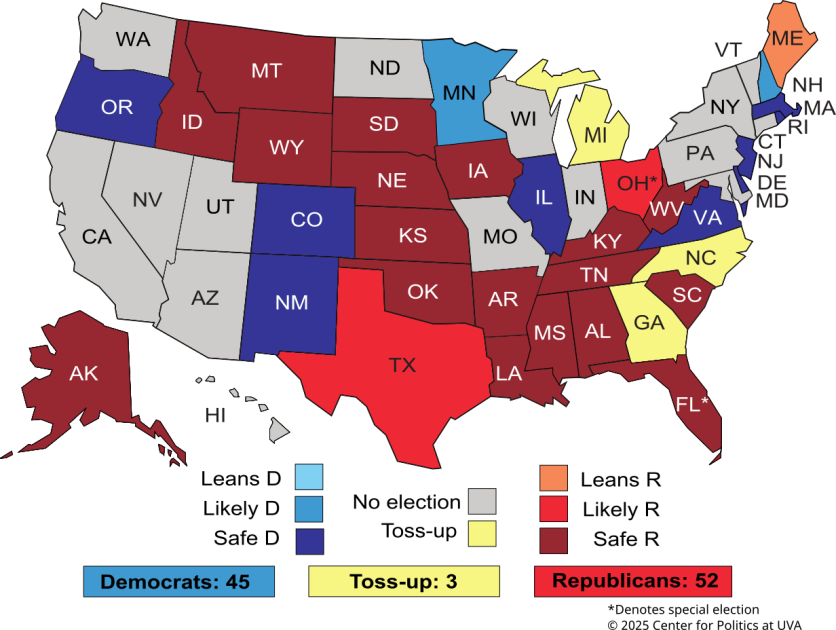
The Constitution doesn’t require presidents to focus on whatever voters care about most at any given moment. But it creates electoral consequences for ignoring voters’ concerns – first through midterm elections that can shift congressional power, then through presidential elections that can remove the party from power entirely.
That’s the system working as designed. Tuesday’s elections sent a signal that Trump’s focus on foreign policy achievements and Washington aesthetics isn’t resonating with voters who care about grocery prices and healthcare costs. Whether Trump adjusts based on that signal determines whether the accountability mechanism actually works.
White House allies promise he will adjust – that he’ll start emphasizing cost-of-living issues as 2026 approaches. But they also promised voters would feel economic improvement from Trump’s policies, and clearly many don’t yet. The gap between what the administration says is happening and what voters actually experience is exactly what doomed Biden.
The Framers created a system where presidents have substantial freedom to set priorities during their terms, constrained by elections every two and four years. Those constraints only work if presidents actually respond to electoral signals. If Trump concludes that Tuesday’s losses were just about candidate quality in blue states rather than about his own messaging and priorities, the accountability mechanism fails.
That’s not a constitutional failure – the Constitution gives Trump every right to focus on whatever he wants. It’s a political failure, where the elected leader stops listening to why he was elected in the first place. The Constitution can’t force presidents to pay attention to voters between elections. It can only create consequences when they don’t.
Whether those consequences are severe enough to force Trump’s attention back to cost-of-living issues – or whether Republicans will blame candidates, the shutdown, and Trump not being on the ballot – determines whether American democracy’s accountability mechanisms still function when presidents would rather talk about their achievements than voters’ concerns.