
It is the most delicate and terrifying question in American governance: What happens if the President, the most powerful person in the world, is no longer mentally or physically capable of leading?
Recent public concerns over the health of both former President Joe Biden and, more quietly, the recent absences of President Donald Trump have pulled this question from the realm of historical what-ifs into the urgent present.
The answer lies not in politics or polls, but in a remarkable and largely untested part of our Constitution designed for precisely such a crisis: the 25th Amendment. Understanding this mechanism is no longer an academic exercise; it is a matter of profound civic importance.

25th Amendment Quick Overview
- The Core Question: Who decides if a U.S. President is no longer fit to hold office?
- The Answer: The 25th Amendment to the Constitution provides a formal, two-part process for a transfer of power.
- The Two Paths:
- Section 3 (Voluntary): The President can temporarily transfer power to the Vice President, for reasons like a medical procedure.
- Section 4 (Involuntary): The Vice President and a majority of the Cabinet can declare the President unable to serve. This is an extreme measure that the President can contest, ultimately requiring a two-thirds vote of Congress to finalize.
- The Context: Recent health concerns and speculation surrounding both President Trump and former President Biden have brought this rarely-discussed constitutional mechanism into the national spotlight.
A Vague Clause and a National Trauma
For most of American history, the Constitution was dangerously vague on this issue. The original document simply stated that the Vice President would assume the President’s duties in case of his “Inability,” but it provided no process for determining what “inability” meant or who could declare it.
This led to several near-catastrophic crises. President Woodrow Wilson was left incapacitated by a severe stroke for the last 18 months of his term, with his wife and doctor secretly running the executive branch.
President Dwight Eisenhower suffered a major heart attack that left the nation’s leadership uncertain for days.
The ultimate catalyst for change was the assassination of President John F. Kennedy in 1963. The horror of that event, combined with the reality of a nuclear-armed world, forced the nation to confront the need for a clear, orderly process. The result was the 25th Amendment, ratified in 1967.

The Solution: How the 25th Amendment Works
The 25th Amendment is a precise legal tool designed to handle two very different scenarios. It is crucial to distinguish it from impeachment, which is a political process for “Treason, Bribery, or other high Crimes and Misdemeanors.”
The 25th Amendment deals only with a President’s inability to perform the duties of the office.
Section 3: The Voluntary Handover This is the amendment’s most used, and least controversial, provision. It allows the President to send a written declaration to Congress that he is temporarily unable to discharge his duties.
The Vice President then becomes Acting President until the President sends another letter declaring he is able to resume. This has been used by presidents like Ronald Reagan and George W. Bush during routine medical procedures.

Section 4: The Involuntary Removal This is the “break glass in case of emergency” button, a process so difficult and requiring such a high level of consensus that it has never been fully used in American history.
- The Vice President and a majority of the Cabinet must declare in writing to Congress that the President is unable to serve. The Vice President immediately becomes Acting President.
- The President can then send his own written declaration to Congress stating that no inability exists. He would then immediately resume his powers.
- If the Vice President and Cabinet still disagree, they can send another declaration to Congress within four days. This forces a vote.
- Congress then has 21 days to decide the issue. A two-thirds vote of both the House and the Senate is required to rule that the President is unable to serve and to keep the Vice President in charge. If that supermajority is not reached, the President reclaims his office.
“Section 4 of the 25th Amendment is the Constitution’s ultimate safeguard. The bar for removing a sitting President against his will is intentionally, and extraordinarily, high.”
From Biden’s Stumbles to Trump’s Silence
This once-obscure constitutional mechanism has become a topic of intense public discussion in recent years.
During his term, the public debate over former President Joe Biden’s age and occasional public stumbles frequently led to calls from critics for the 25th Amendment to be considered.
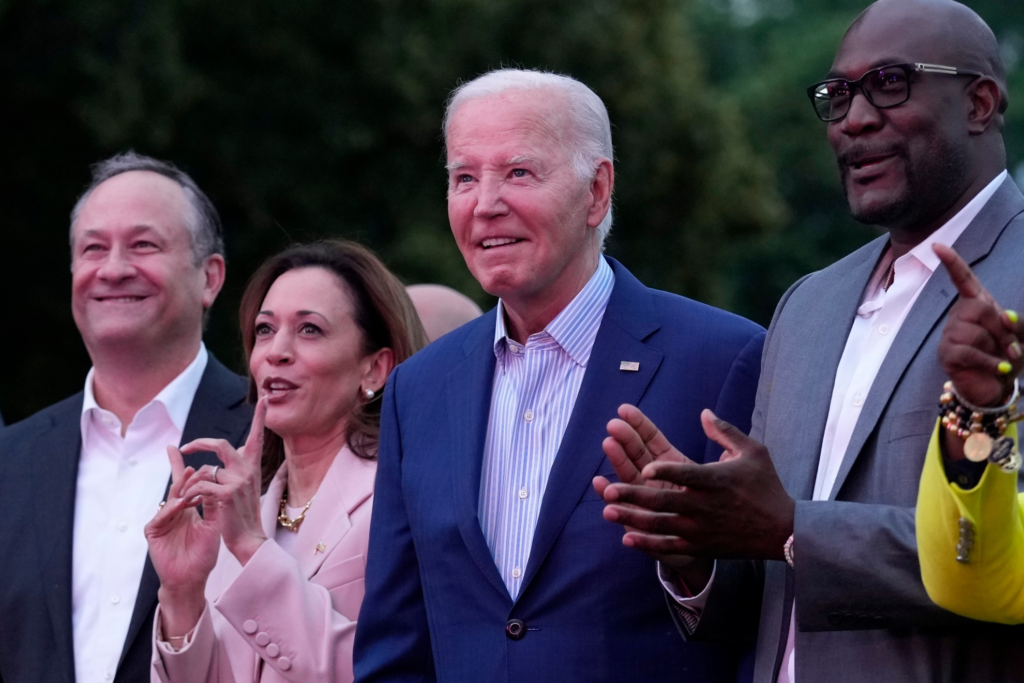
More recently, periods of President Donald Trump’s absence from public view and a lighter public schedule have fueled quiet speculation and rumors among both critics and supporters about his own health and stamina.
These concerns, however whispered, ensure that the 25th Amendment remains a relevant and urgent topic of national conversation.

A Test of the Republic
The 25th Amendment is a testament to the foresight of its framers, who understood that a republic needs a clear, orderly process for the transfer of power, even in the most dire and unthinkable of circumstances.
It is designed to be a legal and constitutional process, not a political weapon. The recent and ongoing focus on presidential health is a powerful reminder that the well-being of the nation is inextricably linked to the well-being of its leader.
The amendment is the ultimate constitutional safeguard, a sober mechanism designed to ensure that the office is always greater than the person who holds it.