
The most persistent political battle of the last 15 years has returned to Washington, and this time, there is a hard deadline attached.
With emergency subsidies for the Affordable Care Act (Obamacare) set to expire at the end of the month, the Republican majority is facing a critical choice: extend the funding they have long opposed, or let it lapse and risk a sudden spike in healthcare costs for millions of voters.
This decision has reopened a deep rift within the GOP. It pits fiscal hawks who want to scrap the system against pragmatists who fear the political and economic chaos of a sudden repeal. It is a high-stakes test of governance, fiscal policy, and the legislative process in a divided government.
At a Glance: The Obamacare Subsidy Fight
- What’s Happening: Enhanced federal subsidies for the Affordable Care Act are set to expire on December 31, 2025.
- The Stakes: Without an extension, an estimated 90% of the 24 million people enrolled in ACA plans could see their premiums rise significantly overnight.
- The GOP Split: The party is divided. Some want to let the subsidies die to save $30 billion a year. Others fear the instability and want to reform, rather than repeal, the law.
- The Constitutional Issue: A clash between the “power of the purse” (appropriating funds for subsidies) and the procedural reality of the Senate filibuster, which requires 60 votes for major legislative overhauls.
The December Cliff
The immediate crisis is fiscal. During the COVID-19 pandemic, Congress passed temporary, enhanced subsidies to lower the cost of insurance premiums for people buying plans on the ACA exchanges. Those enhancements are now days away from expiring.
If Congress does nothing, the price of insurance for millions of Americans will jump.
For fiscal conservatives, this expiration is a feature, not a bug. They view the subsidies as a massive, unfunded liability. Rep. Randy Fine (R-FL) argues that continuing the spending is essentially “lying” about the true cost of healthcare.
“Borrowing money from your kids and grandkids to hide what something actually costs doesn’t lower costs… if we stay on the Obamacare path, we will bankrupt the country.” – Rep. Randy Fine
A Party Divided: Stabilizers vs. Repealers
The internal debate reveals that the “Repeal and Replace” slogan of the past has evolved into a much more complex reality.
On one side are the stabilizers, like Rep. Harriet Hageman (R-WY) and Rep. Mike Kennedy (R-UT). They acknowledge that the ACA is now woven into the fabric of the American healthcare system. They warn that simply pulling the plug without a viable alternative would create chaos in the insurance markets.
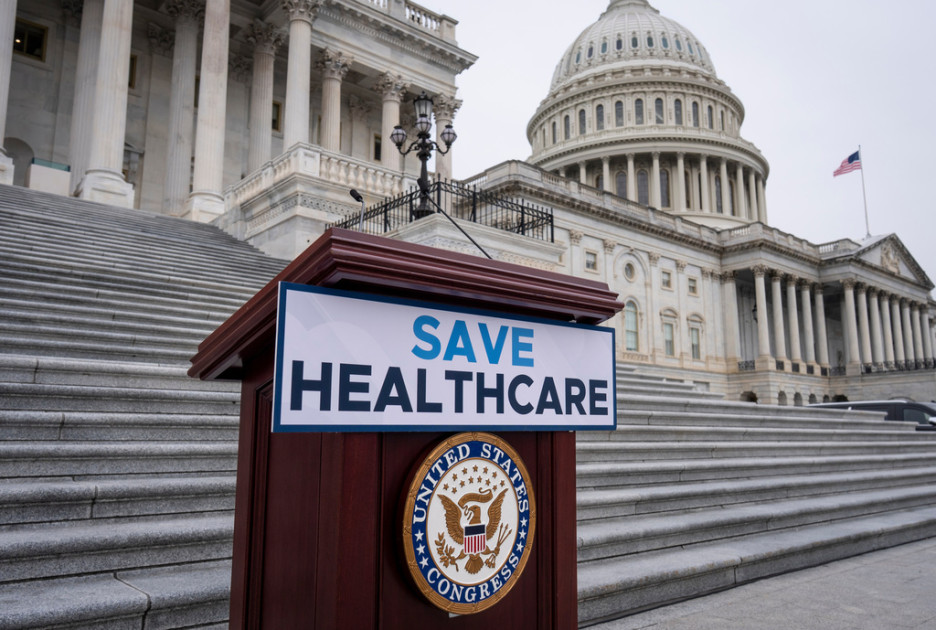
“I don’t know that you can completely remove it. We have to have stability and certainty in the market.” – Rep. Harriet Hageman
On the other side are the reformers who want to build a parallel system. Rep. Eric Burlison (R-MO) suggests creating a new, deregulated option so attractive that people voluntarily “walk away” from Obamacare, rather than trying to fix the existing law.
The Constitutional Math: 60 Votes
Looming over this entire debate is the procedural reality of the U.S. Senate. While Republicans hold the majority, they do not hold the 60 seats necessary to break a filibuster.
This is a critical constitutional and parliamentary constraint. While the House can pass a repeal bill with a simple majority, the Senate generally requires a supermajority for major non-budgetary legislation.
Rep. Rich McCormick (R-GA), a pragmatist in this fight, points out this cold hard math: “The question is, can you pass it? Sixty votes in the Senate. Not gonna happen.”
This reality forces the GOP to look for smaller, market-based reforms—like increasing competition—rather than the wholesale repeal some in the base demand.
The Path Forward
The clock is ticking toward December 31. The decision Congress makes—or fails to make—will have immediate consequences.
If the subsidies expire, it will be a victory for fiscal conservatives exercising the power of the purse to restrain spending. But it will also mean a sudden financial shock for 24 million Americans. The GOP is now caught between its ideological commitment to smaller government and the practical political peril of raising healthcare costs on its own watch.