
Mayor-elect Zohran Mamdani wants to create a $1.1 billion Department of Community Safety that would deploy social workers and mental health professionals to respond to 911 calls instead of police officers. It’s a signature campaign promise and a central plank of his progressive “reimagining public safety” platform.
There’s just one problem: New York City has been testing this exact approach since 2021 through a program called B-HEARD, and it’s failing spectacularly.
A May audit found that 60% of calls were deemed ineligible for response, and more than 35% of eligible calls never got answered at all. Mamdani wants to spend over $1 billion scaling up a program that can’t even handle a small pilot successfully.
This raises a question that goes beyond politics to constitutional governance – when does ambitious policy innovation cross the line into reckless spending on programs that demonstrably don’t work?
At a Glance
- Mamdani’s proposed $1.1 billion Department of Community Safety would absorb and dramatically expand B-HEARD
- B-HEARD has been operating since 2021 with 18 teams responding to mental health crisis calls
- City comptroller audit found 60% of B-HEARD calls deemed ineligible and 35% of eligible calls received no response
- Between 2022-2024, B-HEARD received 96,291 calls but only responded to 24,071
- At stake: whether local governments can responsibly spend billions on programs with proven implementation failures
The B-HEARD Program’s Dismal Record
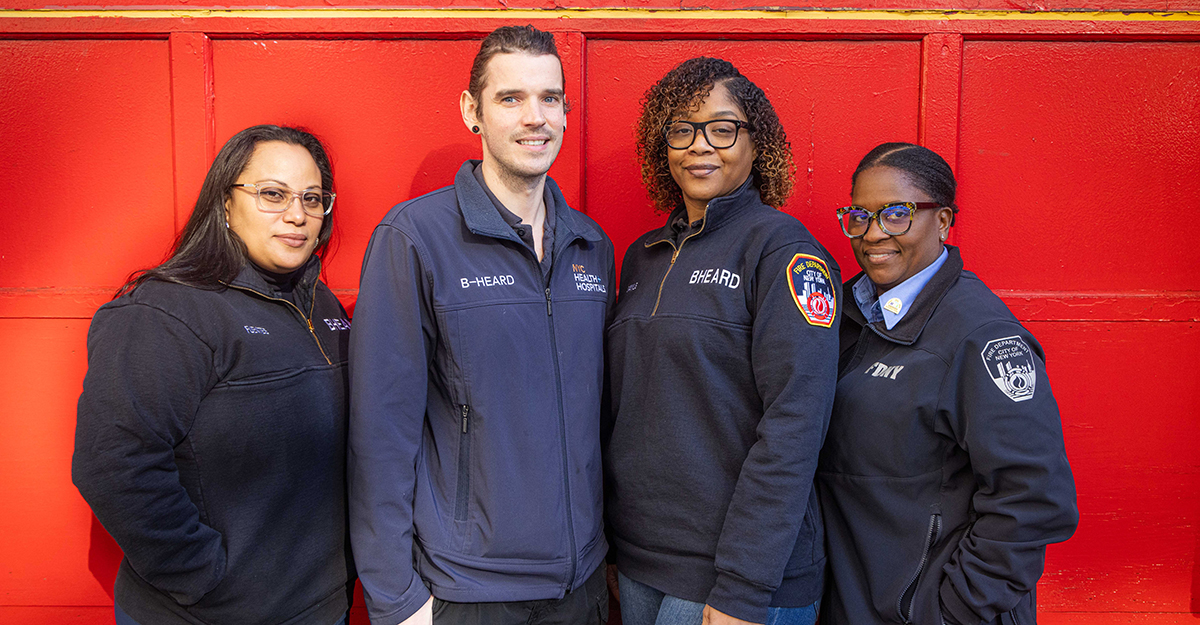
B-HEARD launched in 2021 as a pilot program meant to send mental health professionals and EMTs to certain 911 calls instead of armed police officers. Currently operating with just 18 active teams in parts of The Bronx, Upper Manhattan, central Brooklyn, and northwest Queens, it was supposed to demonstrate that a public health approach to mental health crises could work.
The results tell a different story. Between fiscal years 2022 and 2024, B-HEARD received 96,291 calls. Of those, only 24,071 received an actual response from a B-HEARD team consisting of two FDNY officers/EMTs and one social worker. That’s about 25% – meaning three-quarters of calls never got a B-HEARD response.
The city comptroller’s audit in May painted an even bleaker picture: 60% of calls were deemed ineligible for B-HEARD response, and more than 35% of calls that were eligible never received any response at all.
“Calls were considered potentially dangerous, were ineligible because a mental health professional was already at the scene, or were unable to be triaged because FDNY EMS did not take the call or all necessary information could not be collected about the person in distress.” – NYC Comptroller’s Office
Those numbers reveal fundamental problems with how the program operates. If 60% of calls are automatically ineligible, the screening criteria are either too narrow or the types of calls coming in don’t match what the program is designed to handle. If 35% of eligible calls don’t get responses, there aren’t enough teams or the dispatch system isn’t working properly.
Mamdani’s $1.1 Billion Expansion Plan
Despite B-HEARD’s struggles at small scale, Mamdani wants to massively expand it through his proposed Department of Community Safety. The plan would absorb B-HEARD and scale up to place one response squad in each New York City neighborhood, with up to three teams in areas with higher need.
That’s a 150% funding increase compared to current B-HEARD spending. The total price tag: $1.1 billion, with $605 million coming from absorbing existing programs and $455 million in new funding that would need to be raised somehow.
Mamdani’s campaign website describes DCS as an agency meant to “fill the gaps of our programs and services” with a mission to “prevent violence before it happens by taking a public health approach to safety.”
That sounds good in theory. In practice, it means taking a program that currently can’t handle calls in four neighborhoods and scaling it citywide across all five boroughs – one of the most diverse, complex, and challenging urban environments in the world.
Elle Bisgaard-Church, Mamdani’s newly announced chief of staff, helped craft the DCS proposal. That means his most senior aide is personally invested in defending a plan that experts are already questioning based on existing data.
The Implementation Reality Check
Scaling B-HEARD citywide would require massive increases in staffing and resources. Currently operating with 18 teams covering limited areas, expanding to every neighborhood plus multiple teams in high-need areas could require hundreds of teams.
Each team needs two FDNY officers/EMTs plus one licensed social worker. Finding, training, and retaining that many qualified mental health professionals willing to respond to crisis calls is an enormous challenge. Social workers with the training and experience to handle psychiatric emergencies are in short supply nationally.
Then there’s the dispatch and coordination infrastructure. If the current system can’t properly triage calls or ensure responses to eligible cases, scaling up 10x or 20x makes those problems exponentially worse unless fundamental operational issues are fixed first.
Richard Aborn, president of the Citizens Crime Commission of New York City, identified the core problem: “The devil is in the details, and here the detail is implementation. The fact that the program is not reaching people does not tell me it’s unsuccessful; that is a matter of resources.”
But he also noted “fundamental questions” about when it’s appropriate to send mental health professionals instead of law enforcement to 911 calls – a question that becomes life-or-death when situations turn violent.
The Safety Concerns
Law enforcement and public safety experts have raised serious concerns that Mamdani’s plan could endanger both callers and responders. Political strategist Hank Sheinkopf was blunt: “Domestic dispute calls can get violent. That’s the time when you need a social worker? He must be kidding.”
The concern is legitimate. Many mental health crisis calls involve people who are armed, violent, or unpredictable. Sending social workers without adequate police backup could result in responders getting hurt or killed. It could also result in situations escalating because responders lack authority or training to control dangerous individuals.
The current B-HEARD model addresses this somewhat by including FDNY officers and EMTs alongside social workers, and by screening out calls deemed “potentially dangerous.” But that’s why 60% of calls are deemed ineligible – because many crisis situations involve elements that make them unsafe for non-police response.
If you expand the program dramatically, either you maintain strict eligibility criteria (meaning most calls still get traditional police response) or you loosen criteria and send social workers into dangerous situations. Neither option achieves the goal of reimagining public safety.
“Exactly what New York doesn’t need: another government agency with an unmanageable bureaucracy.” – Hank Sheinkopf, political strategist
The Constitutional Spending Authority Question
From a constitutional perspective, Mamdani has clear authority as mayor to propose new city agencies and spending priorities. The New York City Charter gives the mayor substantial power over the executive branch, including creating new departments and agencies.
But that authority isn’t unlimited. The City Council must approve the budget and can reject or modify the mayor’s proposals. Council members representing districts across the city will have to decide whether to fund a $1.1 billion expansion of a program that’s currently failing.
The deeper constitutional question is about responsible governance. When empirical evidence shows a program isn’t working at small scale, does a mayor have a responsibility to fix those problems before scaling up? Or can he simply declare that more resources will solve implementation issues and demand massive funding increases?
Bill Cunningham, who served under Mayor Michael Bloomberg, emphasized the need for “stronger management” and suggested “it might be wiser, and probably easier to take this report and fix the issues” before creating an entirely new department.
“The bottom line should be how to deliver the needed services. If the corrections are not made, then everything else is cosmetic,” Cunningham said.
What the Founders Would Say
The Founders didn’t envision mayors creating billion-dollar social service agencies or municipal governments providing mental health crisis response. Those functions didn’t exist in 1787.
But they did care deeply about responsible use of public funds. Hamilton wrote extensively in The Federalist about the importance of fiscal responsibility in government. He’d probably argue that spending $1.1 billion on expanding a program with a 60% ineligibility rate and 35% non-response rate for eligible calls is fiscal recklessness.
Madison would focus on the implementation details. He believed effective government required not just good intentions but competent administration. A program that can’t properly triage calls or dispatch teams to eligible cases has fundamental operational problems that more money won’t necessarily fix.
Jefferson would probably question whether municipal government should be handling mental health crisis response at all, or whether this is better left to medical institutions and private charity. He believed in limited government focused on core functions.
But all three would agree that government officials have a responsibility to use public funds wisely and to base spending decisions on evidence rather than ideology.
The Progressive Policy Dilemma
Mamdani’s DCS proposal represents a classic progressive policy dilemma: how do you implement ambitious reforms when early evidence suggests serious problems?
One approach is to acknowledge the problems, fix the implementation issues in the pilot program, and then scale up once it’s actually working. That’s the cautious, incremental approach that Cunningham and others recommend.
The other approach is to argue that the pilot program failed because it lacked sufficient resources and scale, and that a massive investment will solve the problems. That’s essentially Mamdani’s position – B-HEARD isn’t working because it’s too small and under-resourced, so let’s make it much bigger.
The problem with the second approach is that it risks throwing good money after bad. If the operational problems are fundamental – poor call screening, inadequate dispatch systems, unclear eligibility criteria, insufficient coordination between agencies – then more funding might just create a bigger dysfunctional program rather than fixing the dysfunction.
The Political Vulnerability
Mamdani’s DCS plan has already “alienated law enforcement” according to reports, and it’s easy to see why. Police unions and officers view this as an attack on their profession and a suggestion that social workers can do their jobs better – despite evidence that the alternative approach isn’t working.
If Mamdani pushes forward with DCS and it continues to struggle with implementation, every 911 call that doesn’t get a response will become a political liability. Every situation where a social worker team is endangered will be used as evidence the approach is fundamentally flawed. Every violent crime that occurs while DCS resources are tied up elsewhere will be blamed on misplaced priorities.
The comptroller’s audit gives opponents data-driven ammunition to argue against the expansion. It’s not just conservative criticism or law enforcement resistance – it’s empirical evidence from the city’s own financial watchdog showing the program isn’t working.
Mamdani will take office in January facing an immediate decision: does he double down on DCS despite the evidence, or does he acknowledge the implementation problems and take a more cautious approach? His chief of staff helped design the plan, which makes admitting problems politically difficult.
The Constitutional Reality of Local Innovation
American federalism allows cities to experiment with different approaches to governance. Justice Brandeis called states and localities “laboratories of democracy” where policies can be tested before national adoption.
B-HEARD was exactly that kind of experiment – testing whether mental health professionals could effectively respond to certain 911 calls. The experiment produced results: it doesn’t work very well at current scale with current implementation.
The question is whether Mamdani learns from those results or ignores them. Constitutional authority to create new agencies doesn’t mean it’s wise to create them. Mayoral power to propose budgets doesn’t mean City Council should approve every proposal.
Responsible governance means using evidence to inform decisions, fixing problems before scaling up, and being willing to admit when programs aren’t working rather than doubling down because they align with ideological commitments.
Mamdani campaigned on reimagining public safety through a public health approach. That’s an ambitious goal worth pursuing. But pursuing it by spending $1.1 billion to expand a program that currently can’t handle 60% of its calls and doesn’t respond to 35% of eligible calls isn’t reimagining public safety – it’s ignoring evidence in favor of ideology.
The Constitution gives Mamdani authority to propose DCS. It gives City Council authority to approve or reject it. And it gives voters authority to hold both accountable if they spend over a billion dollars on a program that demonstrably doesn’t work. Whether those accountability mechanisms function depends on whether politicians care more about evidence or ideology – and whether voters care more about results or rhetoric.