
A new report from the non-partisan Congressional Budget Office (CBO) has laid bare the stark consequences of the President’s recently signed “megabill”: an estimated 2.4 million Americans are projected to lose their food stamp benefits.
This is not a minor statistical change; it is the result of a deliberate and fundamental shift in America’s social contract.
The new law, which for the first time ties food assistance to work requirements for parents of older children and other adults, forces a national debate over one of the Constitution’s most important and contested phrases. It is a battle over what it truly means for our government to provide for the “general Welfare.”
A New Set of Rules for the Social Safety Net
The Supplemental Nutrition Assistance Program (SNAP), commonly known as food stamps, has long had work requirements for some able-bodied adults. The new law dramatically expands this mandate.
For the first time, parents of dependent children ages 14 and older will be required to work, volunteer, or participate in job training for at least 80 hours a month to remain eligible. This requirement has also been broadened to include older adults between the ages of 55 and 64, as well as veterans and those who have aged out of the foster care system.
Two Competing Visions of the “General Welfare”
This policy shift represents a profound constitutional and philosophical conflict. The authority of Congress to create a program like SNAP is rooted in its Article I power to tax and spend to “provide for the common Defence and general Welfare of the United States.”
This new law brings to the forefront two competing visions of what “general Welfare” means.
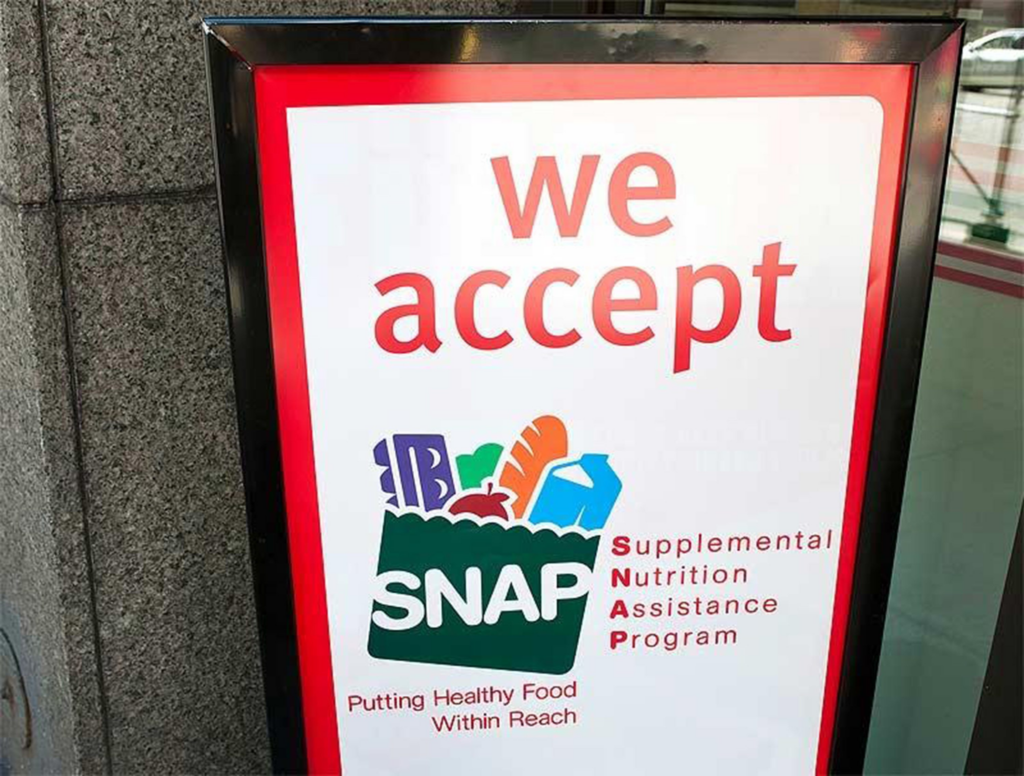
The first vision argues that the general welfare is promoted by ensuring a basic floor of support to prevent hunger and destitution. From this perspective, a law that results in 2.4 million fewer people receiving food assistance is a direct harm to the nation’s well-being.
The second vision, which this law champions, argues that the general welfare is best promoted by a society of self-sufficient, working citizens. From this viewpoint, using federal benefits to incentivize work and reduce government dependency is a long-term investment in the nation’s economic and moral health, even if it results in some individuals losing their benefits.
The Perils of “Red Tape”: A Question of Due Process
Beyond the philosophical debate, critics point to a serious practical and constitutional problem. As studies of similar state-level experiments in Arkansas have shown, many people who are working or who qualify for an exemption end up losing their benefits simply because they cannot navigate the complex and burdensome reporting requirements.
This is not just a bureaucratic flaw; it is a question of procedural due process.
The Fifth Amendment’s Due Process Clause requires that when the government creates a benefit, it must provide a fair and accessible process for citizens to claim it.
the “red tape” is so difficult to overcome that it effectively denies benefits to eligible people, it raises serious questions about whether the law is being administered in a constitutionally fair manner.

The CBO’s analysis makes the stakes of this debate clear. It found that, when combined with the bill’s massive tax cuts, the net effect of the new law will be a drop in annual income for the poorest households, while the wealthiest households will see a significant gain.
This is the ultimate consequence of the new social contract. It is not just a change in rules, but a massive redistribution of resources and a redefinition of our national priorities.