
In a legal escalation that pits the Article I legislative branch directly against Article II executive power, Senator Mark Kelly (D-Ariz.) has filed a federal lawsuit against War Secretary Pete Hegseth and the newly renamed War Department. The suit seeks to block the administration’s unprecedented move to demote the retired Navy Captain and slash his pension—a punishment levied in response to Kelly’s political speech.
The conflict, which began with a 90-second video message to troops, has now metastasized into a constitutional showdown. At its heart is a singular question: Can the Executive Branch use military regulations to punish a sitting member of Congress for statements made in their legislative capacity?
The “Unconstitutional Crusade”
The lawsuit, filed in Washington D.C., names Secretary Hegseth, Navy Secretary John Phelan, and the Department of Defense (now the War Department) as defendants. It argues that the administration’s actions “trample on protections the Constitution singles out as essential to legislative independence.”
“It appears that never in our nation’s history has the Executive Branch imposed military sanctions on a Member of Congress for engaging in disfavored political speech,” the complaint states.
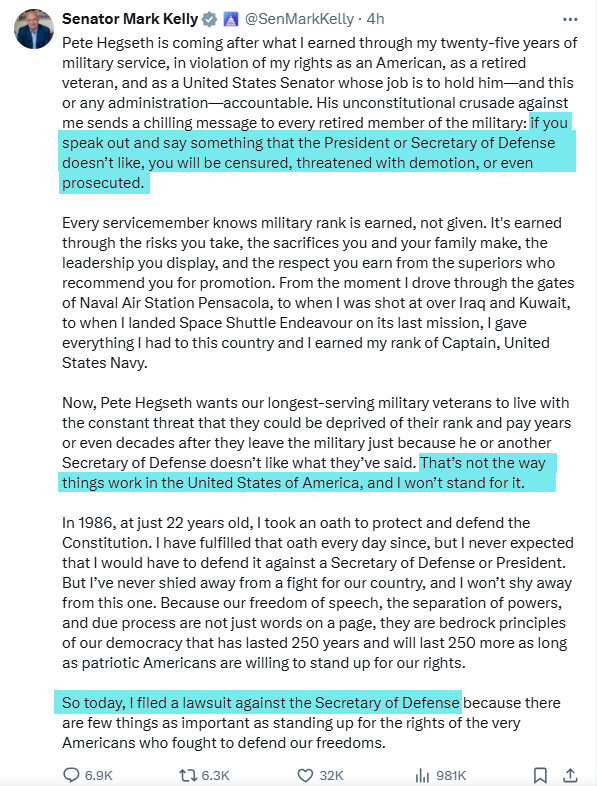
Kelly, a decorated combat pilot and astronaut, characterizes the move as an attempt to weaponize the military retirement system. In a statement on X, he warned of a “chilling message” to all veterans: “If you speak out… you will be censured, threatened with demotion, or even prosecuted.”
The Trigger: “Refuse Illegal Orders”
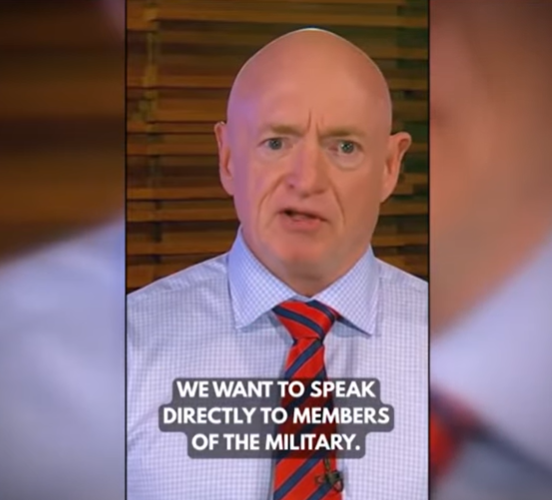
The dispute traces back to November 18, when Kelly joined five other Democratic lawmakers—all veterans or former intelligence officers—in a video message addressing fears that the military might be used for domestic deportations or political retribution.
“Our laws are clear. You can refuse illegal orders,” Kelly stated in the video.
To the administration, this was not a reminder of the Uniform Code of Military Justice (UCMJ), but an act of sedition. President Trump threatened the lawmakers with arrest, calling them “traitors.” Secretary Hegseth followed through with administrative action, issuing a letter of censure and initiating a “retirement grade determination” to reduce Kelly’s rank and pay.
The War Department maintains that Kelly’s status as a retiree keeps him subject to the UCMJ, regardless of his Senate seat. A spokesperson declined to comment on the pending litigation but reiterated that a Senate seat “does not exempt him from accountability.”
The “Golden Handcuff” Theory
Legal experts are watching this case closely because it touches on the “golden handcuff” theory of military service—the idea that a retiree remains perpetually subject to court-martial and command discipline.
If the court sides with Hegseth, it affirms that the millions of retired military personnel in the U.S.—including those in Congress—can effectively be financially penalized by the sitting administration for political speech deemed “prejudicial to good order and discipline.”
If the court sides with Kelly, it will likely establish a hard boundary protecting retired officers, especially elected officials, from retrospective military punishment.
A War of Words and Law
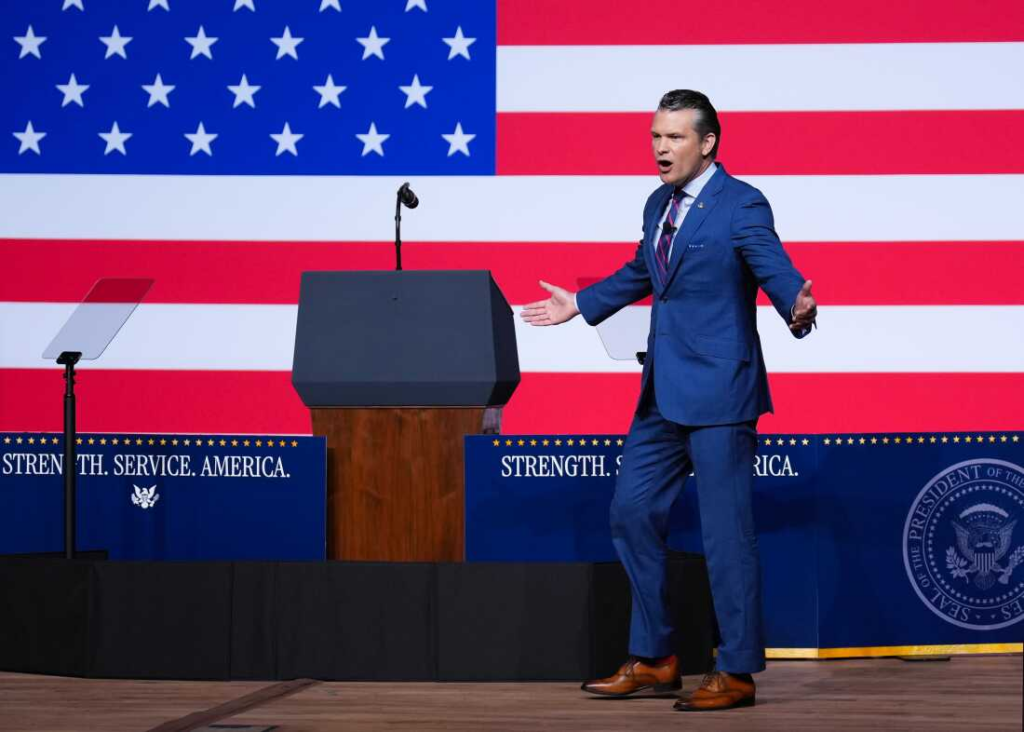
The personal animus between the two men is palpable. Hegseth has publicly mocked Kelly, even critiquing how he wears his uniform in social media posts.
Kelly, in turn, has leaned into his biography, shrugging off threats by referencing his resilience growing up in “Tony Soprano’s hometown.”
But beyond the personalities, the stakes are institutional. The lawsuit accuses the Pentagon of violating the Speech or Debate Clause, which immunizes members of Congress from being questioned in “any other place” for their legislative acts.
As the case moves to federal court, it represents one of the first major legal tests of the Trump administration’s aggressive use of executive power in its second term. For Senator Kelly, it’s a fight for his pension. For the country, it’s a fight over whether the Commander-in-Chief can court-martial his critics in Congress.