
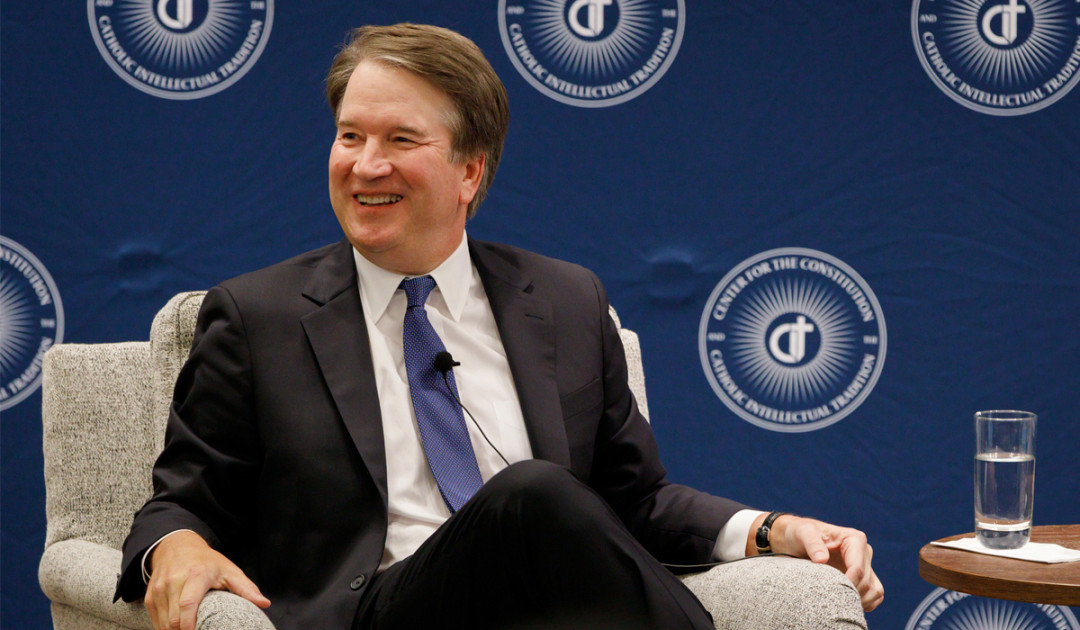
In a rare and constitutionally significant public address, Supreme Court Justice Brett Kavanaugh has provided a sober diagnosis of a problem plaguing our system of government. Speaking at a judicial conference, he explained why the Court’s controversial “emergency docket” has become so active: because presidents of both parties are increasingly trying to govern by executive fiat.
This is not a partisan complaint. It is a profound warning from a sitting justice about the health of our republic. Kavanaugh’s analysis confirms that the rise of the “imperial presidency” is having a direct and destabilizing effect on the Supreme Court itself, forcing it to make high-stakes decisions with alarming speed and limited transparency.
The “Pen and Phone” Presidency
Justice Kavanaugh’s argument was a direct critique of the modern executive branch, and he was careful to spread the blame across party lines. He noted that for the last 20 years, presidents have increasingly used executive orders and regulations to achieve their goals, bypassing the difficult work of legislating.
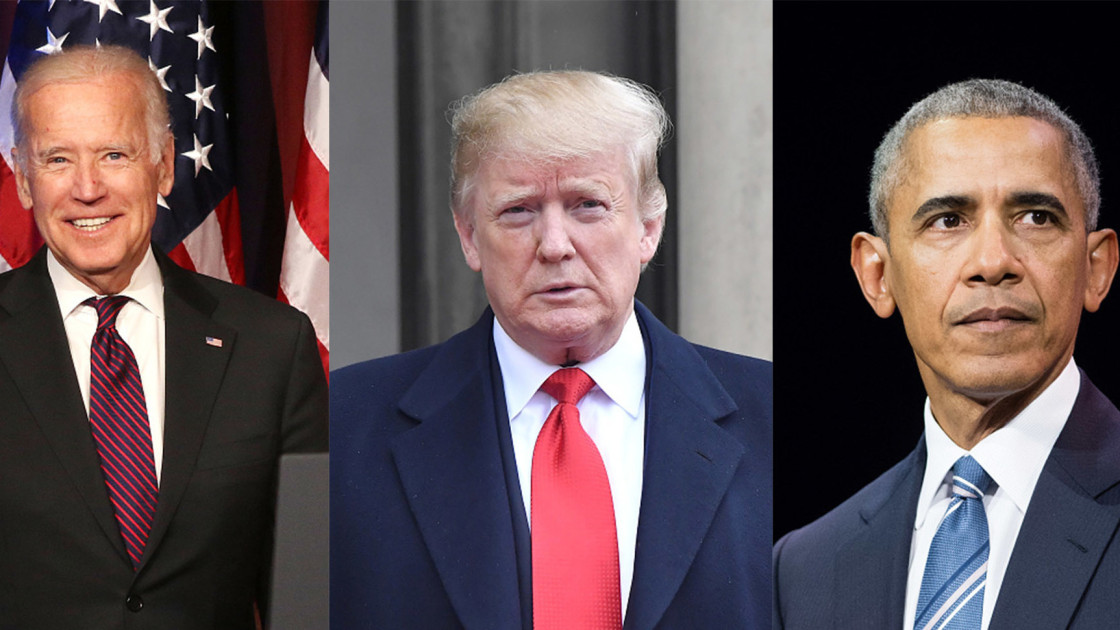
“Executive branches of both parties over the last 20 years have been increasingly trying to issue executive orders and regulations that achieve the policy objectives of the president in power,” Kavanaugh said, explicitly naming Presidents Obama, Biden, and Trump.
This is an insider’s confirmation of a dangerous trend. The executive branch has become the primary driver of major policy, a role the Constitution gives to Congress.
When a president, in President Obama’s famous phrase, turns to their “pen and phone” to act unilaterally, those actions are, as Kavanaugh noted, “challenged pretty quickly in court,” placing the judiciary at the center of a constitutional power struggle.
The Rise of the “Shadow Docket”
This flood of litigation over executive actions has led to the rise of what is known as the Supreme Court’s “emergency docket,” or “shadow docket.” This is the process by which the Court rules on urgent requests, such as pausing a lower court’s order that has blocked a major government policy.
Historically, this docket was used for rare, procedural matters. In recent years, however, it has become the venue where the fate of some of the nation’s most consequential policies is decided. Unlike regular cases, these emergency rulings are made rapidly, without public oral arguments, and often with little or no written explanation.
This lack of transparency and deliberation is a stark contrast to the Court’s traditional, careful process, and it has drawn fierce criticism. Kavanaugh’s acknowledgment that the Court is now trying to provide more written opinions for these orders shows that the justices themselves are aware of this institutional problem.
A Constitutional System Out of Balance
Justice Kavanaugh’s diagnosis reveals a constitutional system that is dangerously out of balance. The crisis of the shadow docket is a symptom, not the disease itself.
The disease is a dysfunctional legislative branch that, through gridlock and inaction, has delegated too much of its constitutional lawmaking power. This has created a power vacuum that ambitious executive branches, of both parties, have been all too eager to fill with unilateral action.
This leaves the judicial branch in an impossible position. The Supreme Court is now forced to act as an emergency referee, making snap judgments on massive, society-altering policies that should have been carefully debated and compromised within Congress.
This places the Court in a dangerously powerful and politically vulnerable position, forcing it to intervene in political battles that it was never designed to resolve.
While Justice Kavanaugh’s comments on the Court’s internal “collegiality” are reassuring, his diagnosis of the external pressures upon it is a grave warning. The rise of a powerful “shadow docket” is a direct reflection of a government where the executive branch acts, the judicial branch reacts, and the legislative branch is increasingly sidelined. This is not the balanced system the framers designed, and Justice Kavanaugh’s rare public reflection is a constitutional alarm bell that all three branches, and the American people, should heed.