
In a stunning and controversial turn, a New York judge has thrown out the top charges against Luigi Mangione, the man accused of assassinating UnitedHealthcare CEO Brian Thompson. As the legal case against him was weakened inside the courtroom, a passionate and defiant protest erupted outside, with supporters hailing him as a revolutionary hero.
The scene in Manhattan on Monday was a jarring spectacle. It showcased a justice system grappling with a high-profile murder and a growing, radical movement that sees the alleged killer not as a criminal, but as a symbol of their rage against corporate America.
This case is no longer just about one man and one crime. It has become a flashpoint for a nation’s anger and a profound test of the rule of law in an era of extreme social and political division.
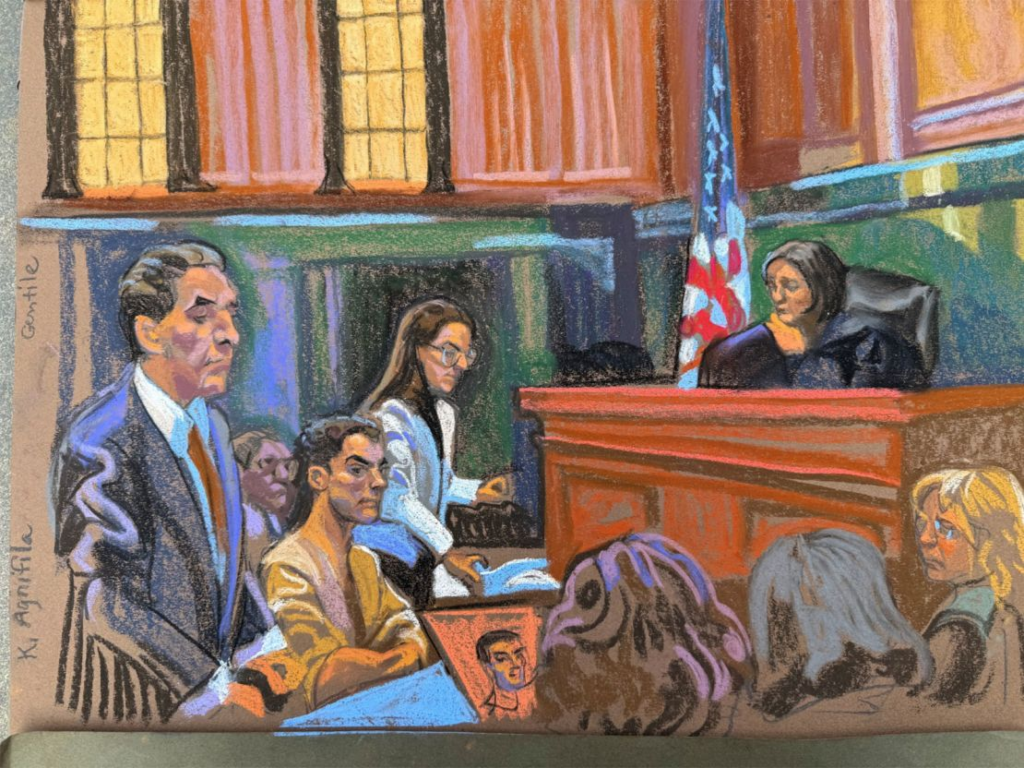
At a Glance: The Luigi Mangione Case
- What’s Happening: A New York judge has dismissed the state terrorism and murder as a political act charges against Luigi Mangione, the man accused of killing UnitedHealthcare CEO Brian Thompson. The standard murder charge remains.
- The Court’s Reasoning: The judge ruled that while the act was horrific, prosecutors had not met the high legal bar to prove the killing was intended to coerce or intimidate a civilian population, a key element of a terrorism charge.
- The Reaction: A large and organized group of supporters rallied outside the courthouse, holding signs like “Luigi Did Nothing Wrong” and hailing him as a folk hero.
- The Constitutional Issue: The ruling highlights the strict legal definitions and high burden of proof required by the Due Process Clause to secure a conviction, especially for a charge as serious as terrorism. It also underscores the First Amendment rights of supporters to protest, even in support of a very controversial defendant.
A Stunning Setback for Prosecutors
The most severe charges against Luigi Mangione have been thrown out. In a pre-trial ruling, a New York judge dismissed the counts of terrorism and murder as an act of terrorism.
The decision is a massive blow to the Manhattan District Attorney’s office, which had sought to frame the killing of Brian Thompson not as a simple homicide, but as a calculated political statement designed to terrorize the corporate world.

The judge reasoned that while Mangione’s alleged actions were clearly premeditated and horrific, the prosecution had not presented enough evidence to show that his motive met the specific, narrow legal definition of terrorism – an act intended to coerce or intimidate a civilian population or influence the policy of a unit of government.
Mangione still faces the top charge of second-degree murder, which carries a potential sentence of life in prison. But the removal of the terrorism charge fundamentally changes the nature of the case.
A Martyr in the Making
As the legal drama unfolded inside, a shocking and passionate display of support took place on the courthouse steps.
Hundreds of protesters, organized under the banner of an anti-corporate, anti-healthcare industry movement, rallied in support of Mangione. They held signs with slogans like “Healthcare Delayed is Healthcare Denied” and “Luigi Did Nothing Wrong.” To his supporters, Mangione is not a murderer; he is a folk hero who took a stand against a “predatory” and “exploitative” healthcare system.
“The scene outside the courthouse was a stark illustration of a growing and radical sentiment: that acts of violence against corporate leaders are not crimes, but a form of revolutionary justice.”
This movement, which has grown online since Mangione’s arrest, views the killing of Brian Thompson as a justified, if extreme, response to the perceived injustices of the American healthcare insurance industry.

The Constitutional Guardrails: Due Process and Free Speech
The day’s events are a powerful, if jarring, demonstration of two core constitutional principles at work.
Inside the courtroom, the judge’s decision to dismiss the terrorism charges is a direct application of the Fifth and Fourteenth Amendments’ guarantee of Due Process of Law. The rule of law demands that the prosecution must meet a high burden of proof for every element of a charged crime. The judge’s ruling, however controversial, is an affirmation that even in a case with an admitted killer and immense public outrage, the state must follow the rules.
Outside the courtroom, the passionate protest is an exercise of the First Amendment’s protection of free speech and assembly. The Constitution protects the right of citizens to voice their opinions, even opinions that are deeply disturbing to the mainstream and appear to celebrate a violent act.
“This case has become a stress test for the Constitution itself, which must simultaneously guarantee a fair trial for the accused inside the courthouse while protecting the right of his supporters to praise his alleged crimes on the steps outside.”
A Nation’s Anger on Trial
The legal case against Luigi Mangione will now proceed as a murder trial. But the movement he has inspired has transformed this case into something much larger.
The proceedings are no longer just about the guilt or innocence of one man. The trial will also be a public indictment of the American healthcare system and a focal point for a generation’s rage against corporate power.
The challenge for the constitutional system of justice will be to provide a fair and impartial trial for a defendant who, in the eyes of a growing and radical movement, has already been declared a hero.