
In a high-stakes bid to end a dramatic political standoff, the state of Texas went to court in Illinois, asking a judge to do something extraordinary: to authorize the arrest of another state’s elected officials.
The judge’s answer was a swift and decisive “no.”
This ruling is more than just a temporary victory for the fugitive Texas Democrats who have camped out in Illinois to block a Republican-led redistricting effort. It is a powerful lesson in the constitutional principles of federalism and a firm declaration that the legal power of one state ends at its own border.
The Texas Standoff
- What’s Happening: An Illinois judge has blocked Texas from enforcing its civil arrest warrants against the Democratic lawmakers who fled the state to prevent a vote on a new congressional map.
- The Ruling: The judge ruled his court has no jurisdiction, and the Texas warrants have no legal power outside of Texas’s geographical boundaries.
- The Immediate Impact: The Democrats have successfully run out the clock on the current special legislative session, blocking the GOP’s redistricting map – for now.
- The Constitutional Issue: A major test of Federalism and the limits of the Full Faith and Credit Clause, affirming that one state’s internal legislative orders are not automatically enforceable in another.
A Court Without Jurisdiction
The legal maneuver by Texas Attorney General Ken Paxton was a long shot from the start. He asked an Illinois court to give full legal force to the civil arrest warrants issued by the Texas House Speaker, and to allow Texas law enforcement to operate in Illinois to bring the lawmakers home.
In his order, Illinois Judge Scott Larson denied the request, stating that his court simply lacked the “subject matter jurisdiction” to intervene in the internal affairs of the Texas legislature.
He ruled that the Texas warrants are “geographically limited” and have no legal authority in Illinois. An Illinois court, he wrote, has no power to order its own law enforcement officers to execute another state’s civil warrants.
The Constitutional Firewall: Federalism and State Borders
This case is a powerful, real-world lesson on the constitutional principle of federalism. While we are one nation, we are also a union of 50 sovereign states, each with its own legal authority that is generally limited by its borders.
Texas’s argument was an attempt to stretch the Full Faith and Credit Clause of the Constitution (Article IV, Section 1). This clause requires states to honor the “public Acts, Records, and judicial Proceedings” of other states – for example, recognizing a driver’s license, a marriage certificate, or a civil court judgment.
“At its core, the judge’s ruling is a powerful affirmation of state sovereignty. It establishes that the legal arm of Texas is not long enough to reach across state lines and compel action in Illinois.”
However, Judge Larson’s ruling affirms the long-standing legal interpretation that this clause does not turn one state’s police force into the enforcement arm for another state’s legislature. An internal, civil warrant to compel attendance is not the same as a criminal warrant or a final court judgment that must be honored across state lines.
A Temporary Victory in a Long War
For the Texas Democrats, this ruling is a major tactical victory. By remaining in exile, they have successfully run out the clock on the 30-day special session, killing the Republican redistricting bill for now.
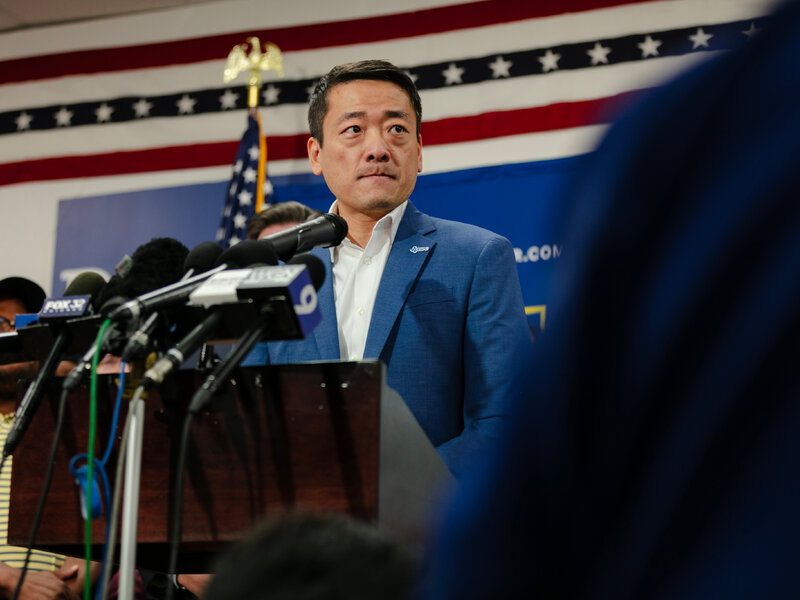
They have used their time in the national spotlight to, in the words of caucus chair Rep. Gene Wu, “wake up America” to the issue of partisan gerrymandering.
But the war is far from over. Governor Greg Abbott has already vowed to call a new special session, resetting the clock and forcing the Democrats into a difficult war of attrition. They will have to decide how long they can remain fugitives from their own legislature as the political and financial pressure continues to mount.
The Weaponization of the Rules
This entire episode – from the quorum-bust to the failed out-of-state legal gambit – is a symptom of a political system under extreme stress.
With the Supreme Court having largely stepped back from policing partisan gerrymandering, the battle for political power has devolved into a raw conflict where every available procedural and constitutional tool is used as a weapon.
The Illinois judge’s ruling has clarified one rule of engagement – a state’s power ends at the border. But the larger, brutal fight over who gets to draw the maps that will determine a decade of political power is far from over.