
A massive new federal tax law signed in Washington is now causing a powerful aftershock in state capitals across the country.
In direct response to the Trump administration’s sweeping tax and spending cuts, a growing number of blue states are pushing back. They are preparing to raise taxes on their wealthiest residents in a move that will fund their social programs and directly counter the fiscal policy of the White House.
This is more than a partisan squabble. It is a fundamental constitutional showdown over the power to tax and a high-stakes economic experiment that will test the very limits of federalism.
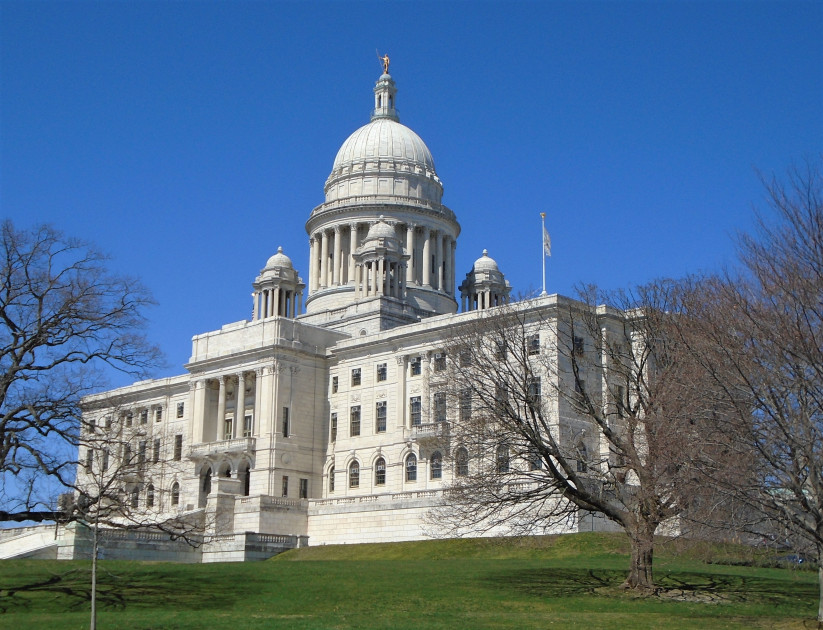
The Blue State Tax Push At A Glance
- What’s Happening: Several Democrat-led states are enacting or proposing new taxes targeting wealthy residents and high-value property.
- Why: They are responding to President Trump’s new federal tax and spending law, which cut some federal aid to states and is expected to increase demand for state-funded social services like Medicaid.
- Examples: Rhode Island’s new tax on million-dollar vacation homes (the “Taylor Swift tax”), Maryland’s income tax hike, and Washington’s capital gains tax increase.
- The Constitutional Issue: A classic display of Federalism. The federal government and state governments are using their separate, concurrent powers to tax to pursue opposing policy goals.
The ‘Taylor Swift Tax’ and a Wave of Blue State Hikes
The most talked-about of these new policies has been nicknamed the “Taylor Swift tax.” The state of Rhode Island has enacted a new levy specifically on vacation homes valued at over $1 million.
The pop star’s prominent $17 million beachfront mansion in the state makes her the most famous example of the type of property owner who will be affected.

But Rhode Island is not alone. The moves are part of a broader trend:
- Maryland has enacted a new income tax hike on residents earning over $500,000 a year.
- Connecticut is considering similar legislation to raise income taxes on its highest earners.
- Washington state recently passed a budget that raises its capital gains tax – a tax on profits from selling assets like stocks and bonds – from 7% to 9%.
A Reaction to Washington’s New Reality
This is not happening in a vacuum. Every one of these state tax hikes is a direct and calculated response to the new fiscal reality created by the passage of President Trump’s “One Big Beautiful Bill Act.”
That federal law permanently extended the 2017 tax cuts while also making significant cuts to federal spending on domestic programs, including the federal share of Medicaid funding.
Blue state leaders argue they are now facing a dual pressure: they will receive less money from Washington while simultaneously facing a greater need for state-funded social services. They see raising taxes on their wealthiest residents as the only responsible way to fill that gap and fund their priorities.
“This isn’t happening in a vacuum. Every one of these state tax hikes is a direct and calculated response to the new fiscal reality created by the federal government.”
## The Constitutional Power to Tax: A Tale of Two Sovereigns
This entire situation is a perfect illustration of federalism in action. The power to “lay and collect taxes” is what is known as a “concurrent power” under the U.S. Constitution – a power held by both the federal government and the state governments simultaneously.
The Tenth Amendment reserves for the states all powers not delegated to the federal government, and the power of direct taxation on property and income is a core state power.
What we are witnessing is the constitutional system working exactly as designed, however contentiously. The federal government, under Republican control, is using its taxing power to pursue a low-tax, smaller-government agenda. At the same time, blue states, under Democratic control, are using their constitutional taxing power to pursue a progressive, social-safety-net agenda.
“This is a perfect illustration of federalism in action. Two sovereign governments – federal and state – are using their shared constitutional power to tax to drive policy in opposite directions.”
## The Risk of ‘Tax Flight’
There is a powerful economic check on the states’ power to tax: the risk of “tax flight.”
Because the Constitution’s Commerce Clause creates a single, unified American market, citizens and capital can move freely between states. This forces states into a form of competition.

History has shown that if a state’s taxes become too high, its wealthiest residents and largest corporations may simply leave. The recent departure of Amazon founder Jeff Bezos from high-tax Washington to no-income-tax Florida is a prime example of this phenomenon. This risk of losing their tax base is the primary argument used by opponents of the new blue state tax hikes.
The Great American Experiment
The wave of blue state tax hikes is the beginning of a massive, real-world experiment in American federalism. It pits two competing economic and social visions directly against each other.
Can high-tax states successfully fund a robust social safety net without driving away the very taxpayers they need to fund it? Or will these policies accelerate an economic flight to the low-tax Sun Belt? The results of this experiment, playing out from Rhode Island to Washington state, will have profound implications for the future of both progressive and conservative governance in a deeply divided nation.