
When the clock strikes midnight on September 30, the United States government may, once again, shut down. The word “shutdown” has become a familiar part of our political vocabulary, a recurring threat in our bitterly divided politics.
But what does it actually mean? How did we get to a place where closing the government became a routine political weapon?
This is more than just a story about politics. It’s a story about the immense, real-world consequences that unfold when the constitutional process of funding the government breaks down, impacting everything from our national security to the lives of the millions of federal workers who serve the nation.
Government Shutdowns Explained
- What it is: A government shutdown happens when Congress fails to pass, and the President fails to sign, the necessary appropriations bills to fund government operations.
- How Often: There have been 10 government shutdowns involving furloughs of federal workers since 1980. The longest was 35 days in 2018-2019.
- National Security Impact: “Essential” national security personnel – including active-duty military, many FBI agents, and border patrol – remain on the job but may have to work without pay. However, intelligence analysis, long-term planning, and support functions can be severely disrupted.
- Government Worker Impact: Hundreds of thousands of “non-essential” federal workers are furloughed, meaning they are sent home without pay. While Congress has historically approved back pay, the financial uncertainty and stress are immense.
- The Constitutional Issue: A shutdown is a failure of Congress’s most basic Article I duty: to exercise its “power of the purse.” It has become a high-stakes weapon in the separation of powers battle between Congress and the President.
A Brief History of a Modern Weapon
For the first 190 years of American history, government shutdowns were virtually unheard of. So what changed?
The modern shutdown era began in 1980 after a new, stricter interpretation of a 19th-century law called the Antideficiency Act. Before this, if a funding lapse occurred, agencies would often continue operating at a reduced level. But a series of legal opinions by then-Attorney General Benjamin Civiletti established a new, hard rule: with no appropriation from Congress, a federal agency must cease operations, except in emergencies involving the safety of human life or the protection of property.
This transformed a funding gap from a bureaucratic headache into a full-blown crisis, and in doing so, it handed a powerful new weapon to political combatants in Washington.
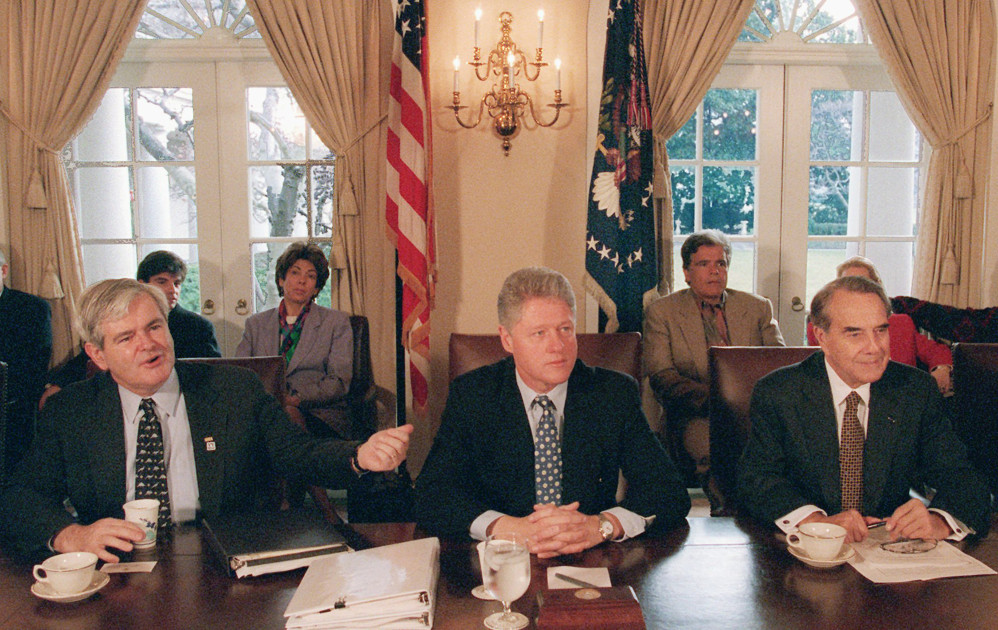
The most famous historical examples were the shutdowns of 1995-1996, a major showdown between Republican House Speaker Newt Gingrich and President Bill Clinton over spending cuts, and the 2013 shutdown, led by Senator Ted Cruz in a failed attempt to defund the Affordable Care Act. The longest shutdown in history was the 35-day standoff in 2018-2019 over President Trump’s demand for border wall funding.
What Does a Shutdown Mean for National Security?
A common misconception is that the entire government closes. That is not the case. Critical functions related to national security and public safety are deemed “essential” and continue.
Active-duty military personnel remain at their posts around the world. FBI agents continue to investigate threats. TSA officers still screen passengers at airports, and Border Patrol agents still patrol the border.
However, a shutdown creates a cascade of dangerous problems.
First, while these essential employees are required to work, they do not get paid during the shutdown. This creates immense financial strain and morale problems for the very people tasked with keeping the country safe.
Second, the support systems they rely on begin to crumble. Civilian analysts, maintenance crews, administrative staff, and intelligence support are often deemed “non-essential” and are furloughed. This can slow down intelligence gathering, halt long-term strategic planning, and degrade military readiness.
A government shutdown is a self-inflicted wound to our national security. It forces our military and law enforcement to operate with one hand tied behind their back, all while telling them they won’t get a paycheck for their trouble.

What Does a Shutdown Mean for Government Workers?
For the hundreds of thousands of federal employees deemed “non-essential,” a shutdown is a personal financial crisis.
They are furloughed – a bureaucratic term that means they are legally barred from working and are sent home without pay. This affects everyone from scientists at the NIH and park rangers at our National Parks to administrative staff at the Social Security Administration.
While Congress has, in every past shutdown, eventually passed legislation to provide back pay to furloughed workers, the immediate consequences are severe. Families are left unable to pay their rent, mortgages, and grocery bills. The financial and emotional stress is immense.
“During a shutdown, hundreds of thousands of public servants are treated like pawns in a political chess match, their livelihoods held hostage to a Beltway power struggle.”
The long-term effect is a crisis in recruitment and retention. Talented individuals become reluctant to pursue a career in public service when they know their paycheck can be turned off at a moment’s notice due to a political fight in which they have no part.