
In a federal courtroom in Virginia, a hearing meant to discuss the legal details of an indictment turned into an extraordinary inquisition into the integrity of the Department of Justice itself.
U.S. District Judge Michael Nachmanoff did not just weigh arguments; he grilled the government’s lawyers, openly questioning whether the new U.S. Attorney leading the case against former FBI Director James Comey was acting as a “puppet” for President Donald Trump.
This explosive hearing has thrown the prosecution of Comey into chaos. It has also laid bare a profound constitutional crisis over the independence of federal prosecutors and the potential weaponization of the justice system.
At a Glance: The Comey Hearing
- What’s Happening: A federal judge has raised serious doubts about the indictment of James Comey, questioning whether it was properly presented to a grand jury.
- The ‘Puppet’ Question: The judge asked if interim U.S. Attorney Lindsey Halligan, a Trump appointee with no prior prosecutorial experience, was acting as a “stalking horse” for the President’s political vendetta.
- The Indictment Flaw: It was revealed that the final indictment document was never shown to the full grand jury, a procedural error that Comey’s lawyer argues invalidates the entire case.
- The Constitutional Issue: A major test of Prosecutorial Independence and the Fifth Amendment’s guarantee of due process, pitting the President’s power to appoint prosecutors against the requirement for impartial justice.
A ‘Puppet’ for the President?
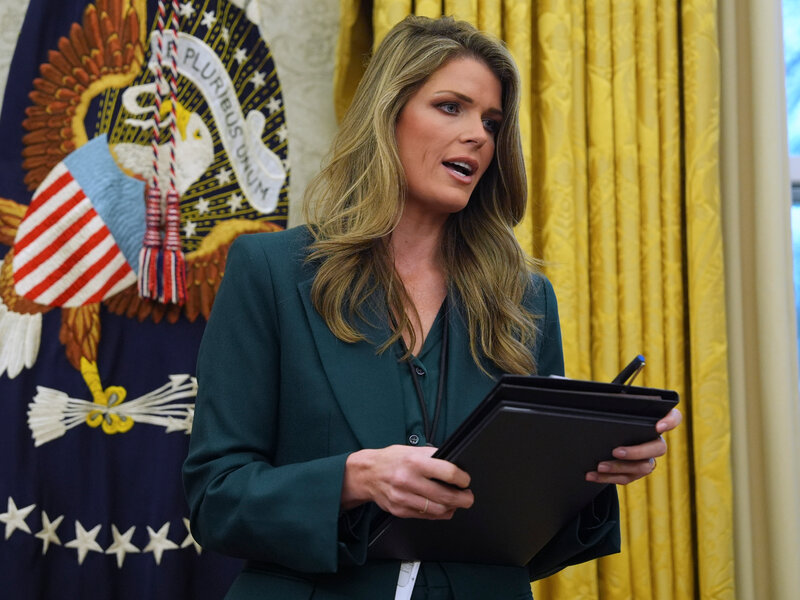
The most dramatic moment of the hearing came when Judge Nachmanoff turned his attention to the prosecutor herself, Lindsey Halligan.
Halligan, a former insurance lawyer and White House aide, was appointed by President Trump as interim U.S. Attorney in September, just days before she secured the indictment against Comey. She had no prior experience as a prosecutor.
Judge Nachmanoff asked Comey’s defense attorney, Michael Dreeben, if he believed Halligan was a “puppet” or a “stalking horse” for the President.
“What independent evaluation could she have done [in four days]?” – U.S. District Judge Michael Nachmanoff
Dreeben argued that Halligan was indeed operating at the direction of the President, citing Trump’s social media posts demanding immediate action against his political enemies. “We can’t delay any longer,” Trump wrote days before the indictment. “JUSTICE MUST BE SERVED, NOW!!!”
The Missing Indictment
Beyond the political questions, the hearing revealed a stunning procedural failure that could sink the entire case.
Under questioning, Halligan admitted that the grand jury had rejected one of the three original charges against Comey. She then signed a second, revised indictment with only two charges. However, this new document was never presented to the full grand jury for a vote.
Comey’s lawyer seized on this, arguing that because the grand jury never saw or voted on the actual document that charged him, “there is no indictment.”
“The revelation that the grand jury never voted on the final indictment is a stunning procedural error. In the federal system, the grand jury is the ultimate check on a prosecutor’s power. If they didn’t approve the specific charges, the case has no constitutional foundation.”
The Constitutional Stakes: Vindictive Prosecution
The core of Comey’s defense is not just technical; it is constitutional. His lawyers are arguing that the entire case is a “vindictive prosecution” – a violation of the Fifth Amendment’s Due Process Clause.
They contend that the charges were brought not because of evidence, but to punish Comey for his past actions against the President. They point to the timeline: the ousting of the previous U.S. Attorney who refused to bring charges, the appointment of a loyalist with no experience, and the President’s public demands for an indictment.
If the judge agrees, he could dismiss the case entirely, ruling that the executive branch cannot use its prosecutorial power as a tool of political retribution.
A Case on the Brink
Judge Nachmanoff did not issue a ruling from the bench, ordering more briefings on the validity of the indictment. But his skepticism was palpable.
The hearing has transformed the case from a prosecution of James Comey into a trial of the Justice Department’s own conduct. The judge’s questions have exposed deep cracks in the government’s case and raised the possibility that the indictment could be tossed out before a jury ever hears a word of testimony.