
The White House didn’t wait for the government shutdown to decide which federal agencies would face mass firings. Officials had already compiled a target list before midnight on October 1, and they’re prepared to announce layoffs as soon as this weekend – possibly tomorrow.
The list was assembled by the Office of Management and Budget in coordination with targeted agencies. President Trump met with OMB Director Russell Vought on Thursday to finalize which cuts will be temporary and which will be permanent. The number of federal workers facing termination is “likely going to be in the thousands,” according to White House press secretary Karoline Leavitt.
This isn’t about budget necessity during a shutdown. This is about using the shutdown as political cover to eliminate agencies Trump views as obstacles to his agenda.
The Agencies Already in the Crosshairs
Some agencies are being targeted because of their diversity, equity and inclusion policies, White House officials told CNN. But most are on the list because “the administration doesn’t think they align with the president’s priorities.”
“We’re looking at agencies that don’t align with the president’s values” and “that we feel are a waste of the taxpayer dollar,” Leavitt told reporters Thursday.
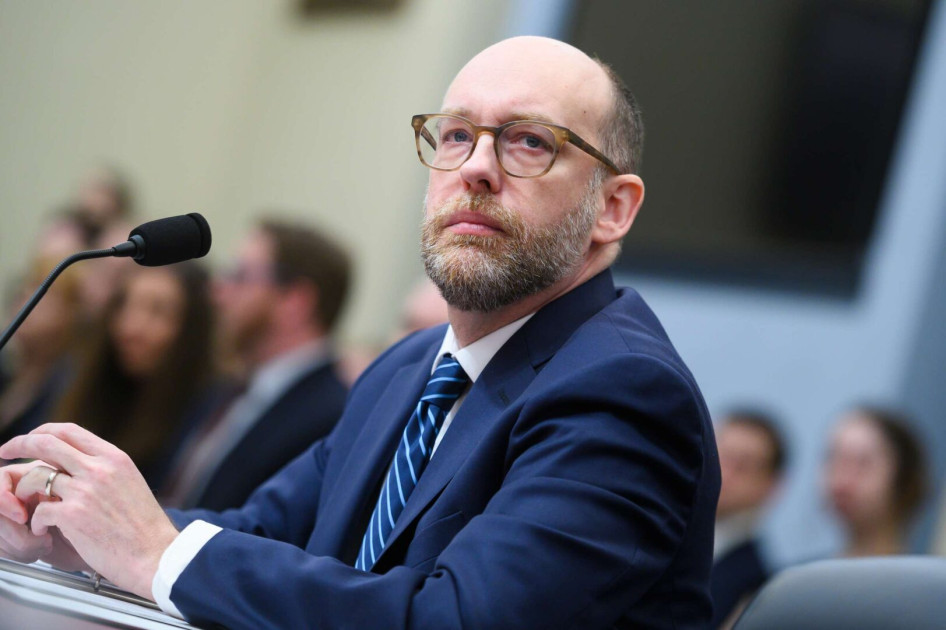
Trump was explicit about his targeting criteria in a Truth Social post Thursday morning: “I have a meeting today with Russ Vought, he of PROJECT 2025 Fame, to determine which of the many Democrat Agencies, most of which are a political SCAM, he recommends to be cut, and whether or not those cuts will be temporary or permanent.”
The characterization of federal agencies as “Democrat Agencies” reveals how Trump views the civil service – not as nonpartisan institutions implementing congressionally approved programs, but as political opponents whose existence depends on whether they support his priorities.
Vought told House Republicans privately that mass layoffs would target agencies that don’t align with presidential priorities and would occur within one to two days. That timeline has arrived. The list exists. Announcements could come as early as Friday.
The Timing That Exposes the Strategy
The White House prepared this target list before the shutdown began. That means Trump’s team was planning mass federal firings regardless of whether Democrats agreed to Republican funding demands.
The shutdown didn’t create the layoff plan – it provided political justification for executing a plan that already existed.
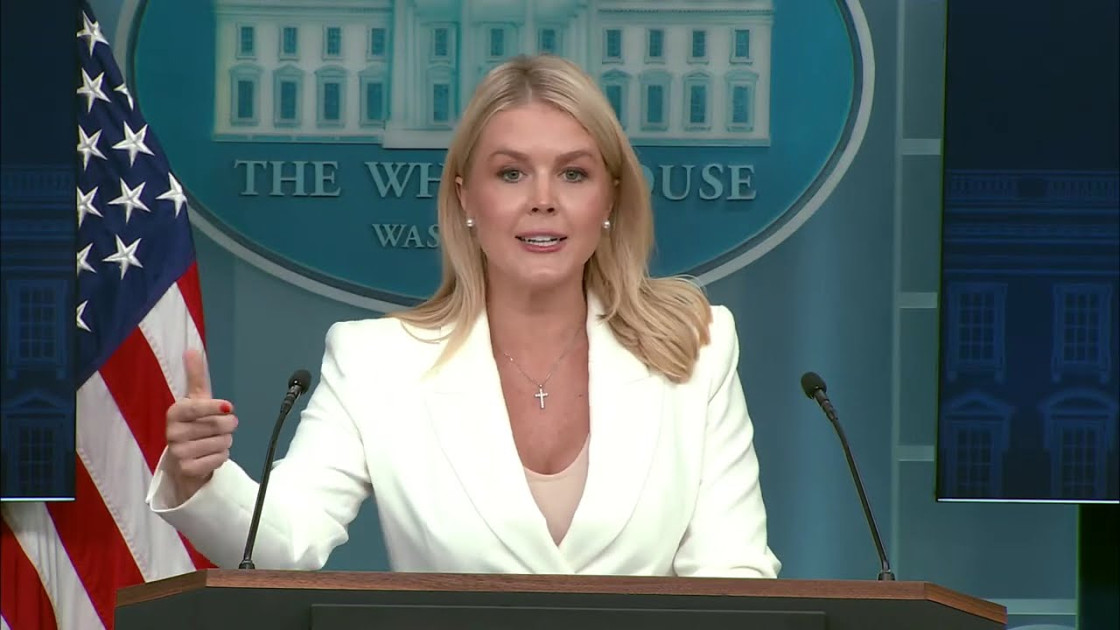
When Leavitt was asked during a Fox News appearance whether Trump’s threats of cuts were just a negotiating tactic, she responded: “Oh, it’s very real.”
House Speaker Mike Johnson echoed this message Thursday, arguing that Trump has constitutional authority during shutdowns to lay off federal workers and withhold funding for congressionally approved projects. “When Congress turns off the funding and the funding runs out, it is up to the commander in chief, the president of the United States, to determine how these resources will be spent,” Johnson said.
That’s a dramatic expansion of presidential power during shutdowns. Previous administrations furloughed non-essential workers temporarily, with the expectation they’d return once funding resumed. Trump is claiming authority to permanently eliminate positions and agencies because Congress failed to pass a continuing resolution.
The constitutional basis for that authority is questionable. Congress appropriates funds and creates agencies. The president executes congressional directives. Shutdowns happen when Congress fails to appropriate funds – not when presidents decide which congressionally created agencies they want to eliminate.
But Trump is testing whether anyone will stop him from using shutdown leverage to restructure the federal government according to his preferences rather than congressional authorization.
What Happens When Federal Workers Get Partisan Emails From Their Bosses
Some furloughed Department of Education workers discovered that out-of-office messages blaming Democrats for the shutdown were automatically sent from their email accounts without their consent or knowledge, according to four sources familiar with the situation. Workers at other agencies said they received suggested language.
The Department of Health and Human Services confirmed Thursday that employees were instructed to blame Democrats in their out-of-office messages. According to HHS’s director of communications: “Employees were instructed to use out-of-office messages that reflect the truth: Democrats have shut the government down.”
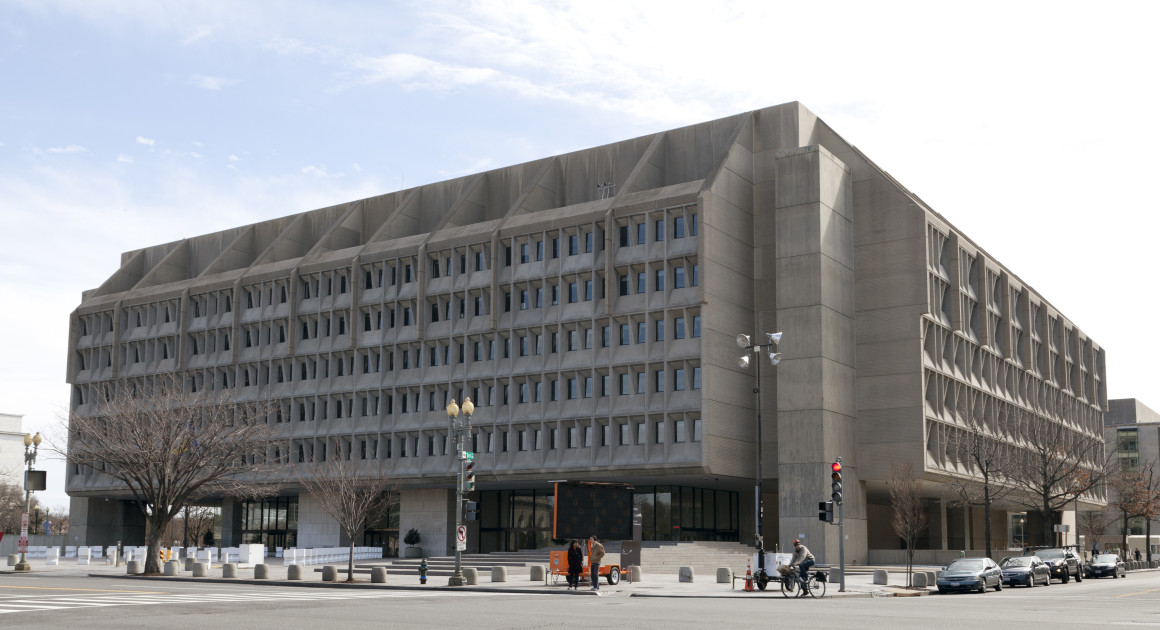
Federal workers at the Small Business Administration received “suggested” language encouraging them to take partisan positions blaming Senate Democrats for the shutdown. Some federal employees believe these instructions violate the Hatch Act, which prohibits federal officials and employees from engaging in partisan political activity in their official capacity.
The Hatch Act exists to “protect federal employees from political coercion in the workplace,” according to the Office of the Special Counsel. Requiring furloughed workers to send partisan messages from government email accounts appears to be exactly the kind of political coercion the law prohibits.
But enforcement depends on whether anyone files complaints and whether the Office of Special Counsel pursues them. During Trump’s first term, Hatch Act violations by senior officials generated reports and criticism but rarely consequences. Trump’s second term appears to be operating on the assumption that Hatch Act restrictions are suggestions rather than enforceable law.
Federal workers facing potential permanent termination are unlikely to file complaints about being forced to send partisan emails. The choice between violating the Hatch Act or losing your job isn’t really a choice when the people ordering Hatch Act violations are the same people deciding who gets fired.
The White House Briefing Room That’s Playing Meme Videos Mocking Democrats
While federal workers face unemployment and military families wonder when paychecks will arrive, the White House briefing room is playing meme videos mocking Democratic leaders on loop as reporters work or walk past to their desks.
One clip shows “a day in the life of a Democrat who was asked to keep the government open,” featuring Michael Scott from “The Office.” Another shows House Minority Leader Hakeem Jeffries and Senate Minority Leader Chuck Schumer “searching for the common sense they lost.”
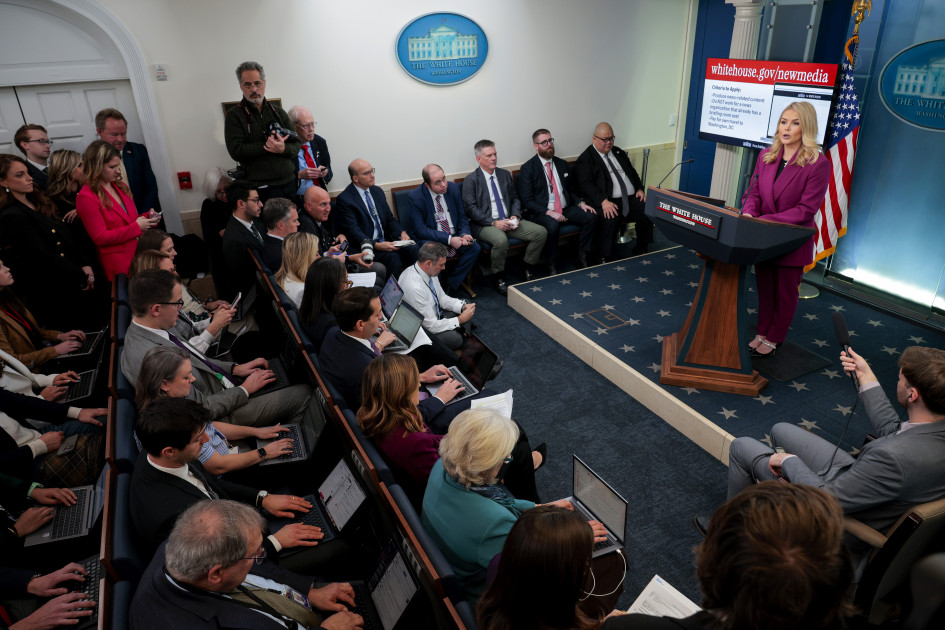
The White House continues falsely claiming that Democrats want to give free healthcare to undocumented immigrants, depicted in another meme portraying Schumer as a character from comedian Tim Robinson’s show “I Think You Should Leave.”
When asked about Trump sharing racist AI-generated images of Jeffries wearing a sombrero, Vice President JD Vance said he found it funny and that Trump “was joking” and having “a little bit of fun.” House Speaker Mike Johnson advised Jeffries to “just ignore it.”
“These are games. These are sideshows,” Johnson said. “To my friend Hakeem, who I was asked about: Man, just ignore it. Don’t respond to it.”
The juxtaposition is stark. Federal workers are being fired by the thousands based on whether their agencies “align with the president’s values.” Military troops will miss paychecks starting October 15 if the shutdown continues. Air traffic controllers work without pay while wondering how they’ll cover medical bills and student loans.
And the White House is playing comedy sketches mocking the Democratic leaders whose refusal to accept Republican funding terms is being used to justify all of it.
When Troops Miss Paychecks But Congress Doesn’t
More than 200,000 military officers and personnel will go without pay during the shutdown, Homeland Security Secretary Kristi Noem said. If Congress doesn’t pass funding before October 15, troops will miss their first paycheck. If the shutdown extends to October 28, they receive no pay at all.
Air traffic controllers are working without compensation. Nick Daniels, president of the National Air Traffic Controllers Association, described the shutdown as an “unnecessary distraction” that creates financial stress for workers trying to do safety-critical jobs.

“They’re also thinking about, ‘I have medical bills I need to pay, student loans I need to pay off,’” Daniels told CNN. “Not being able to plan and having that burden, that stress on you, absolutely does not put an air traffic controller in a position to go in and do the amazing work that they are expected to do every single day.”
FAA funding officially lapsed at midnight Thursday. The longer the shutdown continues, the more financial pressure accumulates for essential workers who must report for duty without paychecks.
Meanwhile, members of Congress continue receiving their $174,000 annual salaries without interruption. The Twenty-Seventh Amendment prevents congressional pay from being varied before the next election, which means senators and representatives keep getting paid while federal workers lose income.
There’s a House bill – the Pay Our Troops Act of 2026 – that would continue military pay appropriations during shutdowns. It has 91 cosponsors including 68 Republicans and 28 Democrats. Lawmakers were unable to push it through before funding lapsed.
Protecting military pay during shutdowns has bipartisan support. Actually passing the legislation to do it apparently doesn’t have enough urgency to overcome procedural obstacles before the deadline.
The Services That Stop While Agencies Get Targeted
National parks have closed across the country during peak fall tourism season. Alcatraz, Carlsbad Caverns, Muir Woods, and the Washington Monument are inaccessible. The National Parks Conservation Association estimates parks could lose $1 million daily in fee revenue while surrounding communities lose $80 million.

In Western North Carolina and Eastern Tennessee, the government shutdown presents new challenges for tourism at Great Smoky Mountains National Park and Blue Ridge Parkway – areas still recovering from Hurricane Helene’s devastation just over a year ago. While main roadways remain open, visitor centers and picnic areas are closed.
The shutdown is even stopping high school football games at Department of Defense schools on U.S. military bases. At least four games scheduled for Friday in the Pacific have been postponed because extracurricular activities aren’t considered essential. All sports – even practices – have stopped at Defense Department schools worldwide, according to Stars and Stripes.
“I feel bad for the student-athletes who have been working hard and improving to have to essentially sit on the sidelines,” Zama High School coach Shawen Smith in Japan told the newspaper.
Classes continue. Sports don’t. Because funding determinations during shutdowns are made by people whose children don’t attend schools affected by those determinations.
What Senate Leaders Are Actually Saying About Ending This
Senate Majority Leader John Thune said Thursday it’s “unlikely” the Senate will stay in town over the weekend. Senators will vote Friday on the GOP-backed funding bill that Democrats have already blocked three times. If that fails again, “they can have the weekend to think about it, we’ll come back, we’ll vote again on Monday,” Thune said.
The House isn’t in session and won’t return until next week. So the shutdown is guaranteed to extend at least into Monday, probably longer, with no indication either party is prepared to compromise.
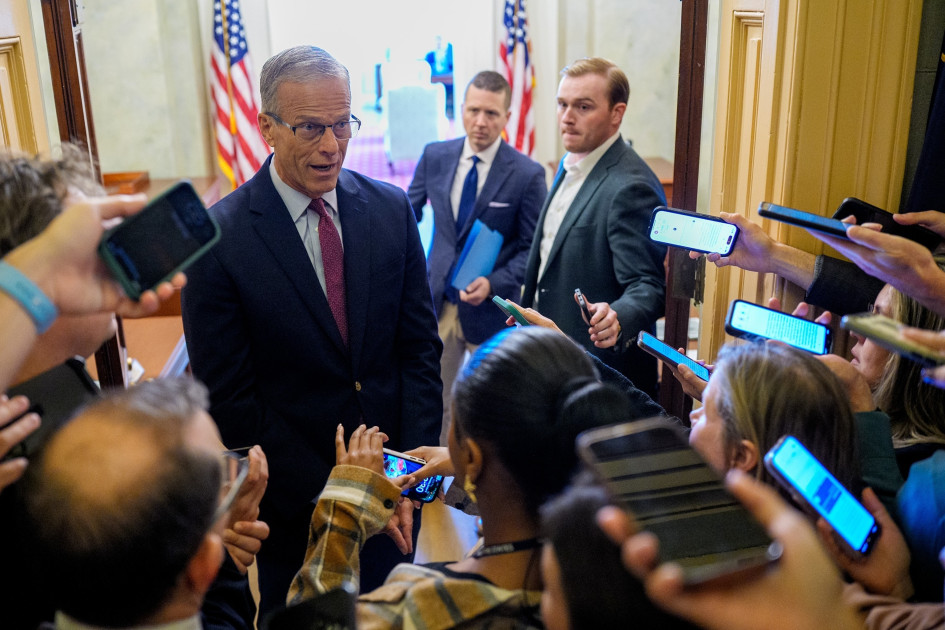
Thune didn’t rule out meeting with Senate Minority Leader Chuck Schumer before the weekend, though he warned any discussion would need to have “a real chance of moving government shutdown talks forwards” rather than being “a photo op.”
He said he’s being read in on informal bipartisan discussions but emphasized that “until there are at least 8 Democrats ready to vote to reopen the government, I’m not sure this goes anywhere.”
House Minority Leader Hakeem Jeffries lambasted Republicans Thursday for refusing to negotiate after Monday’s White House meeting. “Unfortunately, Republicans have shown zero interest in even having a conversation,” Jeffries said. “We’ve seen behavior by the president that is unserious and unhinged, and Leader Schumer and myself haven’t gotten a single phone call as it relates to a follow up conversation.”
Speaker Johnson argued there’s nothing to negotiate – Democrats should simply accept the Republican seven-week funding extension that passed the House but has been blocked in the Senate three times.
Both sides remain dug in. Neither sees political advantage in compromising. And federal workers whose agencies are on Trump’s target list wait to learn whether they still have jobs when this ends.
The Permanent Cuts That Could Outlast the Temporary Shutdown
Previous government shutdowns furloughed workers temporarily with the expectation they’d return when funding resumed. This shutdown is different because Trump is explicitly planning permanent terminations of employees whose agencies don’t align with his priorities.
Senator Mike Rounds pushed back Thursday on suggestions that Republicans could face backlash if federal workers are permanently laid off, arguing Democrats will be hurt more “because the place where the OMB has looked in the past has been in places that are not consistent with President Trump’s policies.”

“There’s a whole lot of things out there that the Democrats care about that are not consistent with the President’s policies, and those are the first things at risk,” Rounds said.
That confirms what Trump stated explicitly – agencies are being targeted based on whether they implement priorities Trump opposes, regardless of whether Congress created those agencies and appropriated funds for their operations.
The constitutional separation of powers gives Congress authority to create agencies and appropriate funds. The president’s role is executing congressional directives. Trump is claiming authority to permanently eliminate congressionally created positions because Congress failed to pass a continuing resolution on his preferred timeline.
House Speaker Johnson endorsed this interpretation Thursday, arguing Trump has constitutional authority during shutdowns to “determine how these resources will be spent” including laying off workers and eliminating programs.
If that interpretation prevails, every future shutdown becomes an opportunity for presidents to restructure the federal government according to partisan preferences rather than congressional authorization. Congress creates an agency and funds it for decades. Then one funding lapse gives the president authority to eliminate it permanently because he views it as a “Democrat Agency” inconsistent with his values.
That’s not how the constitutional separation of powers is designed to function. But Trump is testing whether anyone will stop him – and so far, no one is.
Why This List Matters More Than the Shutdown
The existence of a pre-compiled target list of agencies for mass firings reveals that the shutdown isn’t driving layoff decisions. The layoffs were planned before the shutdown began.
Trump’s team prepared a list of agencies they wanted to eliminate based on whether those agencies align with presidential priorities. Then they waited for a shutdown to provide political justification for executing that plan.
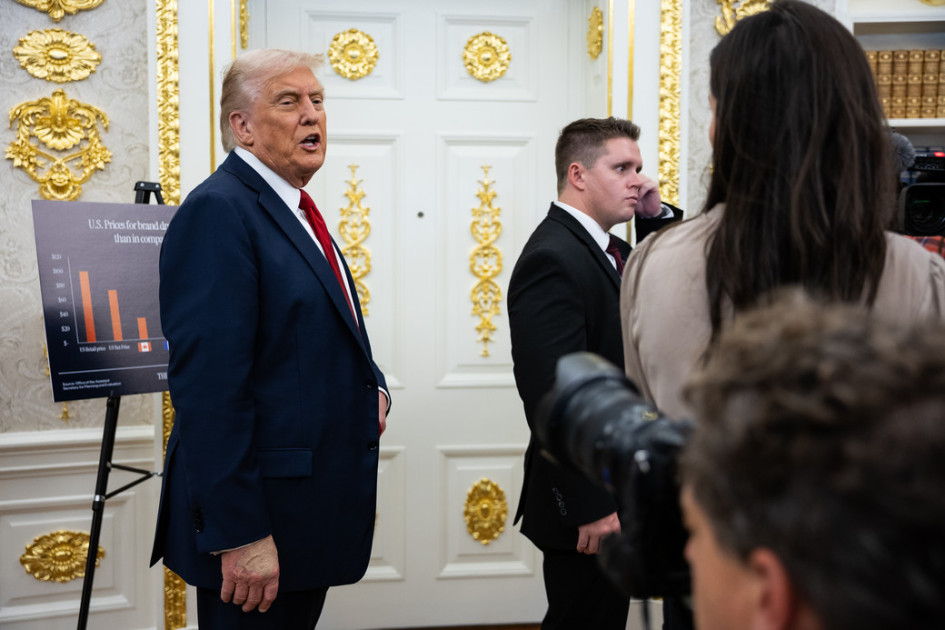
The shutdown gives Trump cover to claim he’s making difficult but necessary decisions about resource allocation during a funding crisis. But the decisions were made before the crisis began, based on ideological criteria rather than budget necessity.
Leavitt confirmed this when she said the administration is targeting agencies “that don’t align with the president’s values.” That’s not a budget criterion. That’s a political purge criterion.
When the shutdown ends – and it will eventually end – the temporary crisis will be resolved. But the permanent eliminations of agencies that don’t align with Trump’s values will remain.
Federal workers on that target list aren’t waiting to see if Congress compromises on ACA subsidies or Medicaid funding formulas. They’re waiting to see if their agencies are deemed sufficiently aligned with Trump’s priorities to survive his administration.
The shutdown is temporary. The restructuring of the federal government based on ideological loyalty tests is designed to be permanent. And the target list exists right now, ready for announcements that could come as soon as tomorrow.
Thousands of federal workers will learn this weekend whether their agencies made the list. Whether they still have jobs. Whether decades of civil service mean anything when a president decides their agency doesn’t align with his values.
The White House has the list. Trump has met with Vought. The announcements are coming.
And the federal government shutdown that was supposed to be about budget negotiations has become the justification for permanently eliminating agencies a president views as political opponents rather than civil service institutions implementing congressionally approved programs.