
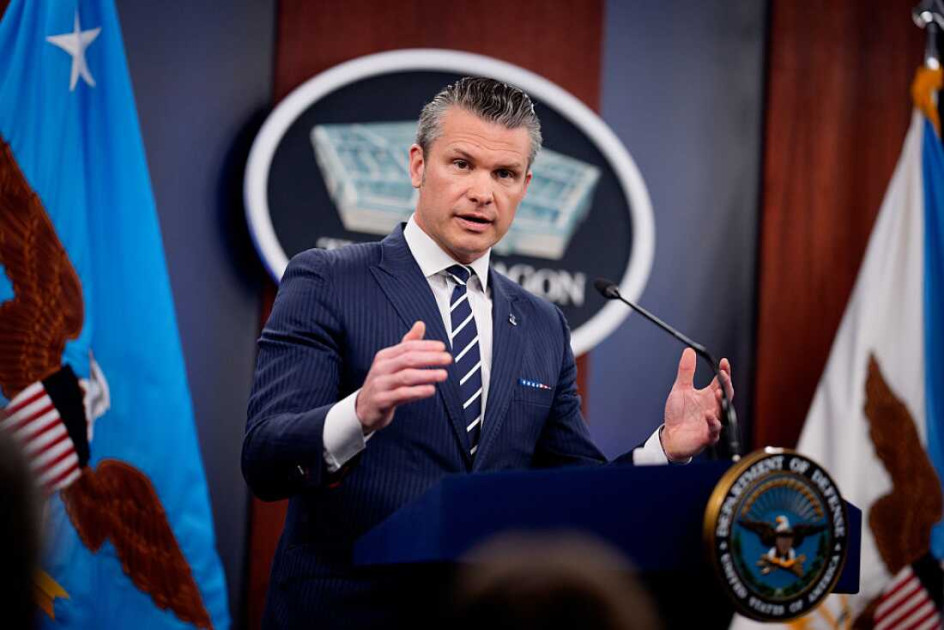
The conflict between the Trump administration and its critics has moved from the campaign trail to the court-martial docket – or at least, the administrative equivalent. In a move that legal scholars are calling “novel” and political opponents are calling “retribution,” Defense Secretary Pete Hegseth has formally initiated proceedings to demote U.S. Senator Mark Kelly and slash his retirement pay.
The trigger? A 90-second video released in November where Kelly – a retired Navy Captain and astronaut – urged service members to “refuse illegal orders.”
This confrontation is not just about one senator’s pension. It is a stress test for the Uniform Code of Military Justice (UCMJ). By attempting to punish a sitting lawmaker for political speech using military regulations, the Pentagon is blurring the bright line between the civilian legislature and the armed forces, raising profound questions about whether a retired officer ever truly leaves the chain of command.
The “Seditious” Video
The controversy stems from a coordinated message released last November by six Democratic lawmakers with military or intelligence backgrounds. Amidst reports of the administration using the military for domestic deportations and strikes on drug cartels, the group reminded troops of their duty to disobey unlawful commands.
“Our laws are clear,” Kelly stated in the video. “You can refuse illegal orders. You must refuse illegal orders.”
Secretary Hegseth, however, viewed this not as a civics lesson, but as mutiny. On Monday, he labeled the video “reckless and seditious,” arguing it was “clearly intended to undermine good order and military discipline.”
While five of the lawmakers are civilians or reservists outside Hegseth’s immediate reach, Kelly is a retired Navy Captain receiving a pension. That status, Hegseth argues, keeps him “accountable to military justice.”
The Punishment: Rank, Pay, and Reputation
The Pentagon’s action is two-fold. First, Hegseth issued a formal Letter of Censure, a permanent stain on Kelly’s service record. Second, and more tangibly, he initiated a “retirement grade determination process.”+1
If successful, this would demote Kelly from Captain (O-6) to a lower rank, significantly cutting the pension he earned over 25 years of service, including 39 combat missions in Desert Storm and four Space Shuttle flights.
Constitutional Quick Fact: The UCMJ does indeed apply to “retired members of a regular component of the armed forces who are entitled to pay.” However, invoking it against a sitting U.S. Senator for political speech protected by the First Amendment enters uncharted legal waters. The Supreme Court has rarely addressed the tension between military discipline and a retiree’s right to criticize the Commander-in-Chief.
“Earned the Right to Speak”
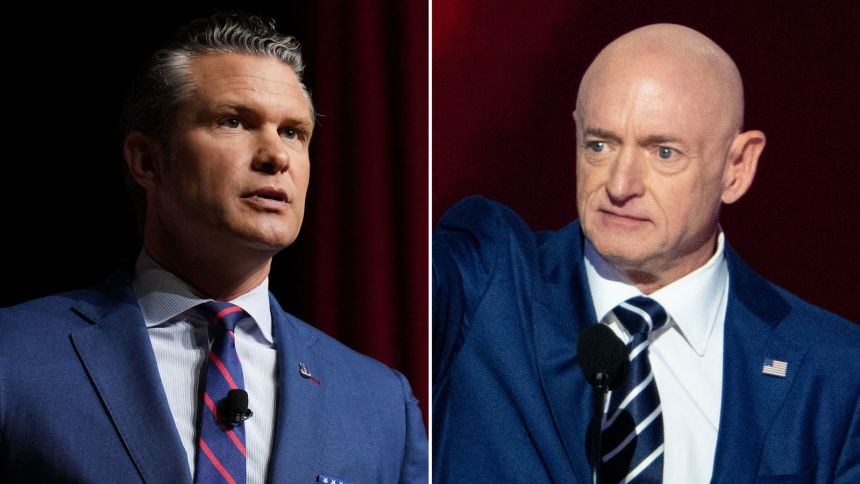
Senator Kelly’s response was immediate and blistering, pivoting from a legal defense to a moral indictment of the Commander-in-Chief. In a statement that quickly went viral, Kelly contrasted his own service record with that of the President.
“How many generations of Donald Trump’s family have served in the military? Zero. Donald Trump deferred the draft five times,” Kelly said. “Not everyone has to serve our military, I get that. But when you question my patriotism and lecture me about duty to this country, and threaten me… my service earns me the right to speak.”
This rhetorical counter-punch highlights the personal nature of the feud. Kelly is framing the censure not as a matter of military discipline, but as a political attack by an administration hostile to dissent.
“I Will Fight This”
Senator Kelly’s response was immediate and defiant. He framed the move as an intimidation tactic designed to silence dissent.
“If Pete Hegseth… thinks he can intimidate me with a censure or threats to demote me or prosecute me, he still doesn’t get it,” Kelly said. “I will fight this with everything I’ve got.”
The legal battle will likely hinge on Article 133 (Conduct Unbecoming an Officer) and Article 134 (the “General Article” covering disorders and neglect). Hegseth claims Kelly violated both. Kelly’s defense will almost certainly rest on the First Amendment and the Speech or Debate Clause of the Constitution, arguing that his statements as a Senator cannot be policed by the Executive Branch.

A Chilling Effect?
The broader implication is the message this sends to the officer corps, both active and retired. If a decorated astronaut and sitting Senator can be targeted for demotion for discussing the legal limits of military orders, the space for independent thought within the ranks shrinks dramatically.
Critics argue this transforms the military pension system into a lever of political loyalty—a “golden handcuff” that ensures silence long after a soldier hangs up the uniform. As Kelly faces a 30-day deadline to respond, the Pentagon has effectively opened a new front in the war over who controls the military’s conscience: the officers sworn to the Constitution, or the political appointees sworn to the President.