
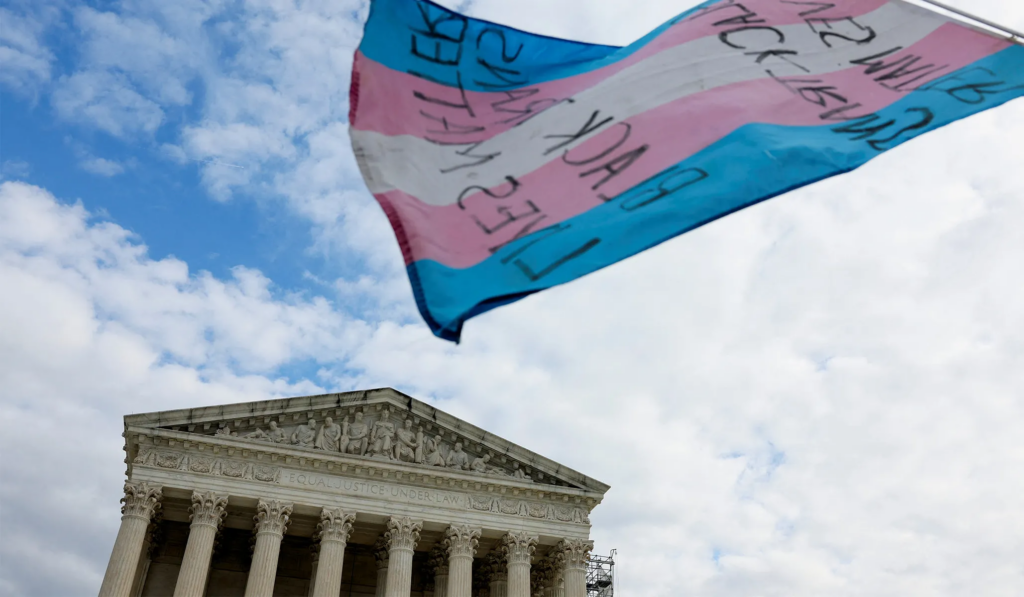
The Supreme Court’s conservative supermajority signaled on Tuesday that it is prepared to uphold state laws banning transgender females from competing in women’s and girls’ sports.
During more than three hours of intense oral arguments, the justices probed the collision between the 50-year-old promise of Title IX and the modern movement for transgender inclusion. While the liberal wing of the bench pleaded for the dignity of a marginalized minority, at least five of the six conservative justices appeared skeptical that the Constitution requires schools to ignore biological differences in the name of equality.
The marathon session, involving challenges to laws in Idaho and West Virginia, suggests the Court is moving toward a ruling that could validate restrictions in nearly 30 states, potentially reshaping the landscape of American athletics for a generation.
The Conservative Majority: “Fairness” and Biological Reality
The prevailing sentiment among the court’s conservative wing was that Title IX was designed to protect biological women, and that ignoring physiological advantages undermines that very purpose.
Justice Samuel Alito was perhaps the most direct, challenging the narrative that those who support separate categories are motivated by animus. He zeroed in on the perspective of female athletes who lose roster spots or podium finishes to transgender competitors.
“There are an awful lot of female athletes who are strongly opposed to participation by trans athletes in competitions with them,” Alito said, posing a sharp question to the plaintiffs’ counsel. “What do you say about them? Are they bigots? Are they deluded in thinking they are subjected to unfair competition?”
Justice Brett Kavanaugh, drawing on his personal experience coaching his daughter’s basketball team, reinforced this concern for the “displaced” female athlete. He argued that the court cannot simply “sweep aside” the reality of the girl who misses the medal stand or the all-league team.
Chief Justice John Roberts took a broader, more structural view. He appeared deeply skeptical of the argument that sex-based classifications are inherently transgender classifications. His questioning suggested a fear of the slippery slope: if the Court rules that “sex” in Title IX includes gender identity for sports, does that definition mandate desegregation in all other sex-separated spaces, from locker rooms to prisons?
The Liberal Dissent: “The Numbers Don’t Talk About Human Beings”
The court’s three liberals—Justices Sotomayor, Kagan, and Jackson—attempted to shift the frame from competitive advantage to individual dignity and Equal Protection.
Justice Sonia Sotomayor passionately argued that the small population of transgender youth—estimated at roughly 2.8 million nationwide—makes them a vulnerable class deserving of judicial protection, not a threat to women’s sports.
“The numbers don’t talk about the human beings,” Sotomayor stated, urging her colleagues to look past the statistics to the children being barred from participation.
Justice Ketanji Brown Jackson expressed visible frustration with the state’s logic. She struggled to reconcile the state’s claim that the laws were neutral with the reality that they specifically target transgender women. “The law expressly aims to ensure that transgender women can’t play on women’s sports teams,” Jackson argued. “So, why is that not a classification on the basis of transgender status?”
Justice Elena Kagan introduced a series of hypotheticals to test the limits of the state’s “biological advantage” arguments, asking if sex-based bans could extend to chess clubs or remedial classes based on debated theories of brain chemistry.
The Trump Administration Weighs In
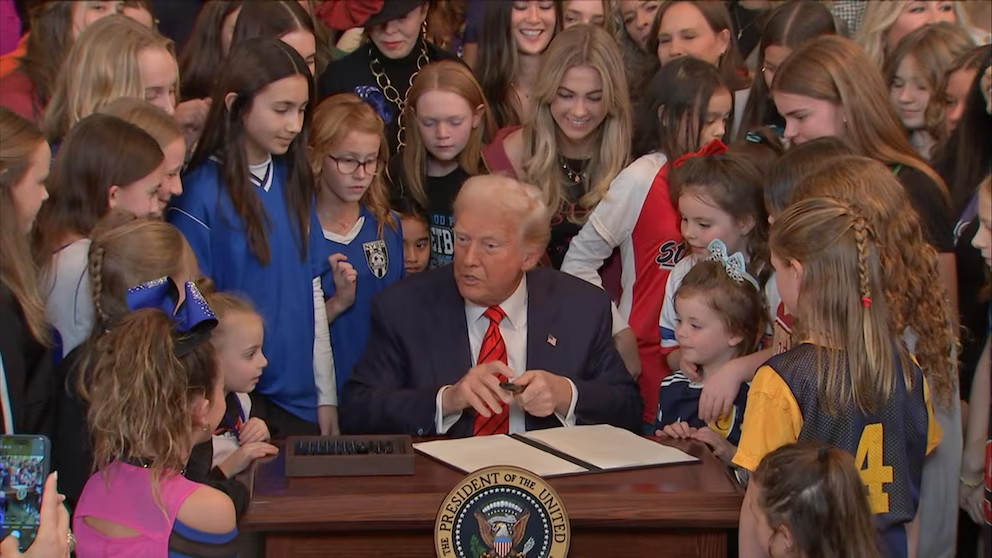
The arguments were significantly bolstered by the participation of the Trump Department of Justice. Reversing the Biden-era interpretation of Title IX, Trump’s DOJ lawyer, Hashim Mooppan, argued that the federal statute prohibits discrimination based on biological sex, not gender identity.
This stance aligns with President Trump’s Executive Order 14201, “Keeping Men Out of Women’s Sports,” signed last February. The administration is pushing a legal framework that recognizes “only two immutable sexes,” a position that appeared to resonate with the conservative justices who view Title IX as a binary statute.
How We Got Here: A Crash Course in Legal Conflict
To understand the gravity of Tuesday’s arguments, one must look back at the chaotic legal timeline that brought the issue to One First Street.
- 1972: Title IX is passed to ensure equal educational opportunities, revolutionizing women’s sports.
- 2020: In Bostock v. Clayton County, the Supreme Court rules (6-3) that workplace discrimination against transgender employees is a form of sex discrimination. This opinion, written by Justice Neil Gorsuch, became the cornerstone for activists arguing the same logic applies to schools.
- The State Surge: Beginning in 2020 and accelerating through 2025, Republican-led states began passing “Fairness in Women’s Sports” acts, defining eligibility by biological sex at birth.
- The Circuit Split: The legal system fractured. The 4th Circuit Court of Appeals (covering West Virginia) ruled that banning a transgender girl from track violated Title IX. Conversely, the 9th Circuit (covering Idaho) and others upheld similar bans or issued conflicting injunctions.
This circuit split forced the Supreme Court to intervene. The core legal tension is whether the Bostock precedent—which dealt with hiring and firing—applies to the physical reality of competitive sports.
The Human Element
At the center of this constitutional storm are two students. Becky Pepper-Jackson (B.P.J.), a West Virginia middle schooler who has identified as female since third grade, wishes to run cross-country. She has been taking puberty blockers, a fact her lawyers argue negates any biological advantage.
The other plaintiff, Lindsay Hecox, is a senior at Boise State University in Idaho. However, her case highlighted a potential “mootness” issue.
Hecox is set to graduate and has stated she will no longer compete, leading her to ask for her case to be dismissed—a request the Justices have yet to rule on, though they proceeded with the arguments regardless.

Outlook: A “Cautious” Precedent?
While a conservative victory seems likely, the scope of that victory remains the wild card.
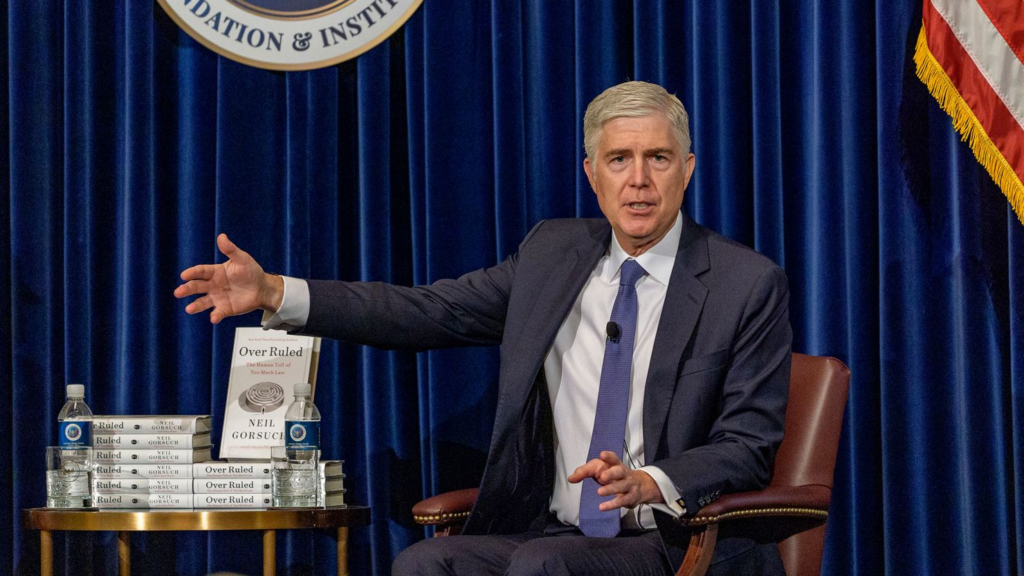
Justice Neil Gorsuch, the author of Bostock, remained the enigma of the day. He appeared open to some of the plaintiffs’ arguments regarding the specific application of the laws, suggesting he might be looking for a middle ground—perhaps a ruling that allows restrictions in elite high school and college sports while leaving room for inclusion in intramural or elementary settings.
However, the “center of gravity” on the court—Roberts and Kavanaugh—seemed hesitant to “constitutionalize” a rule for the entire nation. Kavanaugh questioned why the Court should intervene when “half the states are allowing it… and half are not,” suggesting a ruling that defers to the democratic process.
If the Court rules as expected in early summer, it will likely affirm that states have the constitutional authority to separate sports teams by biological sex. Such a ruling would solidify the bans in roughly 30 states and effectively end the Biden-era expansion of Title IX, marking a definitive shift in the legal interpretation of sex and gender in America.