
From the fortified streets of Caracas to the protest-choked avenues of Minneapolis, the American presidency is undergoing a radical stress test. In a matter of weeks, President Donald Trump has asserted a sweeping interpretation of Article II powers that challenges a century of legal norms, leaving both the Supreme Court and international observers scrambling to define the new boundaries of executive will.
The Caracas Precedent: Arresting a Head of State
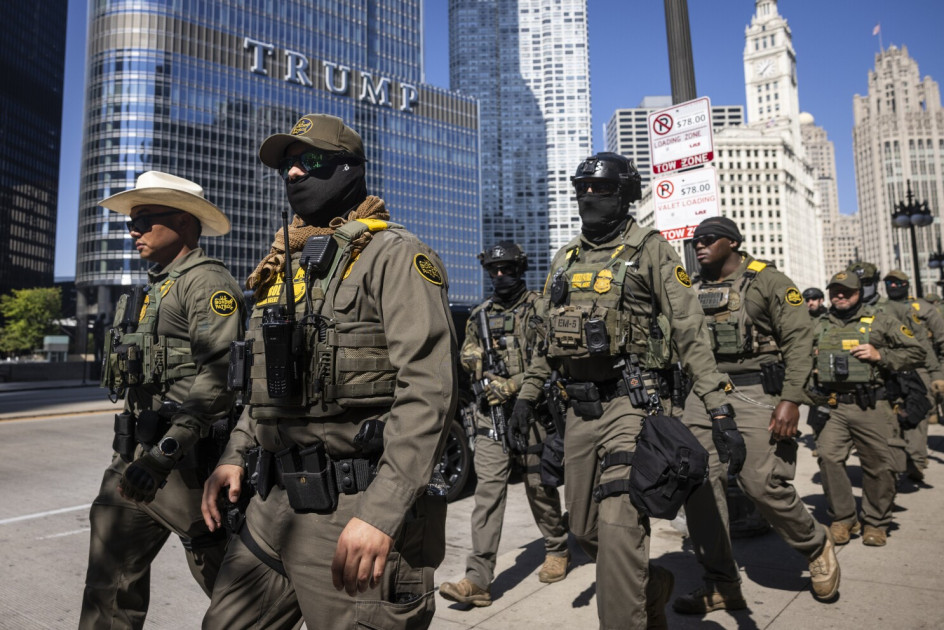
The most jarring display of this “Protective Power” occurred earlier this month with the capture of Nicolás Maduro. Operation Absolute Resolve saw U.S. special operations forces penetrate Venezuelan airspace to seize the deposed leader, an act that the administration justifies not as an act of war, but as a law enforcement operation with military backing.
The legal bedrock for this action rests in a 1989 Office of Legal Counsel (OLC) memo, which argues that the President has the inherent constitutional authority to order extraterritorial arrests to protect federal interests. This “Barr Memo” posits that the “Take Care” Clause of Article II allows for such actions even if they impinge on foreign sovereignty.
Critics argue that this creates a dangerous precedent, effectively treating the entire globe as a domestic jurisdiction for U.S. federal agents. However, the administration maintains that Maduro’s status as an indicted drug trafficker placed him within the reach of the American justice system, regardless of his title or location.
From National Guard to the Insurrection Act
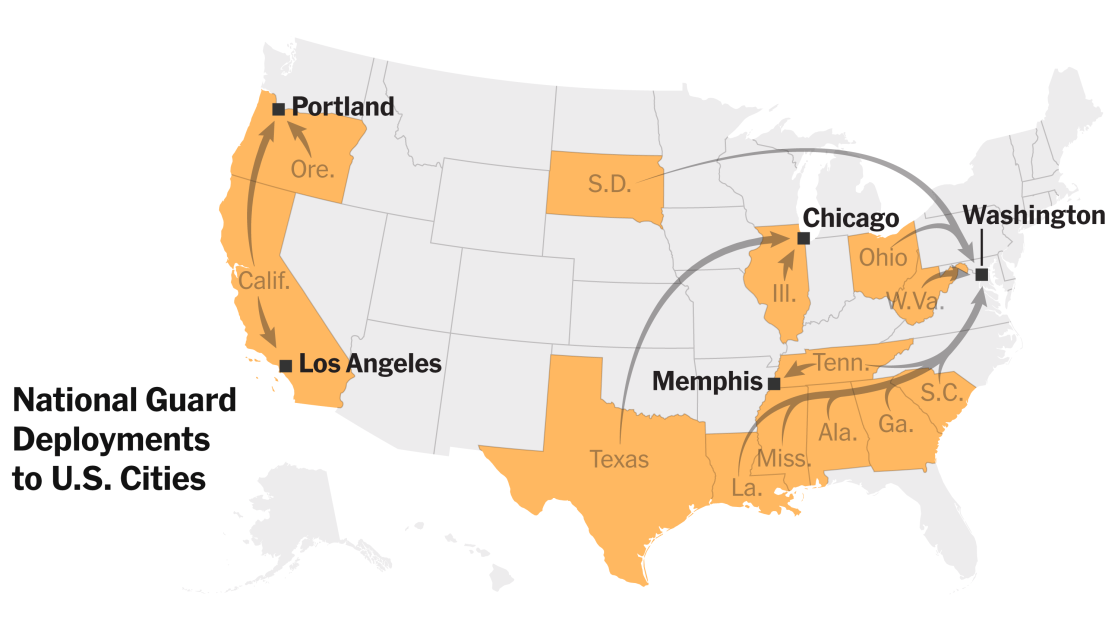
While the administration has found success abroad, its domestic efforts to “restore order” have hit significant judicial roadblocks. Throughout late 2025, the White House attempted to federalize the National Guard in Illinois, California, and Oregon to protect federal property and enforce immigration laws over the explicit objections of state governors.
- October 2025: A federal judge in Illinois blocks the deployment of Guard troops in Chicago, citing a lack of statutory authority.
- December 2025: The Supreme Court issues an interim order in Illinois v. Trump, refusing to stay the lower court’s injunction.
- January 2026: Governor Gavin Newsom successfully forces the return of the California National Guard to state control after the Ninth Circuit rejects federalization.
The Supreme Court’s skepticism centers on Title 10, which requires the President to demonstrate that regular military forces are unable to execute the laws before federalizing the Guard. In a 6-3 split, the Court signaled that “regular forces” refers to the professional military, not civilian law enforcement, effectively shutting the door on Trump’s preferred method of domestic intervention.
The Insurrection Act: The Nuclear Option?
With the National Guard route blocked by the judiciary, the White House has turned to a more potent and archaic tool: the Insurrection Act of 1807. Following the fatal shooting of Renee Nicole Good by an ICE agent in Minneapolis and the ensuing civil unrest, the President has threatened to deploy active-duty U.S. troops to “quell the travesty” in Minnesota.
The Insurrection Act is uniquely dangerous because it is largely not reviewable by courts. It grants the President broad discretion to determine when “unlawful combinations” make it impracticable to enforce federal law. If invoked, it would allow the military to bypass the Posse Comitatus Act, which generally prohibits the U.S. military from performing domestic law enforcement duties.
“The President can protect his law enforcement domestically, and he can protect his law enforcement abroad, both under Article II,” says constitutional law professor Josh Blackman. “It is the power of protection at its core.”
A Constitutional Collision Course
The through-line between the Maduro raid and the Minneapolis standoff is the theory of the “Unitary Executive.” This philosophy holds that the President possesses the total, indivisible power of the executive branch, and that legislative or judicial attempts to trim that power are unconstitutional.
The current standoff in Minneapolis—dubbed “Operation Metro Surge” by the Department of Homeland Security—has seen the deployment of nearly 3,000 federal agents. Local leaders, including Governor Tim Walz, have characterized this as an “occupation,” while the administration views it as a necessary response to protect federal officers from “professional agitators.”
- Executive Argument: Article II grants inherent authority to protect federal personnel and functions from any threat, foreign or domestic.
- Judicial Argument: Specific statutes like Title 10 and the Posse Comitatus Act provide clear limits that the President cannot ignore.
- State Argument: The 10th Amendment protects the “police power” of the states, preventing the federal government from seizing control of local security.
As 2026 unfolds, the Supreme Court finds itself in an impossible position. It must decide whether the President is the ultimate “Protective Power” of the nation or if he is merely one of three equal branches of government, bound by the very laws he is sworn to execute. The stakes of this debate will define the presidency for generations to come.