
The Trump administration has secured a significant legal victory in its effort to maintain a military presence in the nation’s capital.
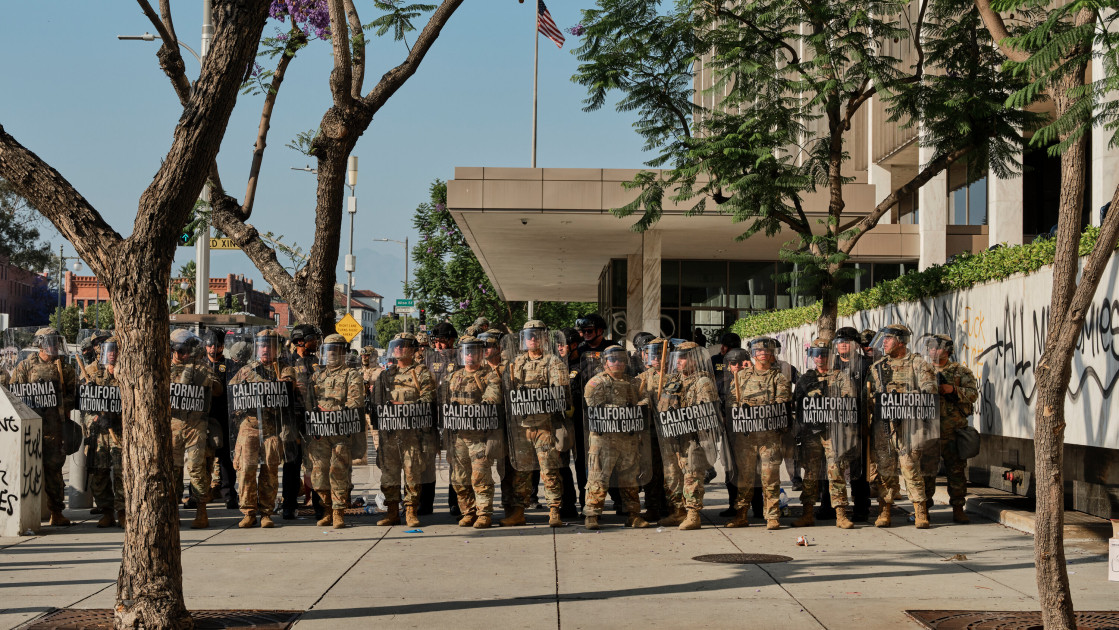
A federal appeals court ruled unanimously on Wednesday that the President likely has the authority to keep National Guard troops deployed in Washington, D.C., indefinitely pausing a lower court order that would have forced their withdrawal.
While this ruling solidifies federal control over D.C. streets for now, the judges carved out a critical distinction that could spell trouble for the administration’s plans in other cities like Chicago or Portland: State sovereignty matters.
At a Glance: The DC Guard Ruling
- The Ruling: The D.C. Circuit Court of Appeals issued an indefinite stay, allowing National Guard troops to remain in Washington through at least February 2026.
- The Reasoning: The court found that because D.C. is a federal district and not a sovereign state, the President possesses “unique power” to deploy forces there.
- The Judges: The decision was unanimous from a three-judge panel, including one Obama appointee (Judge Patricia Millett) and two Trump appointees.
- The Warning: The court explicitly warned that deploying out-of-state troops to non-consenting states (like Illinois or Oregon) would be “constitutionally troubling,” distinguishing this win from other ongoing legal battles.
- The Human Cost: Judge Millett noted that abruptly sending troops home would cause a “profound level of disruption” to the lives of service members who have been mobilized for months.
‘Unique Power’ in a Federal District
The core of the court’s decision lies in the constitutional difference between Washington, D.C., and the 50 states.
Under Article I, Section 8, Clause 17 of the Constitution, Congress has exclusive jurisdiction over the District of Columbia. The appeals panel agreed with the administration that this status gives the President broad authority to protect “federal governmental functions” in the capital that he does not possess elsewhere.
Judge Millett, writing for the panel, stated that the lower court likely erred by treating D.C. as if it had the same sovereign rights as a state to reject federal troops.
“The President’s order implicates a strong and distinctive interest in the protection of federal governmental functions and property within the Nation’s capital.” — Judge Patricia Millett

The ‘Constitutionally Troubling’ Caveat
While this is a win for the White House in D.C., the ruling contained a flashing warning light for the administration’s broader “crime crackdown” in other cities.
The judges went out of their way to distinguish D.C. from the states. They noted that sending National Guard troops into a state like Illinois or Oregon without the governor’s consent—as the administration has attempted or threatened to do—raises entirely different legal questions.+1
The order stated that such actions would be “constitutionally troubling to our federal system of government.” This language suggests that while the President can police D.C. as he sees fit, federal courts may still block him from overriding governors like J.B. Pritzker or Tina Kotek.
Disruption and Disagreement
The decision halts the order by U.S. District Judge Jia Cobb, which would have required troops to begin withdrawing immediately.
The appeals court panel was swayed by the practical reality on the ground. Judge Millett argued that forcing thousands of soldiers to pack up and leave while the legal appeal is still pending would be chaotic and unfair to the service members themselves.
D.C. Attorney General Brian Schwalb, who brought the lawsuit, remains defiant. His office emphasized that this is a preliminary stay, not a final judgment on the merits, and vowed to continue fighting the “illegal infringement” on local policing authority.
For now, however, the camouflaged patrols in the subway stations and street corners of Washington, D.C., are going nowhere.