
A Supreme Court Justice sat on a stage at Lincoln Center, not in a courtroom, offering a rare glimpse behind the curtain of the most powerful and secretive institution in Washington. As she promotes her new memoir, Justice Amy Coney Barrett has embarked on a public tour to defend the integrity of a Court that is facing a profound crisis of public trust.
Her remarks were a fascinating and carefully crafted performance. But the story is as much about what she refused to discuss as what she chose to reveal.
It is a story about a Court that knows it is in trouble, and is now, for the first time, engaging in a public relations campaign to save itself.

“Burn the Boats”: A Portrait of a Justice
In a wide-ranging interview, Justice Barrett offered a refreshingly human look into her nearly five years on the high court. She described her confirmation during the COVID-19 pandemic as “very awkward” and recounted the personal kindness of her colleagues, who lent her office supplies and staff as she got started.
She also shared the advice her husband gave her when she was weighing the nomination: that if she chose to proceed, they had to “burn the boats” – a reference to eliminating any possibility of retreat.
It is a mindset, she says, that has served her well in a job that requires a “thick skin” against constant public criticism.
A Defense of a Court Under Fire
The core of Justice Barrett’s message was a full-throated defense of the institution she serves. She pushed back against the growing fear that the nation is in a constitutional crisis.
“I think the Constitution is alive and well,” she said. “I think a constitutional crisis – we would clearly be in one if the rule of law crumbles. But that is not the place where we are.”
She acknowledged that public trust in the Court has eroded, a development she said worries her. She asked Americans to “trust that the court is trying to get it right,” insisting that it is “an institution that does operate with integrity.”

The Subject She Wouldn’t Touch: The “Shadow Docket”
But when the conversation turned to the Court’s controversial “shadow docket,” Justice Barrett was, as the interviewer noted, “demonstrably less candid.” The shadow docket is the emergency process through which the Court’s conservative majority has delivered a series of major, often unexplained, victories for the Trump administration.
When asked about this, the Justice offered only a brief, formalistic reply: the Court “is at its best when it can review cases that have been fully adjudicated” by lower courts.
This is a telling and deafening silence.
Her public defense of the Court’s integrity rings hollow when she refuses to substantively address the very process that has caused the most damage to its reputation for impartiality.
“Spicy” Remarks and a Fragile Collegiality
Justice Barrett also addressed the increasingly sharp tone of the Court’s opinions, defending her own “spicy” remarks toward Justice Ketanji Brown Jackson in a previous case as a “warranted” response.
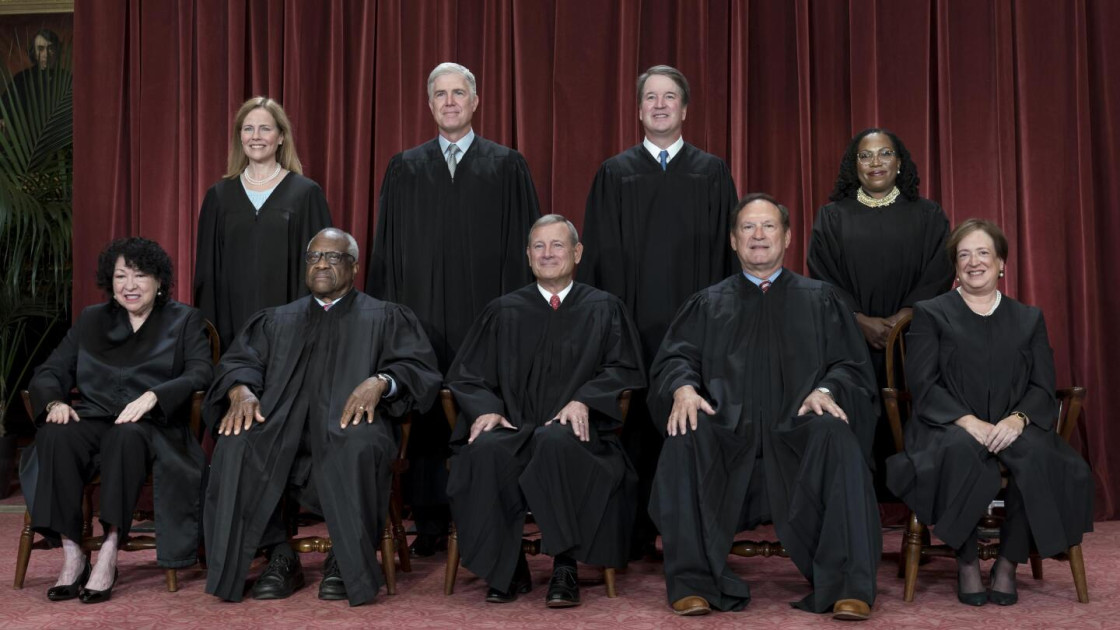
This offers a glimpse into a Court that is struggling to maintain its cherished tradition of collegiality. While Barrett and her colleague Justice Kavanaugh have both recently spoken of the justices as “patriots,” the increasingly personal and bitter nature of the dissents – like Justice Jackson’s memorable charge of “Calvinball jurisprudence” – tells a different story.
Justice Barrett’s book tour is an unprecedented attempt to manage the public perception of the Supreme Court. But while she speaks of an institution committed to the rule of law, her silence on its most controversial practices speaks even louder.
The crisis of the Court’s legitimacy will not be solved by a public relations campaign, but by a return to the principles of transparency and reasoned deliberation that her comments on the “shadow docket” so carefully avoided.