
He was one of the most electrifying and feared baseball players of his generation, a New York legend whose fall from grace was as spectacular and public as his rise. Darryl Strawberry’s story became a dark American tragedy of immense talent destroyed by cocaine addiction, tax evasion, and prison time.
Now, that long and painful chapter has been given a final, definitive ending. President Donald Trump has granted the former MLB star a full presidential pardon, an act that is simultaneously a powerful story of redemption and a profound, real-world lesson in one of the Constitution’s most absolute and controversial powers.

What is the Official Justification for the Pardon?
The White House, in its announcement, is framing the pardon as a celebration of a life truly turned around. Strawberry’s story, in this light, is the perfect case for presidential mercy. After serving jail time and battling deep substance abuse, Strawberry turned to Christianity, has remained sober, and co-founded a ministry dedicated to helping others struggling with addiction.
Strawberry himself, who received the news in a personal phone call from the President, framed it as a moment of spiritual liberation.
“Thank you, President @realdonaldtrump for my full pardon and for finalizing this part of my life, allowing me to be truly free and clean from all of my past… God used him as a vessel to set me free forever!”
What Makes This Pardon Constitutionally Complicated?
The legal and constitutional complexity of this pardon has nothing to do with the merits of Strawberry’s redemption. The complication is the deep, personal, and public relationship between the two men. This was not a pardon granted to an anonymous citizen; it was a grant of mercy to a personal friend.

The President and Strawberry have known each other for decades, a staple of the 1980s New York celebrity scene.
More recently, Strawberry was a contestant on President Trump’s reality show, “The Celebrity Apprentice,” in 2010.
This unavoidable fact, as Strawberry himself noted – “This has nothing to do with politics — it’s about a man, President Trump, caring deeply for a friend” – is the very thing that makes the act constitutionally problematic from a watchdog’s perspective.
What is the Presidential Pardon Power?
The President’s power to grant “Reprieves and Pardons for Offenses against the United States” is found in Article II, Section 2 of the Constitution. It is one of the most awesome and “king-like” powers any president holds.
Unlike almost every other executive action, the pardon power is absolute and final. It cannot be overturned by Congress and it cannot be reviewed by the Supreme Court. It is an unchecked, unilateral power to wipe a federal criminal record clean, a tool the framers saw as a necessary “safety valve” for dispensing mercy when the rigid mechanisms of the law proved too harsh.
Is This How the Framers Intended This Power to Be Used?
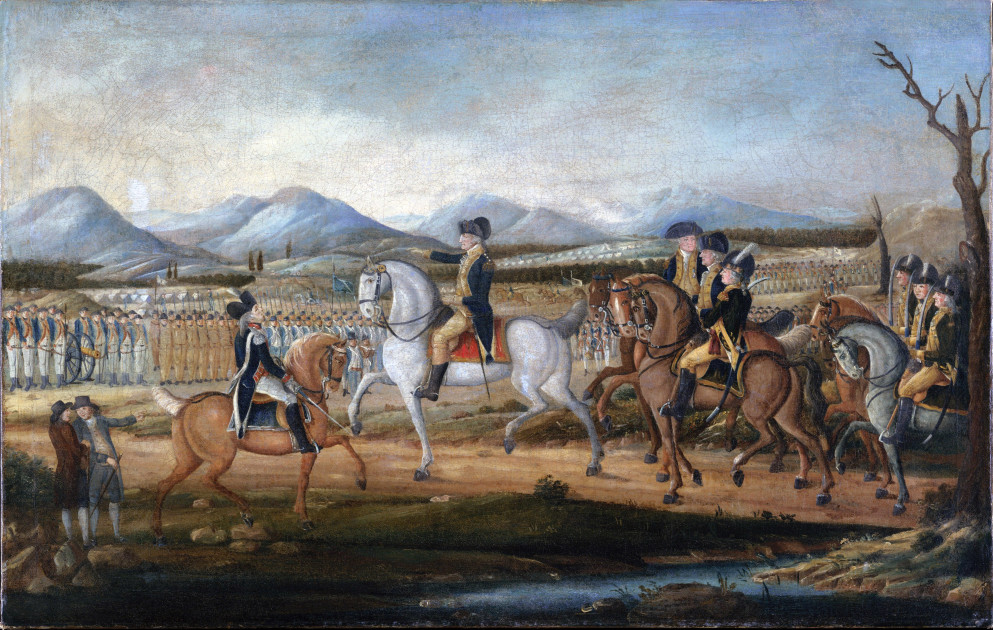
This is where the true constitutional debate lies. The pardon power has a long and complex history. It was used by George Washington in a broad, strategic way to heal the nation after the Whiskey Rebellion by pardoning its ringleaders. It has also been used in deeply controversial ways, most famously by President Bill Clinton in his last-minute pardon of the fugitive financier Marc Rich, an act that was widely seen as a corrupt political favor.
The question the Strawberry pardon forces us to ask is not one of legality – the President’s action is perfectly legal.
The question is one of propriety and equal protection. In our constitutional republic, is justice blind? Does an average, non-famous American with an identical story of addiction and redemption have the same chance of receiving a presidential pardon?
This act highlights the profound tension in our system. It is a heartwarming story of a man’s redemption being officially recognized. It is also a stark demonstration of a two-tiered justice system, where personal access to the President can grant a final act of mercy that is functionally unavailable to the millions of other Americans who may be just as deserving.