
Trump’s Legal Year in Review
The first year of Donald Trump’s second term was not a transition; it was a blitz. From the moment the oath was administered, the 47th President unleashed a torrent of executive orders designed to test the absolute limits of Article II authority. The result has been a constitutional stress test unlike any in modern history, with the federal judiciary serving as the only effective brake on the White House’s ambitions.
As we enter 2026, the scorecard is complex. While the administration has secured critical victories that hamstring the “resistance” in lower courts, it has also faced stinging rebukes when attempting to federalize state resources or bypass Congressional appropriations.
Here is the definitive breakdown of the legal war for Washington.
The Scorecard: Administration Wins
The President’s legal team, led by Solicitor General John Sauer, has focused on dismantling the procedural tools used by opponents. Their victories have been technical but devastatingly effective.
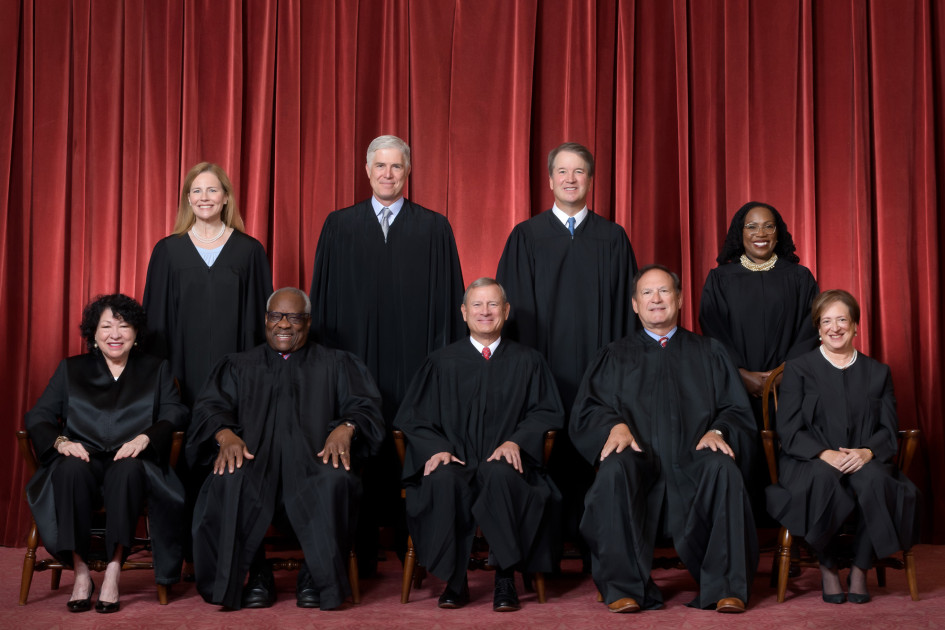
- The Death of the “Universal Injunction” (Trump v. CASA): In a massive 6-3 ruling in June 2025, the Supreme Court effectively disarmed the “resistance” judge. The Court ruled that a district judge in Hawaii or California can no longer issue a nationwide injunction blocking a policy for the entire country. This procedural win means that opponents must now fight state-by-state, drastically slowing down legal challenges to immigration and energy policies.
- The “Unambiguous” VA Abortion Ban: In December, the Department of Justice secured a major victory when its Office of Legal Counsel (OLC) issued a binding opinion stripping the Department of Veterans Affairs of the power to fund abortions. The opinion, which reversed a Biden-era rule, was accepted by the agency immediately, effectively closing a federal abortion access loophole without a single court battle.
- Firing the “Deep State” (Trump v. Slaughter): The Supreme Court has signaled it is ready to overturn the 90-year-old Humphrey’s Executor precedent. By pausing lower court orders that tried to reinstate fired Democrat appointees at the NLRB and MSPB, the High Court has tacitly endorsed the “Unitary Executive” theory – that the President can fire almost any executive branch official for any reason.
- The AI “One Rule” Preemption: Attempts by California and Tennessee to block the President’s “One Rule” executive order on Artificial Intelligence were dismissed by a federal judge in October. The court ruled that the “interstate commerce” nature of AI gives the federal government supremacy, a massive win for the administration’s deregulatory tech agenda.
The Scorecard: Administration Losses
Despite these victories, the judiciary has drawn hard lines where the President has attempted to use military force or spending powers without Congress.
- The L.A. National Guard Blockade: In perhaps the most stinging personal rebuke of the year, U.S. District Judge Charles Breyer blocked the President from “federalizing” the California National Guard to police immigration protests. Breyer’s ruling – that a protest is not a “rebellion” – prevented the creation of what he called a “national police force” and forced the troops to return to Governor Newsom’s command.
- The “Ballroom” Bulldozer Warning: In a symbolic loss, U.S. District Judge Richard Leon issued a humiliating warning to the White House regarding its construction of a new $300 million ballroom. While he didn’t halt the project entirely, he warned that any “irreversible” work done before regulatory approval would be ordered torn out, effectively freezing the administration’s pet project in legal cement.
- The Tariff Skepticism (Learning Resources v. Trump): The administration’s attempt to use the International Emergency Economic Powers Act (IEEPA) to impose a blanket 10% tariff faced a brutal reception at the Supreme Court. During oral arguments, both liberal and conservative justices appeared deeply skeptical that an economic policy dispute constitutes a “national emergency,” signaling a likely defeat for the President’s signature economic tool.
The “Big Ones”: The Cases That Will Define 2026
The legal skirmishes of 2025 were just the undercard. The docket for early 2026 contains the cases that will fundamentally rewrite the social contract.
1. The End of Birthright Citizenship? (Trump v. Barbara)
The Stakes: This is the legal equivalent of a nuclear weapon. On Day One, President Trump signed an executive order denying citizenship to children born of undocumented parents. The Status: Lower courts have uniformly blocked it, citing the 14th Amendment’s “subject to the jurisdiction thereof” clause. The Supreme Court has agreed to hear arguments between February and April 2026. A ruling in favor of Trump would upend 150 years of precedent and instantly strip citizenship from roughly 150,000 babies born annually.
2. The Purge of the Federal Reserve
The Stakes: Can the President fire a Federal Reserve Governor? The administration is attempting to remove Governor Lisa Cook, arguing she is obstructing economic policy. The Status: The Supreme Court will review this case alongside Slaughter. If they rule the President can fire Fed governors “at will,” the independence of the U.S. central bank—and the stability of the global financial system—could vanish overnight.
3. The “DOGE” Budget Cuts (AFGE v. Musk)
The Stakes: The Department of Government Efficiency (DOGE), led by external advisors, has recommended massive impoundments of funds Congress already appropriated. The Status: Unions have sued, arguing that the President cannot refuse to spend money Congress has allocated (violating the Impoundment Control Act of 1974). This case will decide if the “power of the purse” truly belongs to Congress, or if the President can simply starve agencies he dislikes.
Quick Fact: The last time a President aggressively tried to impound funds was Richard Nixon. His actions led directly to the Impoundment Control Act. Trump is effectively asking the Supreme Court to declare that Nixon was right all along.