
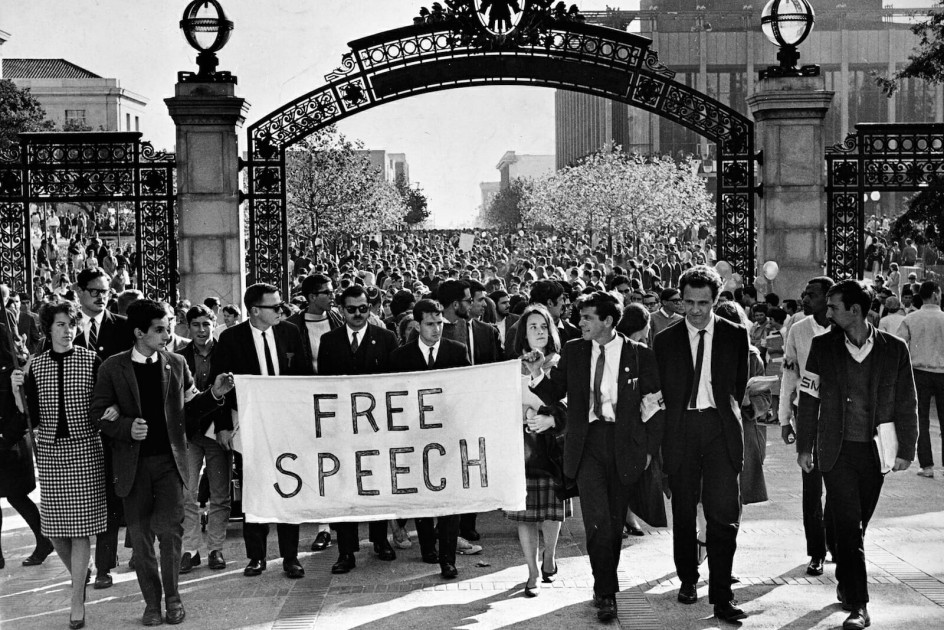
The final leg of the conservative student organization Turning Point USA “American Comeback Tour” landed this week at University of California, Berkeley — a campus once synonymous with liberal protest and the Free Speech Movement. What unfolded was more than a showdown of ideologies: it was a test of how the Constitution protects speech, protest and security in the modern campus arena.
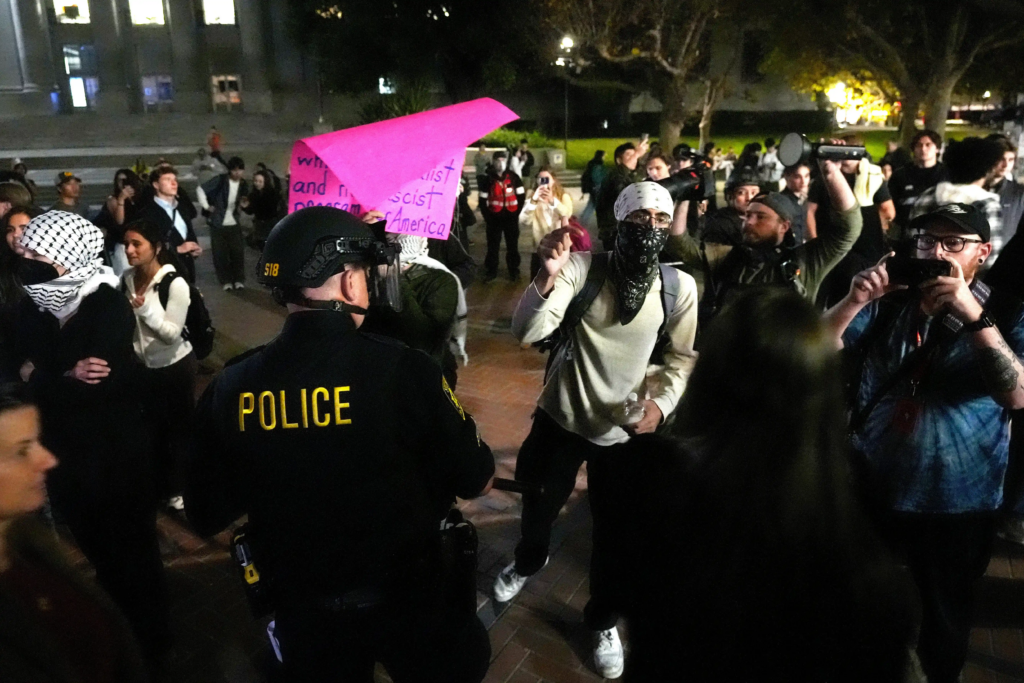
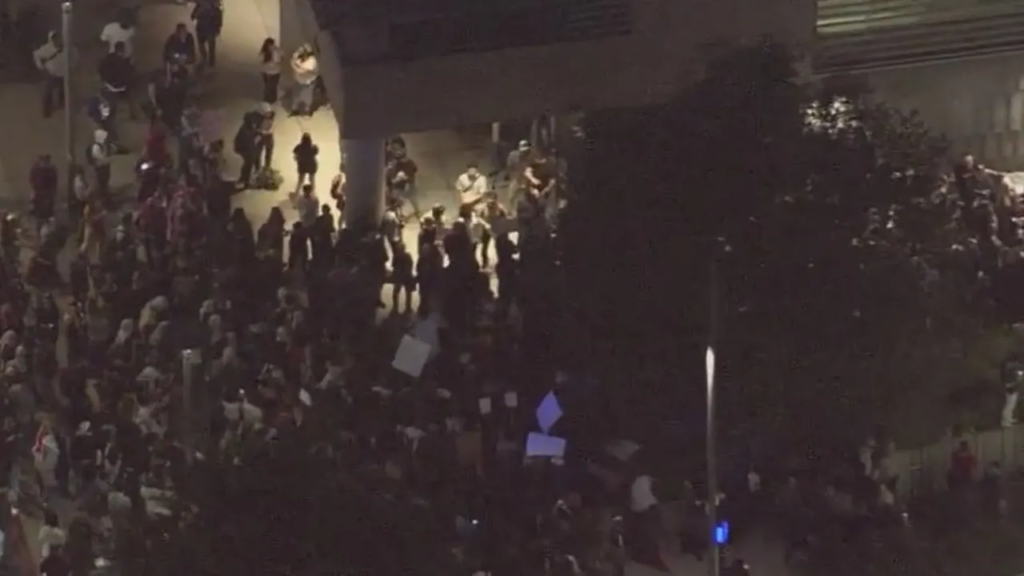
About 900 attendees packed the event, while at least 150 protesters gathered outside — mostly peaceful, though tensions flared when a bottle shattered near police lines, and at least six arrests followed.
Calling it a “frenetic flashpoint,” university officials and law-enforcement teams emphasized the dual mission of maintaining open discourse and protecting student safety. At stake: whether a campus facility built for debate remains viable when one side fears intimidation and the other fears silencing.
At a Glance
- What happened: A national conservative student group concluded its tour at UC Berkeley, drawing ~900 inside attendees and ~150 outside protesters.
- Where the friction lay: Protesters displayed signs and chants including “No Trump, no KKK, no fascist USA,” while security dealt with glass bottles and barricades near Zellerbach Hall.
- Why law-enforcement responded: The Federal Bureau of Investigation and a Joint Terrorism Task Force were reported to be investigating the protest amid concerns about outside agitators.
- Institutional context: UC Berkeley affirmed its commitment to a “robust marketplace of ideas” while noting the campus is “a different university than it was in 1964.”
- Constitutional spotlight: The case brings into focus the rights of protest, the rules governing campus speech, and how universities can balance security with free expression.
What Led Up to Monday Night
Months ago, Turning Point USA announced that UC Berkeley would host the final stop of its tour — a decision loaded with symbolism. The campus has long stood for progressive activism and was once the epicenter of the 1960s Free Speech Movement.
The event came just two months after the group’s founder, Charlie Kirk, was assassinated at a speaking engagement. That context heightened security concerns and raised the stakes for both organizers and protesters.
UC officials said this stop would be tightly managed — bag checks, attendees sorted by list, security contingency plans in place — even as they emphasised that canceling was not an option.
“Universities are places where civil discussion and debate … can and should occur, without fear or threat of harm,” one memo said.
Clashes, But Not a Collapse
Protesters gathered on Sproul Plaza and near Sather Gate ahead of the event, chanting and holding signs targeting both Turning Point and the university’s handling of free speech. One student displayed a swastika-covered sign reading “We Will Not Comply.”
Inside Zellerbach Hall the program proceeded uninterrupted — speakers complained about what they view as liberal intolerance and praised Berkeley for hosting the event. Outside, however, police arrested at least six: four earlier for vandalism related to an art installation, and two after a bottle-throwing incident near barricades.
The time of passive dialogue at Berkeley is over — this is a marketplace under pressure, and every voice now comes with security protocols.
Authorities stressed there was no large-scale violence inside, though some attendees reported confusion when a nearby vehicle played a noise that sounded like gunfire — prompting a scramble for cover.
The Constitutional Flashpoints
This event may seem like a campus spectacle. But beneath it lie core questions about institutional duty and individual rights.
First Amendment Rights and Campus Hosting
Public universities like UC Berkeley operate under the First Amendment: they cannot selectively ban speakers simply because they present controversial viewpoints. At the same time, they have a responsibility to maintain order and safeguard all attendees. The tension between those responsibilities was in plain view Monday.
Protesters, for example, have the right to voice their dissent, but they must do so without preventing the event from occurring or resorting to violence or intimidation. When windows break or projectiles fly, the university must respond — but also avoid chilling speech. That balance is delicate and dynamic.
Due Process for Protesters and Attendees
Both sides in this confrontation have procedural rights. Attendees invited by Turning Point have the right to access the event and listen. Protesters have the right to assemble and express opposition. If security protocols or state machinery favor one side systematically, constitutional concerns about viewpoint bias and fair process arise.
State and Federal Oversight of Campus Safety
With the FBI and federal civil-rights authorities now involved, there is a jurisdictional question: does federal probing of a campus protest interfere with state governance or infringe on campus autonomy? Universities must navigate both state public‐safety mandates and federal civil‐rights oversight when events become flashpoints.
Why This Moment Matters Beyond Berkeley
This was not just another college event—it foreshadowed how American campuses will handle polarized politics from now on.
If UC Berkeley demonstrates that even deeply divided gatherings can proceed while respecting both speech and safety, it could offer a model for other colleges slipping into frequent protest-driven gridlock. But if this becomes the norm—where speakers need riot gear and federal involvement just to take the stage—then the ideal of open campus speech starts to resemble a battlefield.
The question the Constitution invites us to consider is this:
Can a university host a controversial speaker without turning its podium into a fortress, and can protestors dissent openly without turning into disruptors?
On Monday, UC Berkeley may have added a chapter to its history of free-speech confrontation. But the real test will lie ahead—when the lights go down and the tape of protests stays live, will colleges still be forums of ideas or frontlines in larger ideological wars?