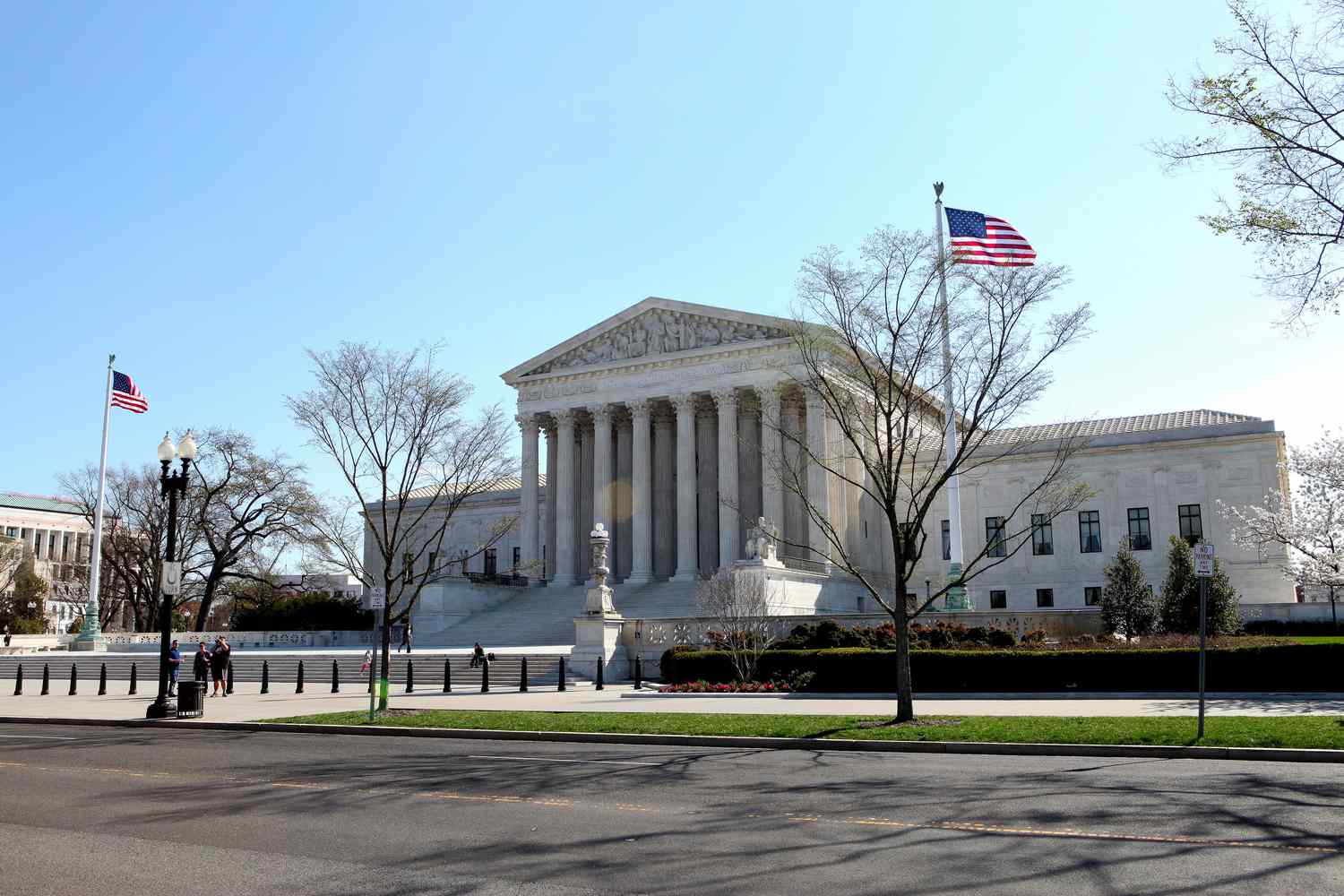
The Supreme Court ruled Friday that President Trump cannot use emergency powers to impose tariffs. The Constitution gives Congress – not the president – authority over tariffs, Chief Justice John Roberts wrote in the 6-3 decision.
By Friday evening, Trump had announced a 10% global tariff under a different law. By Saturday, he raised it to 15%, calling the Court’s ruling “extraordinarily anti-American” and promising to “determine and issue the new and legally permissible Tariffs” in coming months.
The Supreme Court blocked one path to presidential tariff authority. Trump immediately invoked another. And there are at least three more statutory options waiting if courts block this one too.
This is the constitutional collision between congressional power and executive action playing out in real time: The Court says the president exceeded his authority. The president responds by finding different authority in a different statute. And nobody knows whether the alternative authority will survive judicial review either.

Discussion
Leave a Comment
Leave a Comment
What the Supreme Court Actually Ruled
The 6-3 decision addressed Trump’s “Liberation Day” tariffs imposed in 2025 under the International Emergency Economic Powers Act (IEEPA). Trump had declared an economic emergency, claiming foreign countries were “ripping off” the United States, and used IEEPA to impose sweeping global tariffs.
Chief Justice John Roberts wrote for the majority: “The framers gave [tariff] power to Congress alone, notwithstanding the obvious foreign affairs implications of tariffs.”
The language is unambiguous. Tariffs are taxes on imports. The Constitution gives Congress taxing power. Presidents cannot impose taxes—including tariffs—without congressional authorization.
IEEPA grants presidents emergency economic powers during national emergencies. But Roberts ruled that emergency powers cannot override the Constitution’s allocation of tariff authority to Congress.
The decision invalidated all tariffs imposed under IEEPA. Trump’s entire “Liberation Day” tariff structure—potentially affecting hundreds of billions in imports—was struck down.
The dissent: Justices Clarence Thomas, Brett Kavanaugh, and Samuel Alito argued the president has inherent authority over foreign commerce and that IEEPA provides sufficient congressional authorization for emergency tariffs.
Thomas wrote: “The majority ignores that Congress explicitly granted the president emergency economic powers, including authority to regulate imports. Striking down these tariffs strips the executive of tools Congress provided for national security.”
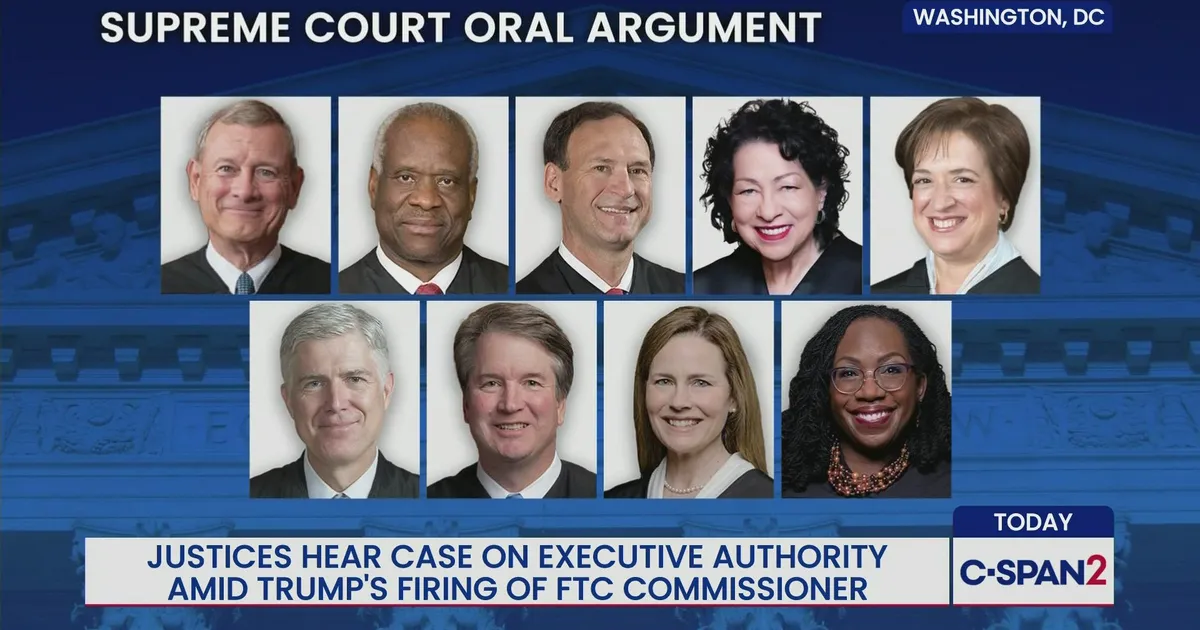
The 6-3 split is notable. Roberts was joined by Justices Sotomayor, Kagan, Jackson, Barrett, and Gorsuch. Kavanaugh—a Trump appointee—dissented along with Thomas and Alito.

Trump’s Immediate Response: Section 122
Friday evening, hours after the Court’s ruling, Trump announced he was signing a 10% global tariff under Section 122 of the Trade Act of 1974.
Section 122 – the “Balance of Payments” provision – allows presidents to impose tariff duties up to 15% for 150 days if countries are found to be “maintaining unjustifiable or unreasonable restrictions on U.S. commerce.”
The authority is intended to give the executive branch flexibility to respond quickly to trade practices harming U.S. economic interests or to correct significant balance-of-payments deficits.
Trump’s Friday announcement: “It is my Great Honor to have just signed, from the Oval Office, a Global 10% Tariff on all Countries, which will be effective almost immediately.”
The tariff applies in addition to standard tariffs already in place. It’s a new layer of taxation on all imports from all countries, implemented within hours of the Supreme Court striking down his previous tariff authority.
Saturday’s Escalation to 15%
Saturday, Trump raised the tariff from 10% to 15%—the maximum allowed under Section 122:
“Based on a thorough, detailed, and complete review of the ridiculous, poorly written, and extraordinarily anti-American decision on Tariffs issued yesterday… I, as President of the United States of America, will be, effective immediately, raising the 10% Worldwide Tariff on Countries… to the fully allowed, and legally tested, 15% level.”

The escalation to the statutory maximum suggests Trump is testing the limits of Section 122 authority immediately. Why impose 10% Friday and raise to 15% Saturday? Possibly to demonstrate that even if courts review the action, he’s operating within statutory bounds (15% is the legal maximum).
Trump called the Court’s Friday ruling “ridiculous, poorly written, and extraordinarily anti-American.” He said he was “ashamed” of certain members of the Court – presumably Kavanaugh and other justices he appointed who didn’t side with him.
The language is unprecedented for presidential response to adverse Supreme Court ruling. Trump is essentially calling the Court anti-American for ruling that the Constitution gives Congress tariff authority.
The Four Other Laws Trump Could Use
Legal experts identify at least four additional statutory paths for presidential tariffs if Section 122 gets blocked:
1. Trade Expansion Act of 1962 (Section 232)
The JFK-era law allows the Commerce Department to impose tariffs on articles “imported in such quantities or under such circumstances as to threaten or impair the national security.”
Commerce Secretary Howard Lutnick has already used this authority, building on predecessor Wilbur Ross’s 2018 steel and aluminum tariffs by adding 407 more imports to the tariff list on grounds they’re “derivative” of the two approved metals.
Advantage: Court-tested. Section 232 tariffs have survived judicial review.
Disadvantage: Not immediate. Requires Commerce Department formal investigation before tariffs can be imposed.
Constitutional concern: Can nearly everything be classified as “national security” threat? If so, the exception swallows the rule and Congress’s tariff authority becomes meaningless.

2. Trade Act of 1974 (Section 301)
Section 301 allows the U.S. Trade Representative to seek retaliatory tariffs against countries with unfair trade barriers.
The process requires investigation, including negotiations with targeted countries. If the probe finds the U.S. is being denied trade agreement benefits or facing unjustifiable trade practices, tariffs can be imposed.
Advantage: A federal appeals court in September 2025 ruled against thousands of companies challenging tariffs on China imposed under Section 301. The authority has been upheld.
Disadvantage: Imposed tariffs typically sunset after four years. And the process requires investigation and negotiation, not immediate action.
Constitutional concern: Roberts’s logic in Friday’s ruling could apply here too—even if Congress authorized tariffs, does that authorization comply with Constitution’s allocation of taxing power to Congress?
3. Smoot-Hawley Tariff Act of 1930
The Depression-era law provides mechanism for Commerce Department to determine when goods are being “dumped” on U.S. consumers or when foreign countries unfairly subsidize exports, and to respond with tariffs.
Advantage: Still on the books. Provides statutory authority.
Disadvantage: Requires product-by-product tariffs, not country-by-country. Trump’s approach has been imposing tariffs on all imports from specific countries—Smoot-Hawley doesn’t authorize that.
Historical baggage: Smoot-Hawley is blamed by many economists for worsening the Great Depression. Using it would trigger immediate economic and political criticism.
4. Fordney-McCumber Tariff Act of 1922
Largely obsolete, superseded by Smoot-Hawley and later the Reciprocal Trade Agreements Act. Any remaining provisions are considered unusable.
The list demonstrates Trump’s legal strategy: multiple statutory paths exist for presidential tariffs. If one gets blocked, invoke another. If that gets blocked, invoke a third.

The Constitutional Problem Roberts Identified
Roberts’s majority opinion rests on clear constitutional principle: Article I, Section 8 gives Congress power to “lay and collect Taxes, Duties, Imposts and Excises.”
Tariffs are duties on imports – a form of taxation. The Constitution explicitly assigns taxing power to Congress.
Presidents execute laws Congress passes. They cannot create new taxes without congressional authorization. Emergency powers don’t override constitutional allocation of authority.
Roberts wrote that the Framers gave tariff power to Congress “notwithstanding the obvious foreign affairs implications of tariffs.” Even though tariffs affect foreign relations – traditionally executive branch domain – the taxing nature of tariffs keeps them within congressional authority.
This is originalist constitutional interpretation: look at text, understand Framers’ intent, apply it to modern circumstances. Tariffs are taxes. Taxes belong to Congress. Presidents cannot impose taxes regardless of foreign policy rationale.
The Statutory Authorization Question
Trump’s counter-argument through alternative laws: Congress DID authorize presidential tariffs through multiple statutes—Trade Act of 1974, Trade Expansion Act of 1962, Smoot-Hawley, and others.
If Congress passed laws granting presidents tariff authority under specific circumstances, isn’t that Congress exercising its constitutional power by delegating implementation to the executive?
That’s the non-delegation doctrine question: Can Congress delegate its constitutional powers to the president, or must Congress exercise those powers directly?
The Supreme Court has traditionally allowed broad congressional delegations to executive agencies. Congress can pass laws granting presidents discretion to implement policy within statutory boundaries.
But does that principle apply when the Constitution explicitly assigns power to Congress? Can Congress delegate its exclusive constitutional authority to another branch?
Roberts’s opinion suggests no—at least not when it comes to tariffs. Even if Congress passes law authorizing presidential tariffs, that authorization might be unconstitutional delegation of Congress’s exclusive taxing authority.

Why Thomas, Kavanaugh, and Alito Dissented
The three dissenters argued Congress explicitly granted the president emergency economic powers through IEEPA. When Congress authorizes presidential action, the president isn’t exceeding authority—he’s exercising authority Congress granted.
Thomas’s dissent emphasized national security and foreign affairs considerations. Presidents need flexibility to respond to economic threats quickly. Requiring congressional action for every tariff change would hamstring executive response to urgent situations.
Kavanaugh – Trump appointee – sided with executive power. His dissent suggested the majority was imposing new limits on presidential authority that weren’t clearly required by constitutional text or precedent.

Alito emphasized that IEEPA represents congressional judgment that presidents should have emergency tariff authority. Striking down IEEPA tariffs overrides Congress’s policy choice about how to structure emergency economic responses.
The dissent’s argument: This isn’t presidential overreach – it’s Congress authorizing presidential action, which is exactly how separation of powers should work.
Senator Rand Paul’s Celebration
Senator Rand Paul celebrated the Court’s ruling: Trump cannot use “emergency powers to enact taxes.”
Paul has long opposed executive overreach and defended congressional prerogatives. For him, the ruling affirms that presidents cannot bypass Congress to impose taxes by declaring emergencies.
The principle matters beyond tariffs. If presidents can declare economic emergencies to justify tariffs without congressional authorization, what other taxes could they impose through emergency declarations?
Paul’s position: Emergency powers are for genuine emergencies, not policy disagreements about trade. If Trump wants tariffs, he should ask Congress to pass them – not invoke emergency authorities to bypass legislative process.

Commerce Secretary Lutnick’s Strategy
Commerce Secretary Howard Lutnick testified during confirmation hearings that he supports “country by country, macro” approach to tariffs. He agreed with Trump that the U.S. is “treated horribly by the global trading environment.”
Lutnick’s strategy appears to be maximizing tariffs through every available statutory authority:
- Section 232 (national security) tariffs on steel, aluminum, and 407 “derivative” products
- Section 122 (balance of payments) global tariffs up to 15%
- Section 301 (unfair trade practices) retaliatory tariffs
- Smoot-Hawley anti-dumping duties
By layering different statutory authorities, the administration can impose tariffs even if courts strike down one or two pathways. As long as some statutory authority survives, tariffs continue.

The “Anti-American” Supreme Court
Trump called Friday’s ruling “extraordinarily anti-American” and said he was “ashamed” of certain Supreme Court members.
The language is remarkable. The Supreme Court ruled that the Constitution gives Congress—not presidents—authority to impose taxes. Trump characterized that constitutional interpretation as anti-American.
The framing suggests Trump views any limit on presidential power as anti-American. If the Constitution says Congress has tariff authority, ruling accordingly isn’t anti-American—it’s faithful to the constitutional text.
Trump’s anger appears directed at Kavanaugh specifically—his own appointee who joined the majority rather than dissenting with Thomas and Alito. The president expected loyalty from his appointees and got constitutional interpretation instead.
The Economic Impact Nobody’s Calculating Yet
Trump imposed 10% global tariff Friday evening. He raised it to 15% Saturday morning. The Supreme Court ruling that triggered this involved different tariffs imposed under different authority.
What’s the total tariff burden on imports now?
- Standard pre-existing tariffs (vary by product and country)
- Section 232 tariffs on steel, aluminum, and derivatives
- Section 301 tariffs on China and other countries for unfair trade
- Section 122 global tariff at 15% (as of Saturday)
- Potential additional tariffs under other authorities Trump might invoke
The cumulative effect could be tariffs of 30-50% or higher on many imports. That’s not tax policy—that’s fundamental restructuring of international trade.
Consumers pay tariffs through higher prices. Businesses pay tariffs on imported components, raising production costs. Retaliatory tariffs from other countries hurt American exporters.
The economic impact of Friday’s Court ruling isn’t that tariffs disappeared – it’s that Trump immediately replaced them with different tariffs under different authority, creating uncertainty about which tariffs apply and for how long.

What Happens When Courts Review Section 122
Legal challenges to Trump’s Section 122 tariffs are inevitable. The same reasoning Roberts used to strike down IEEPA tariffs could apply to Section 122.
Plaintiffs will argue: Section 122 is unconstitutional delegation of Congress’s exclusive taxing authority. Even though Congress passed the law, it cannot delegate its constitutional power to impose taxes to the president.
Trump will argue: Section 122 has statutory limits (15% maximum, 150 days duration, specific findings required). Those limits make it constitutional delegation, not blank-check transfer of congressional power.
Courts will decide: Whether any congressional authorization for presidential tariffs survives Roberts’s ruling that “framers gave [tariff] power to Congress alone.”
If courts strike down Section 122, Trump moves to Section 232, Section 301, or Smoot-Hawley. The legal battles could continue for months or years while tariffs remain in effect pending final resolution.
The Separation of Powers Crisis
The tariff fight reveals fundamental tension in constitutional separation of powers:
Congress has tariff authority constitutionally. Article I, Section 8 is explicit.
Congress has passed laws delegating tariff decisions to presidents. Trade Act of 1974, Trade Expansion Act of 1962, IEEPA, and others all grant executive tariff authority.
Presidents claim they’re using authority Congress granted. Trump argues he’s not exceeding his power—he’s exercising power Congress gave him.
Courts must decide if Congress can delegate its exclusive constitutional authority. Even if Congress wants to grant presidents tariff power, can it constitutionally do so?
The Framers didn’t anticipate this scenario. They assumed Congress would jealously guard its powers and resist executive encroachment. They didn’t anticipate Congress passing laws giving away its constitutional authority.
When Congress delegates its own constitutional powers to the president, and courts must decide if that delegation is constitutional, separation of powers becomes judicial question rather than political negotiation.

The “Reciprocity” Framing
Trump frames his tariff policy as “reciprocity”—other countries impose tariffs on American goods, so America should impose equivalent tariffs on their goods.
The Reciprocal Trade Agreements Act, signed by FDR, originally gave presidents authority for bilateral negotiations aimed at LOWERING tariffs through reciprocal reductions.
Trump is using “reciprocity” to mean the opposite—raising American tariffs to match other countries’ tariffs, creating race to the top rather than negotiated reductions.
The rhetorical flip transforms trade liberalization authority into protectionist justification. “Reciprocity” sounds fair and balanced. In practice, it means matching other countries’ worst trade practices rather than negotiating mutual reductions.
What the Framers Would Think
The Framers gave Congress exclusive tariff authority for specific reasons:
Taxation without representation: They’d just fought a revolution against taxation without representation. Presidential tariffs are taxes imposed without legislative vote—exactly what they revolted against.
Democratic accountability: Congress members face voters. Unpopular tariffs cost legislators their seats. Presidential tariffs face no immediate electoral accountability.
Deliberation: The Framers wanted careful legislative deliberation about taxation. Presidential tariffs bypass that deliberation entirely.
Check on executive power: Requiring congressional authorization for tariffs prevents presidents from using economic policy as foreign policy weapon without legislative buy-in.
Trump’s tariff strategy – cycling through multiple statutory authorities to find one courts won’t block—would horrify the Framers. It’s exactly the kind of executive maneuvering around constitutional limits they designed the system to prevent.
The fact that Congress passed laws authorizing presidential tariffs wouldn’t satisfy them. They’d ask why Congress surrendered its constitutional authority in the first place.