The letters went out Monday morning. California, Colorado, Illinois, Minnesota, and New York would lose over $10 billion in federal funding for child care and social services. The reason cited: fraud concerns. The political pattern: all five are Democratic-led states.
By afternoon, the constitutional questions were obvious. Can a president unilaterally freeze billions in congressionally appropriated funds? Does citing fraud justify cutting off money that Congress allocated? Where’s the due process for states accused of mismanagement?
The answers determine whether federal spending is a partnership between branches—or a presidential weapon.
Discussion
Finally a president with the guts to take on the corrupt Dem states!
Get real, this is just another political stunt. Accusing whole states without evidence? That's not guts, that's playing politics.
Way to stand up to these crooked states, Trump! America first! 💪🇺🇸
Leave a Comment
Leave a Comment

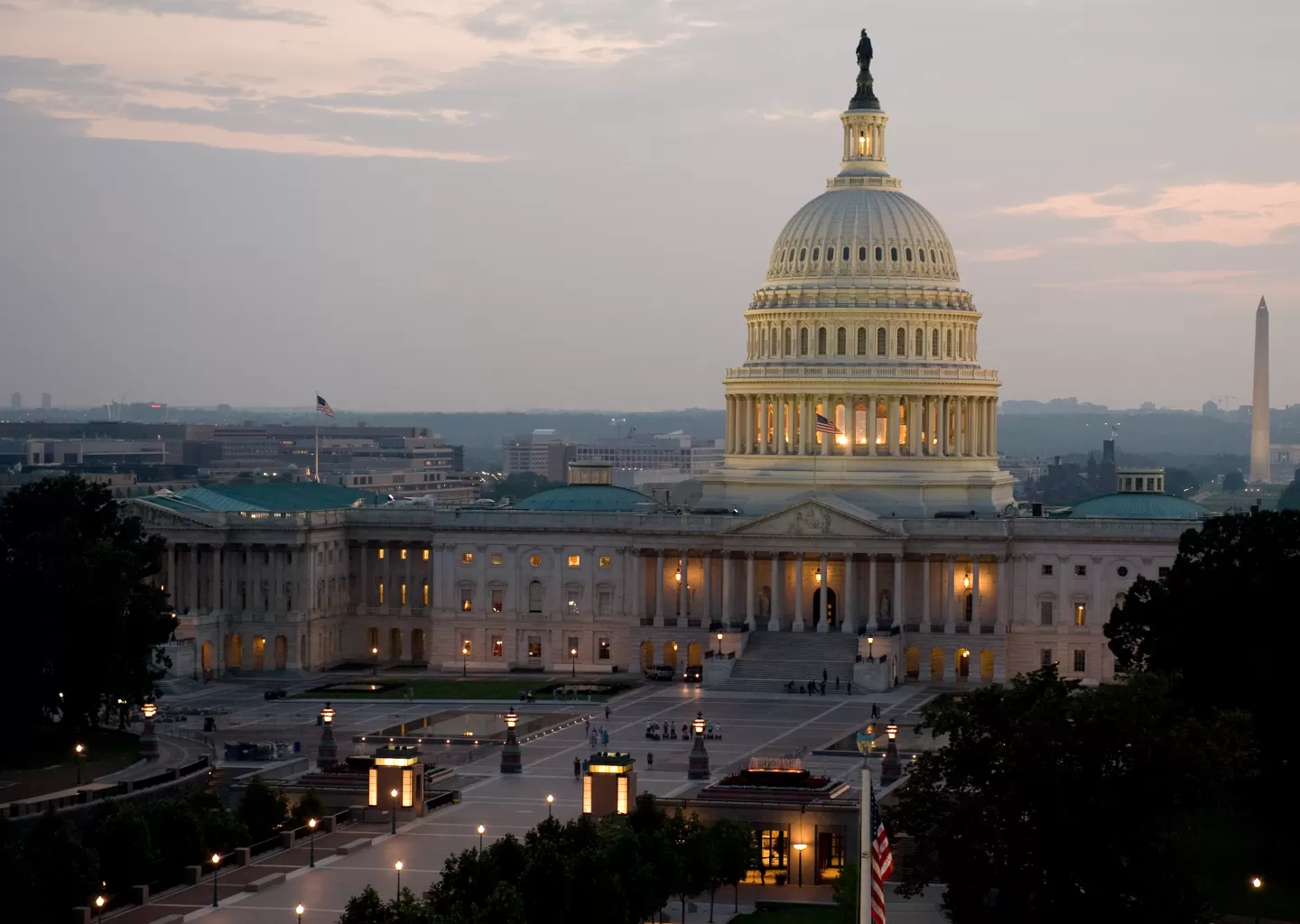
Alex Brandon/AP
What Actually Got Frozen
The Department of Health and Human Services froze funding from three major programs: the Child Care Development Fund, Temporary Assistance for Needy Families, and the Social Services Block Grant program.
The freeze blocks at least $7.35 billion in TANF money, nearly $2.4 billion in child care funding, and another $869 million from social services block grants. The five affected states – California, Colorado, Illinois, Minnesota, and New York – share one obvious characteristic: Democratic governors.

The administration’s stated rationale centers on Minnesota fraud allegations. Federal prosecutors secured convictions related to $250 million stolen through one Somali-linked organization, Feeding Our Future.
First Assistant U.S. Attorney Joe Thompson claimed the actual fraud could reach $9 billion, calling it “staggering, industrial-scale fraud.”
A viral YouTube video visiting Minnesota child care centers that received $111 million in taxpayer funds found roughly half appeared closed or empty. Subsequent reporting confirmed the findings.
But Minnesota’s alleged fraud doesn’t explain why California, Colorado, Illinois, and New York lost funding. The administration’s letters cite concerns about benefits fraudulently going to non-citizens—a broad claim without state-specific evidence publicly released for four of the five states.

The Spending Clause Question
Article I, Section 9 of the Constitution is clear: “No Money shall be drawn from the Treasury, but in Consequence of Appropriations made by Law.”
Congress appropriated the frozen funds. The president is now declining to spend them. That creates a constitutional problem that’s plagued presidents since Thomas Jefferson.

The power is called “impoundment” – refusing to spend congressionally appropriated money. Nixon used it aggressively in the 1970s, refusing to spend billions Congress had allocated for programs he opposed. Congress responded with the Impoundment Control Act of 1974, strictly limiting presidential authority to withhold funds.
Under that law, presidents can temporarily defer spending with congressional notification, or propose permanent rescissions that Congress must approve. Neither process was followed here. The administration simply announced the freeze.
The constitutional question cuts to separation of powers: If Congress appropriates funds and the president refuses to spend them, who actually controls federal spending?

The Due Process Problem
States aren’t criminal defendants—they’re partners in federal programs. But the funding freeze treats them like suspects.
Minnesota faces specific fraud allegations with convictions and ongoing investigations. The other four states received funding freezes based on generalized concerns about non-citizens receiving benefits, with no public evidence of fraud matching Minnesota’s scale.
Due process doesn’t necessarily require hearings before every government action. But it generally requires notice, an opportunity to respond, and some process before severe consequences.
The letters went out Monday. The freezes were immediate. No hearings occurred. No specific findings were issued for four of the five states.
Constitutional law distinguishes between taking away what you already have and declining to give you something new. Cutting off ongoing federal funding that states have budgeted for and recipients depend on falls somewhere in between—not quite property, not quite a gift.
Senator Kirsten Gillibrand called it “political retribution that punishes poor children.”
Whether that’s accurate depends on whether the fraud concerns are genuine or pretextual. But the process question remains: Can the executive branch freeze billions in state funding without hearings, findings, or congressional approval?

What Minnesota’s Fraud Actually Shows
The Feeding Our Future prosecution is real. Dozens of convictions. $250 million in confirmed fraud. Luxury cars and real estate purchased with stolen federal funds meant for feeding children during COVID.
Federal prosecutors believe the fraud extends far beyond what’s been charged. Thompson’s $9 billion estimate hasn’t been proven in court, but the investigation continues. The scale is enormous – possibly the largest COVID-relief fraud case nationally.
Minnesota Governor Tim Walz acknowledged the fraud concerns Monday while announcing he won’t seek reelection. “We cannot effectively deliver programs and services if we can’t earn the public’s trust,” he said, before criticizing “political gamesmanship” from Republicans.
The fraud revelations are devastating for Minnesota. The question is whether they justify freezing funding to four other states without similar evidence, or whether Minnesota’s confirmed problems are being used as justification for broader political action.

The “Non-Citizen” Justification
The administration’s letters cite concerns that benefits fraudulently went to non-citizens. That claim requires unpacking.
Federal programs have citizenship eligibility requirements. Receiving benefits as a non-citizen when you’re ineligible is fraud. But many federal programs explicitly allow certain non-citizens—legal permanent residents, refugees, asylees—to receive benefits.
The administration hasn’t released state-specific findings showing illegal payments to ineligible non-citizens in California, Colorado, Illinois, or New York at scales justifying immediate funding freezes. Without that evidence, the justification looks pretextual.
Trump’s Truth Social post Monday made the political dimension explicit: “Governor Walz has destroyed the State of Minnesota, but others, like Governor Gavin Newscum, JB Pritzker, and Kathy Hochul, have done, in my opinion, an even more dishonest and incompetent job.”
That language – “Newscum” for California Governor Gavin Newsom, broad claims about incompetence – suggests policy disagreement rather than fraud-specific concerns. The constitutional problem deepens when spending decisions appear driven by political retaliation rather than program integrity.

The Impoundment Control Act Showdown
The 1974 Impoundment Control Act was Congress’s response to Nixon’s aggressive withholding of appropriated funds. The law allows temporary deferrals with congressional notification or permanent rescissions that Congress must approve within 45 days.
Trump has expressed interest in challenging the Act’s constitutionality. Some conservative legal scholars argue it unconstitutionally restricts executive power. The theory holds that the president’s duty to “take Care that the Laws be faithfully executed” includes discretion about how and when to spend money.
That reading conflicts with the Appropriations Clause’s explicit requirement that spending follow congressional authorization. The Supreme Court hasn’t definitively ruled on presidential impoundment power.
This funding freeze could force that ruling. If states sue—and they likely will—courts will face questions about presidential spending authority that have simmered since Nixon.
The stakes extend far beyond $10 billion. If presidents can unilaterally freeze congressionally appropriated funds citing fraud concerns without process or specific findings, Congress’s power of the purse becomes advisory rather than controlling.

Who Gets Hurt First
The constitutional questions matter. The immediate human impact matters more.
TANF provides cash assistance to families in poverty—roughly 1.8 million families nationally receive benefits. The Child Care Development Fund helps low-income families afford child care so parents can work. Social Services Block Grants fund everything from adult protective services to child welfare.
Freezing those funds doesn’t hurt governors—it hurts families. Parents lose child care subsidies. They can’t work without child care. They lose income. Children lose services. The cycle compounds quickly.
Colorado Governor Jared Polis’s office said if the freeze is real, “it would be awful to see the federal government targeting the most needy families and children this way.” California said it’s “committed to safeguarding the integrity of all child care subsidy payments” but hadn’t received guidance on funding changes.

The political calculation appears straightforward: blue state governors get blamed for federal funding cuts, even though those governors didn’t commit the alleged fraud and can’t restore federal funds unilaterally.
The Supremacy Clause Meets the Spending Clause
Federal spending comes with conditions. States can refuse federal money and avoid federal rules. But once they accept funds, they must comply with federal requirements.
That’s the Spending Clause framework: Congress can attach conditions to grants, and states voluntarily accept those conditions by taking the money. The Supreme Court has upheld Congress’s spending power as a tool for achieving national policy goals states might not pursue independently.
But conditions must be clear, related to the program’s purpose, and not unduly coercive. Threatening to withhold all of a state’s highway funding unless it raises the drinking age is constitutionally permissible. Threatening to withhold all Medicaid funding unless a state expands the program is unconstitutionally coercive—the Court ruled that in 2012.
The current freeze sits in murky territory. The conditions aren’t new—states always had to prevent fraud. But the enforcement mechanism—immediate funding cutoff without process—may exceed constitutional limits.
States that accept federal funds don’t surrender sovereignty entirely. They retain rights, including due process before severe federal actions. The question is whether fraud concerns justify skipping that process.

The Pattern Across 2025
This isn’t the first time Trump administration funding decisions triggered constitutional questions in 2025.
Minnesota faced child care funding freezes in November that lasted three weeks before partial restoration. Planned Parenthood lost Medicaid funding in twenty-two states. Education funding faced sudden terminations multiple states reported.
The pattern suggests federal spending as a political tool—a way to pressure states, punish opponents, and advance policy goals without legislation. It’s constitutional if done properly through legal channels. It becomes problematic when it bypasses process requirements and congressional authority.
Every president tests spending power limits. Obama faced legal challenges over Affordable Care Act implementation. Trump’s first term saw battles over sanctuary city funding. Biden faced litigation over student loan forgiveness.
But 2025’s velocity is different. The speed of funding decisions, the scale of dollars involved, and the explicit political framing create constitutional friction previous administrations avoided or at least obscured.
What Happens Next
States will likely sue within days. The legal claims will focus on separation of powers, due process, and the Impoundment Control Act. Courts will face emergency motions for temporary restraining orders restoring funding while litigation proceeds.
The administration will argue fraud justifies immediate action, that states lack standing to challenge spending decisions, and that courts should defer to executive judgment on program administration.
Courts will likely issue preliminary injunctions restoring at least some funding—judges generally disfavor cutting off benefits to needy recipients without process. But the underlying constitutional questions will take months or years to resolve.
Meanwhile, Congress could act. The Impoundment Control Act requires congressional approval for permanent rescissions. If the administration is effectively rescinding appropriated funds, Congress can force the issue. But that requires congressional will to challenge the president, which may not exist in a Republican-controlled Congress.

The Real Constitutional Test
The Framers gave Congress the power of the purse specifically to check executive power. Presidents propose budgets. Congress appropriates funds. The executive spends according to congressional direction.
That framework assumes good faith cooperation. It assumes presidents won’t freeze billions in congressionally appropriated funds for political purposes disguised as fraud prevention. It assumes Congress will defend its constitutional powers against executive encroachment.
What happens when those assumptions fail? When a president uses spending power as a political weapon, and Congress declines to fight back because they’re the same party?
The constitutional machinery still works—courts will hear cases, issue rulings, enforce orders. But the system works best when all three branches defend their institutional prerogatives. When Congress won’t protect its spending power, courts become the only check.
That’s not how the Framers designed it. They assumed institutional loyalty would create friction between branches regardless of party. They assumed Congress would jealously guard the power of the purse.
The $10 billion freeze tests whether that assumption still holds—or whether party loyalty now trumps institutional defense.
Follow the Money, Find the Constitution
Federal spending is simultaneously the most powerful and least understood constitutional power. Congress controls it through the Appropriations Clause. The president executes it through administrative agencies. Courts review it when rights are violated.
Every dollar flowing from Washington to states involves constitutional authority, congressional appropriation, executive implementation, and state compliance with federal conditions. The system balances cooperation with coercion, voluntary participation with mandatory conditions, federal supremacy with state sovereignty.
When that balance breaks—when spending becomes a political weapon, when fraud allegations justify freezes without evidence, when process disappears and due process becomes optional—constitutional principles clarify quickly.
Can a president freeze $10 billion in congressionally appropriated funds to states he criticizes publicly, citing fraud that’s proven in one state and alleged without evidence in four others, without hearings or findings or congressional approval?
The Constitution suggests no. The Impoundment Control Act says no. Due process principles say no. But the answer ultimately depends on whether courts enforce those limits, whether Congress defends its powers, and whether the public distinguishes between fraud prevention and political retaliation.
Good, do the same to democratic ppl, they have called you and MAGA PPL everything under the Sun…they are Vicious, nasty mouth ppl, who don't deserve anything,except a good, quick kick in the Ass!!