
 Loading …
President Trump announced Wednesday night that he has ordered the Department of War to resume nuclear weapons testing “immediately” to match other nations’ programs. The directive ends a 33-year American moratorium on nuclear testing that has been maintained by presidents of both parties since 1992. Trump cited Russia’s recent missile tests and China’s growing nuclear capabilities as justification for the decision.
The announcement raises immediate questions about treaty obligations, presidential authority to restart testing without congressional approval, and whether the United States can maintain its leadership position on nuclear nonproliferation while conducting tests other nations have long demanded the right to conduct themselves.
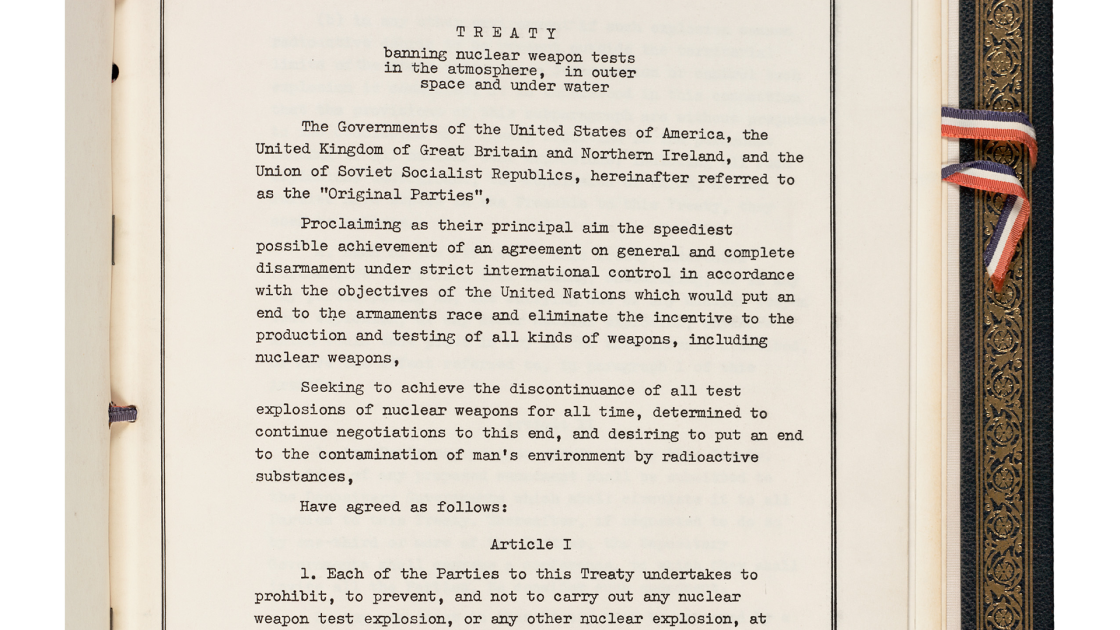
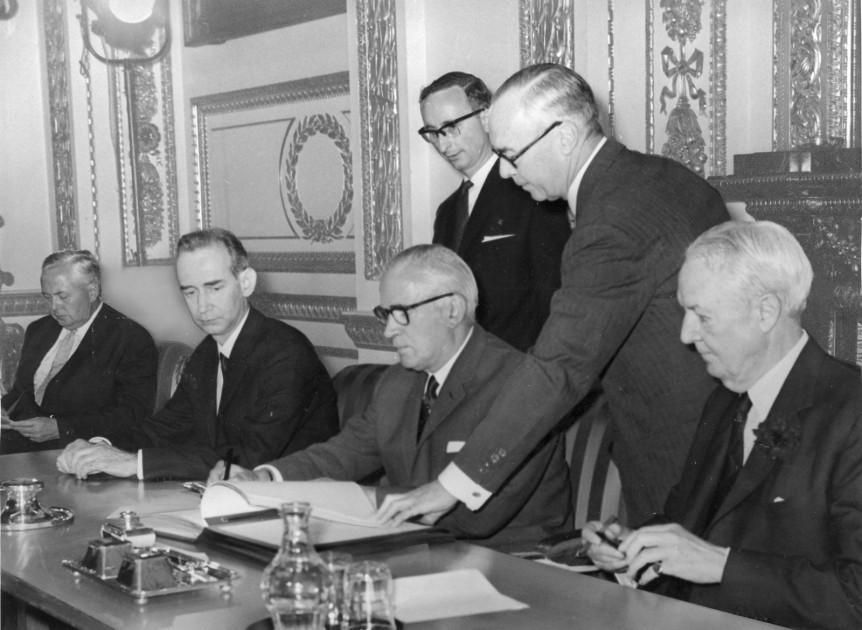
The United States remains party to the Comprehensive Nuclear Test Ban Treaty, which it signed in 1996 but never ratified. The treaty prohibits all nuclear explosions. While the Senate’s failure to ratify means the U.S. isn’t legally bound by the treaty, America has observed a voluntary testing moratorium for three decades as global norm against nuclear testing strengthened.
Discussion
Is this really about safety, or just ramping up tensions further?
Finally, someone willing to defend America. PRESIDENT TRUMP is 100% right to strengthen our nuclear capabilities against threats like Russia & China. We can't just sit back & watch! Liberals are too busy crying about treaties to protect us. Keep America SAFE AND STRONG! 🇺🇸💪
Leave a Comment
Leave a Comment
What Trump Actually Ordered
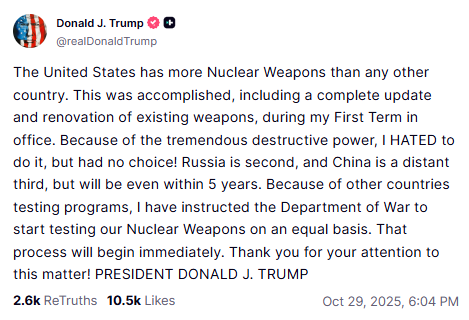
Trump’s Truth Social post stated: “Because of other countries’ testing programs, I have instructed the Department of War to start testing our Nuclear Weapons on an equal basis. That process will begin immediately.”
The directive came days after Russia announced successful testing of its nuclear-powered Burevestnik cruise missile, which Russia claims can travel more than 8,700 miles and remain airborne for 15 hours. Russian President Vladimir Putin stated Russia is moving to deploy the weapon.
Trump characterized the decision as reluctant: “Because of the tremendous destructive power, I HATED to do it, but had no choice!” He noted that the U.S. possesses more nuclear weapons than any other country – an arsenal updated and renovated during his first term – but emphasized that Russia ranks second and China will achieve parity “within 5 years.”
The Treaty Obligations
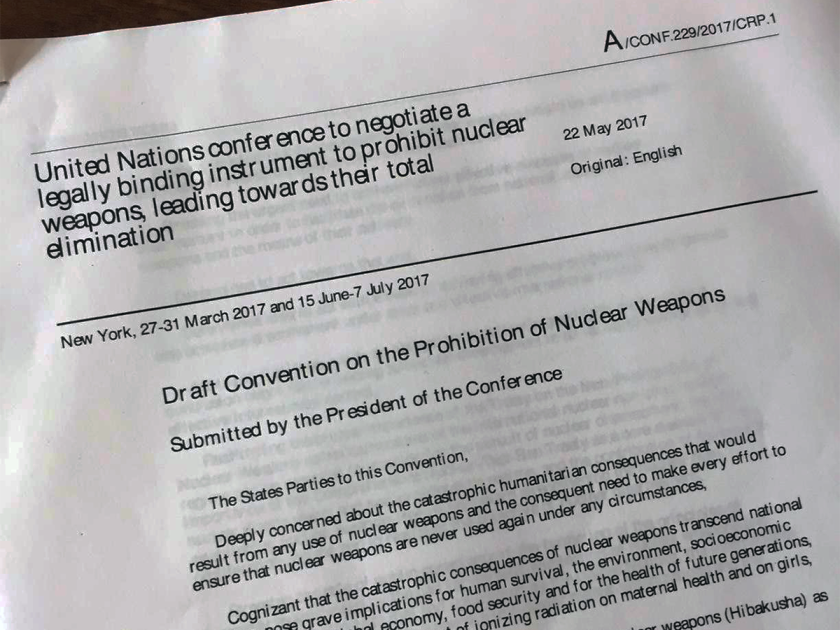
The Comprehensive Nuclear Test Ban Treaty (CTBT) prohibits all nuclear test explosions. The United States signed the treaty in 1996 under President Clinton. The Senate considered ratification in 1999 but rejected it 51-48, with Republican senators arguing the treaty couldn’t be adequately verified and would constrain U.S. nuclear modernization.
Because the Senate never ratified CTBT, the United States isn’t legally bound by its terms under international law. But America has maintained a voluntary testing moratorium since 1992 when President George H.W. Bush signed legislation imposing a nine-month testing pause that subsequent presidents extended indefinitely.
That moratorium reflected bipartisan consensus that nuclear testing wasn’t necessary for maintaining arsenal reliability and that American restraint strengthened global nonproliferation efforts. Presidents from both parties – Bush, Clinton, Bush, Obama, Biden, and Trump in his first term – all maintained the moratorium for 33 years.
Trump’s directive breaks that consensus. The question is whether the president possesses unilateral authority to resume testing or whether congressional authorization is required.
The Constitutional Authority Question
Article II makes the president commander-in-chief of armed forces. That authority includes decisions about military readiness, weapons systems, and defense capabilities. Nuclear weapons fall within presidential command authority as the ultimate military capability.
But Congress controls appropriations and has authority to “raise and support Armies” and “provide and maintain a Navy.” Nuclear weapons testing requires substantial resources, infrastructure, and preparation. The last U.S. nuclear test occurred in 1992. Testing facilities have been mothballed. Resuming testing would require hundreds of millions in appropriations.
Can the president simply order testing without congressional funding? The Department of War presumably has discretionary funding that could be reprogrammed for testing preparation. But actual detonations would require resources beyond typical discretionary accounts.
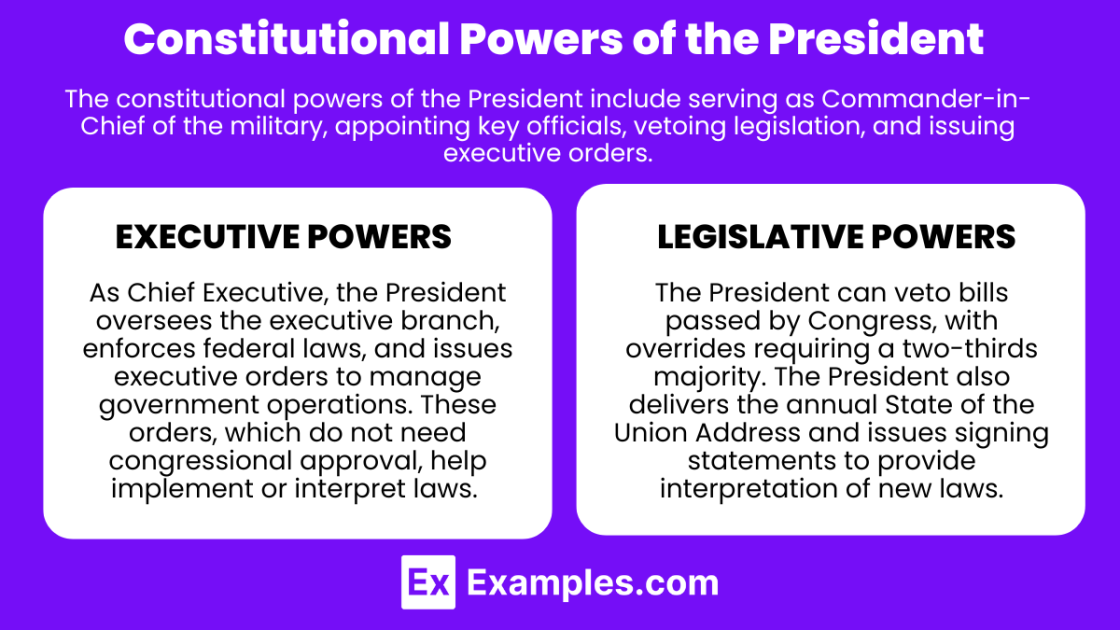
Congress could refuse to appropriate funds for testing, effectively blocking the president’s directive. But if Trump redirects existing defense appropriations – similar to how he redirected Pentagon research funds for military payroll during the shutdown – he might initiate testing before Congress can intervene.
The Russia and China Justification
Trump explicitly cited Russian testing programs and China’s growing arsenal as reasons for resuming U.S. tests. The framing suggests American testing serves defensive purposes – maintaining parity rather than seeking advantage.
Russia’s Burevestnik missile test demonstrates continued Russian investment in nuclear capabilities. China is rapidly expanding its nuclear arsenal, with Pentagon estimates suggesting China will possess 1,000 warheads by 2030 – triple its current stockpile.
But neither Russia nor China has conducted full-scale nuclear test explosions recently. Russia’s Burevestnik test involved a nuclear-powered cruise missile – the propulsion system is nuclear, but the test didn’t involve nuclear detonation. China conducts subcritical experiments that don’t produce nuclear yield.
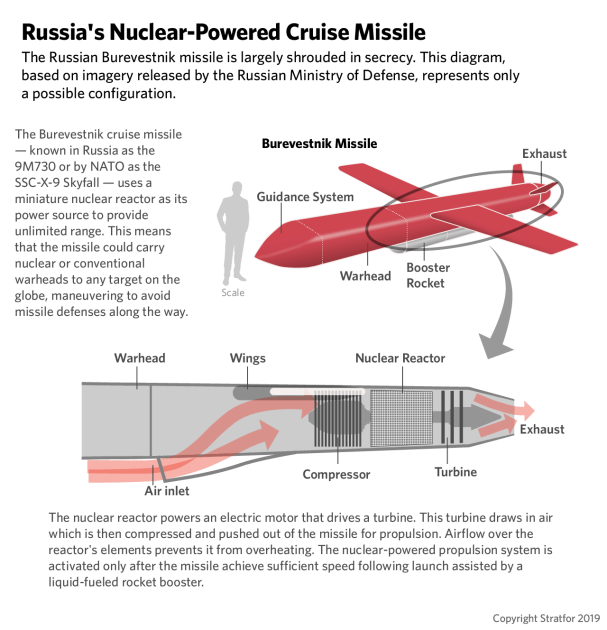
The distinction matters. Resuming actual nuclear test explosions – detonating nuclear weapons to test yields and effects – differs substantially from testing delivery systems or conducting subcritical experiments. Trump’s directive appears to authorize the former rather than just the latter.
What “Testing on an Equal Basis” Means
Trump stated he ordered testing “on an equal basis” with other countries’ programs. That phrase is ambiguous. Does it mean:
- The same number of tests as Russia and China conduct?
- Tests of similar magnitude and purpose?
- Testing capability maintenance without specific parity metrics?
The ambiguity leaves implementation discretion to Defense Department officials. They could interpret “equal basis” narrowly – conducting minimal tests to demonstrate capability – or broadly – matching whatever testing programs adversaries pursue.
The Department of War hasn’t issued implementing guidance. Whether testing begins with subcritical experiments, simulations, or actual detonations remains unclear.

The Nuclear Nonproliferation Implications
The United States has long led global nonproliferation efforts. American voluntary testing restraint strengthened arguments that other nations should forgo nuclear weapons development. If the world’s largest nuclear arsenal doesn’t require testing for reliability, why would emerging nuclear states need it?
Resuming testing undermines that nonproliferation leadership. It signals that nuclear testing serves legitimate security purposes and that treaty obligations or voluntary restraints can be set aside when national interest dictates.
That message matters for countries considering nuclear weapons development. If America resumes testing, nations like Iran, North Korea, or others pursuing nuclear capabilities can cite U.S. precedent when international community pressures them to exercise restraint.
The Submarine Positioning
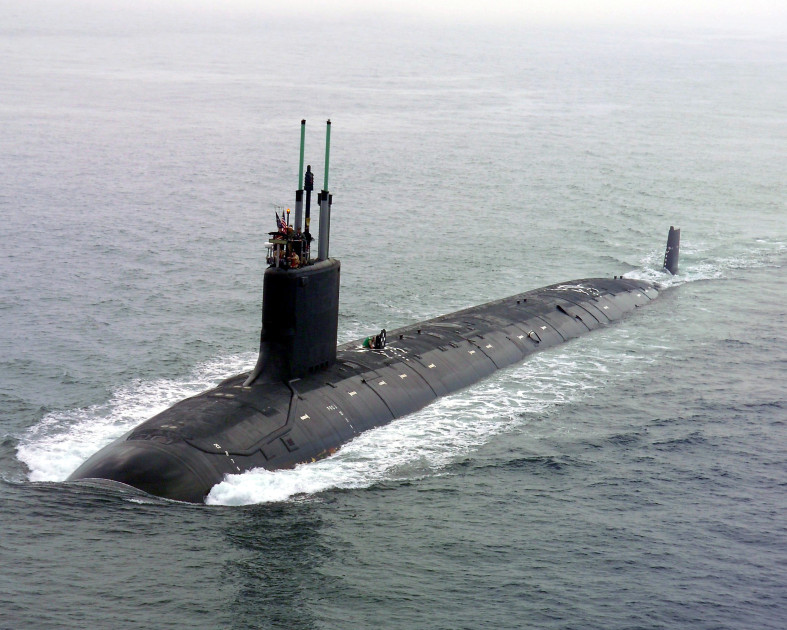
Trump revealed Monday that the U.S. has positioned a nuclear submarine “right off [Russia’s] shores” in response to Russian missile testing. The disclosure of submarine positioning is extraordinary – such information is typically classified because submarines’ effectiveness depends on adversaries not knowing their locations.
Trump’s public revelation suggests either that the submarine’s positioning was meant as visible deterrent (submarines surfacing or operating in detectable ways) or that Trump disclosed classified information to make a political point about American military strength.
The comment reflects Trump’s broader nuclear posture – emphasizing American capability and willingness to use force while criticizing Russia for testing missiles instead of pursuing peace in Ukraine. He stated: “We’re not playing games with them” and suggested Putin should “get the war ended” rather than testing missiles.
The “Department of War” Framing
Trump continues referring to the Defense Department as the “Department of War” – terminology that hasn’t been official since 1947 when the National Military Establishment was reorganized into the Department of Defense.
The rhetorical choice signals Trump’s preferred military posture. “Defense” suggests protecting American interests and responding to threats. “War” suggests offensive operations and combat focus.
Applied to nuclear testing, the “Department of War” framing positions tests as preparation for potential nuclear conflict rather than maintaining deterrent capability. That subtle shift in language reflects broader changes in how Trump characterizes American military power.
The Congressional Response
Trump announced the testing directive Wednesday night. As of publication, Congress hasn’t responded with legislation, hearings, or significant pushback. The silence suggests either acceptance of presidential authority over nuclear testing decisions or reluctance to challenge Trump on national security grounds.
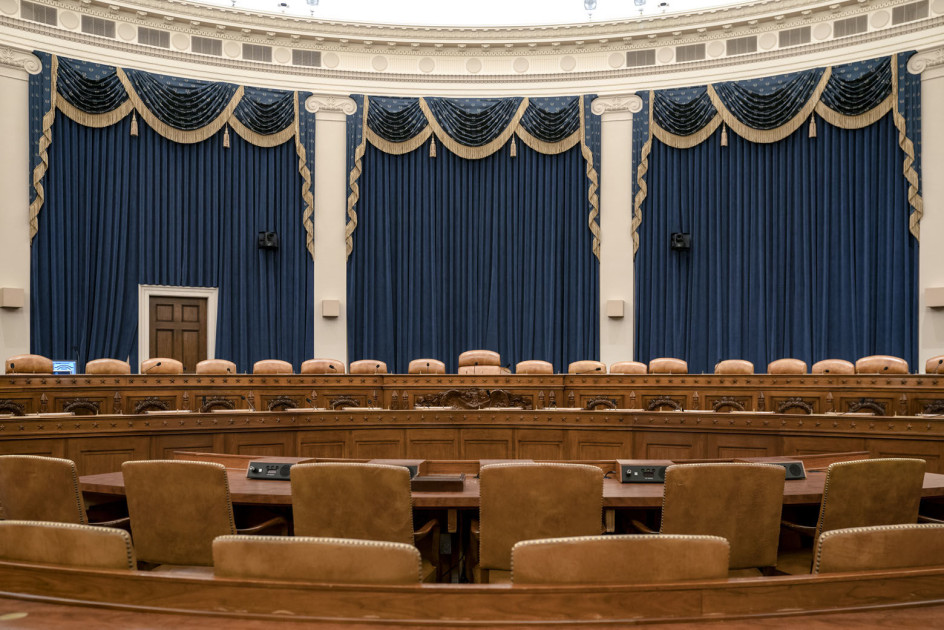
Congress could prohibit nuclear testing through appropriations riders – refusing to fund test preparations or operations. The House and Senate Armed Services Committees could hold hearings examining the necessity and implications of resumed testing.
But such actions require congressional majorities willing to confront the president on nuclear policy. With Republicans controlling Congress and viewing Trump’s national security decisions favorably, meaningful oversight seems unlikely.
The Scientific Question
Do U.S. nuclear weapons require testing to ensure reliability? The National Nuclear Security Administration has maintained through multiple administrations that stockpile stewardship programs – using supercomputer simulations, subcritical experiments, and component testing – can verify weapons reliability without full-scale detonations.
If NNSA assessments are correct, resumed testing serves political or strategic purposes rather than technical necessity. The weapons work regardless of whether they’re detonated in tests.
If NNSA assessments are wrong – if simulations cannot fully replicate test conditions – then weapons reliability may genuinely require periodic testing. But decades of NNSA reporting to Congress has consistently maintained that testing isn’t necessary.

The Global Response
International reaction to Trump’s announcement will indicate whether the testing decision damages American diplomatic standing or whether other nations accept the justification based on Russian and Chinese programs.
U.S. allies who have urged restraint and nonproliferation leadership may criticize the decision. Nations seeking to develop nuclear capabilities will cite it as precedent. And adversaries will characterize it as American aggression justifying their own military buildups.
The testing announcement came as Trump prepares for his first face-to-face meeting with Chinese President Xi Jinping in six years. That meeting will address trade disputes, but now it will also occur against backdrop of Trump ordering nuclear testing specifically citing China’s arsenal growth.
What Happens Next
The Department of War must now determine how to implement Trump’s directive. Options range from subcritical experiments that don’t produce nuclear yields to full-scale detonations at Nevada Test Site or other facilities.
Preparations for actual detonations would take months or years. Testing facilities have been inactive for three decades. Environmental assessments would be required. Safety protocols would need updating. Personnel would require training.
If Trump wants visible demonstrations of resumed testing quickly, the Department might conduct subcritical experiments or announce test preparations rather than actual detonations. Those steps would signal compliance with Trump’s directive while buying time for more comprehensive planning.

Congress could intervene through appropriations restrictions or legislation prohibiting tests. But absent congressional action, presidential authority over military operations likely permits at least initial testing preparation.
The Treaty Isn’t Binding
America’s failure to ratify CTBT means Trump’s directive doesn’t violate treaty obligations as a legal matter. But it violates the spirit of international nonproliferation efforts and the voluntary restraint America has exercised for 33 years.
That distinction matters diplomatically more than legally. The United States can technically resume testing without breaching international law. But doing so damages American credibility when advocating nuclear restraint by other nations.
The question is whether Trump views that credibility loss as acceptable cost of maintaining arsenal capability. His announcement suggests he does – national security concerns about Russian and Chinese programs outweigh diplomatic costs of resumed testing.
The Moratorium That Just Ended
For 33 years, presidents of both parties maintained nuclear testing restraint. That bipartisan consensus reflected judgment that testing wasn’t necessary for security and that American leadership required setting an example for other nations.
Trump’s directive ends that consensus. Whether future presidents will restore the moratorium or whether America has permanently resumed testing remains uncertain. But the 33-year pause in U.S. nuclear testing just concluded.
Russia tested missiles. China expands its arsenal. Trump ordered matching tests “on an equal basis.” And the nuclear arms control architecture that has constrained testing for three decades faces an uncertain future as America rejoins nations conducting nuclear weapons tests.
The president announced the decision on social media Wednesday night. The Department of War will begin implementation “immediately.” And the question of whether presidential authority alone suffices to resume nuclear testing – or whether Congress must approve – will be tested alongside the weapons themselves.
Finally, some real leadership in this country! President Trump sees the danger where the Dems just turn a blind eye. We can't sit around while Russia and China bulk up their nukes and get ready to challenge us. This is about America first, not rolling over to keep some outdated treaty happy. Dems probably worried more about their global buddies than protecting this great nation. Trump keeps showing he knows what it takes to keep us safe. If resuming tests means we stay ahead, then that's what needs to happen. Strength is what keeps America on top, not weakness! MAGA!