
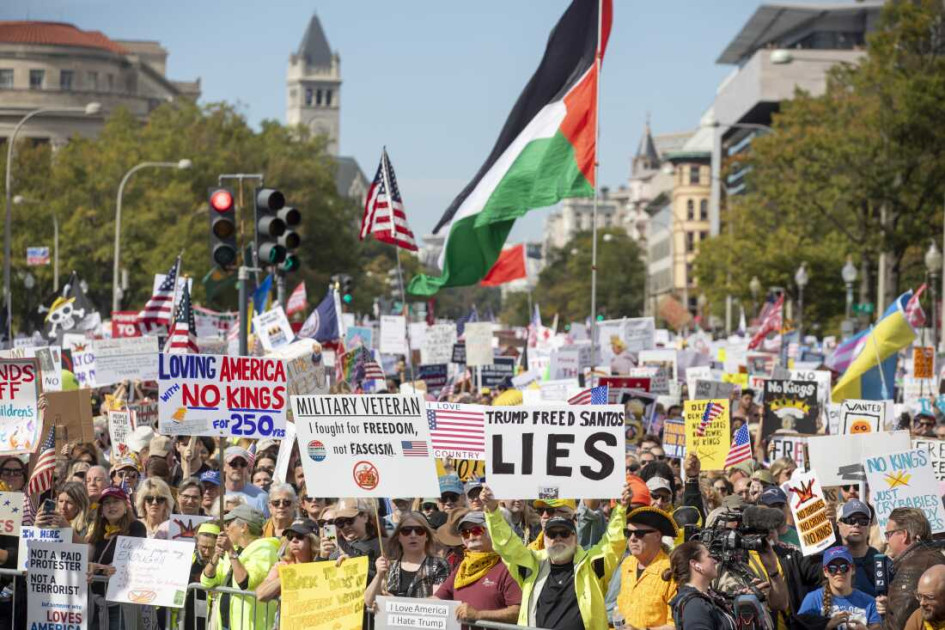
Roughly 7 million people participated in “No Kings” demonstrations across more than 2,700 locations Saturday, making it one of the largest single-day domestic protests in modern American history. President Trump initially dismissed the events as drawing “very few people,” then posted an AI-generated video depicting himself in a fighter jet dropping what appears to be feces on protesters in Times Square.
The presidential response – juvenile imagery followed by claims the massive turnout was “very small” despite reality – revealed something about how executive power responds to mass dissent. Trump told reporters aboard Air Force One that he believes “radical left lunatics” were responsible and added “we’re checking it out,” suggesting possible federal investigation into citizens exercising First Amendment rights.
The contrast between organizers’ stated goals and Trump’s reaction exposes tensions about legitimate protest, presidential authority, and whether democracy can function when leaders treat mass demonstrations as threats requiring investigation rather than signals requiring attention.
Discussion
Leave a Comment
Leave a Comment
The Turnout That Exceeded Predictions
Trump told reporters days before the events: “I hear very few people are going to be there, by the way.” Republican Representative Dan Meuser echoed this on Newsmax, saying “they claim there is going to be hundreds of thousands of people. We shall see.”
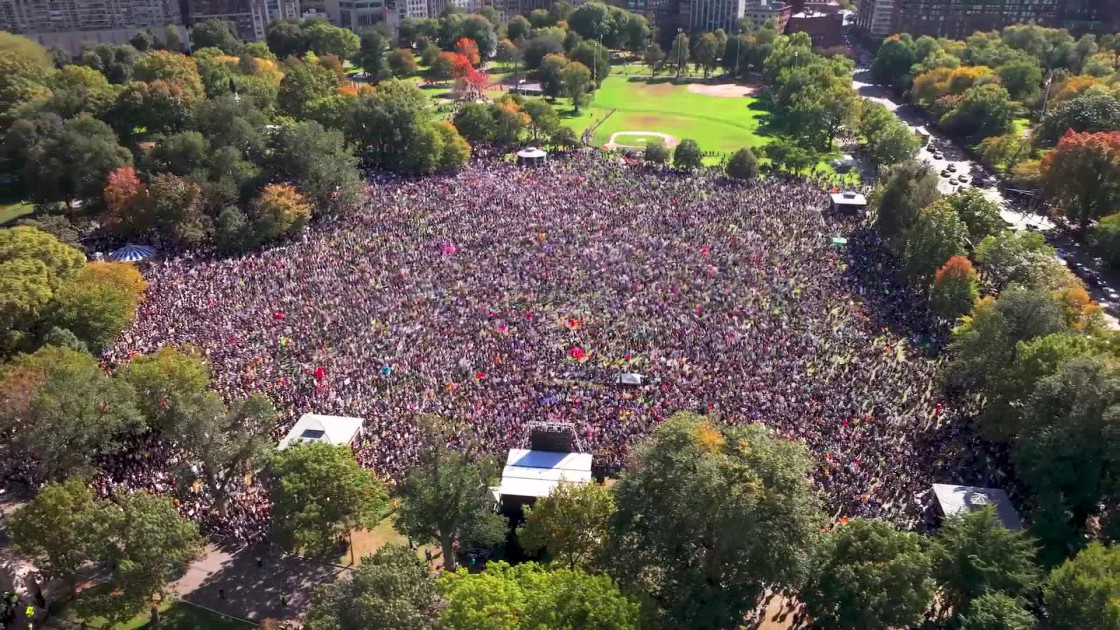
The actual participation dwarfed those predictions. Organizers reported roughly 7 million participants across 2,700 demonstrations in cities from Los Angeles to New York, including Chicago, Washington D.C., and Austin. International demonstrations occurred simultaneously.
NBC News reported crowds flooding streets “chanting, marching and waving homemade signs” with messages including “We want all of the government to work” and “Make America Good Again.” The turnout represented one of the largest coordinated protest efforts in American history.

Ezra Levin, co-founder of Indivisible which co-organized the events, told The Washington Post that RSVPs “skyrocketed” after GOP leaders launched coordinated efforts to smear the protests as “hate America” rallies. The Republican rhetoric appears to have backfired, generating increased participation rather than discouraging attendance.
The Presidential Response That Contradicted Itself
When The New York Times asked the White House Saturday afternoon for Trump’s reaction, a spokesperson replied: “Who cares?”
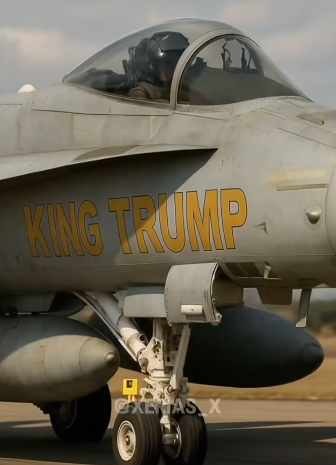
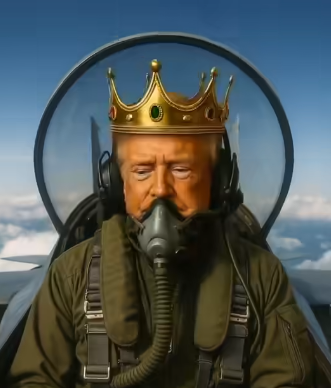
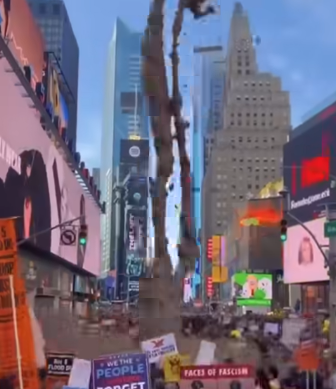
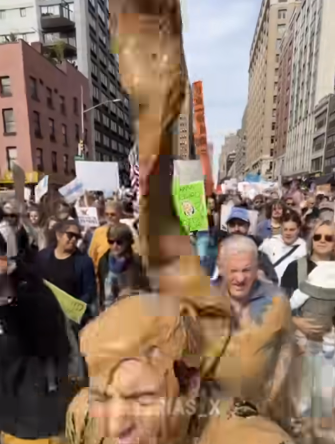
What became apparent quickly was that Trump cared considerably. He posted an AI-generated video showing himself in a fighter jet dropping apparent fecal matter on protesters who resembled left-wing influencer Harry Sisson and others gathered in what appeared to be Times Square.
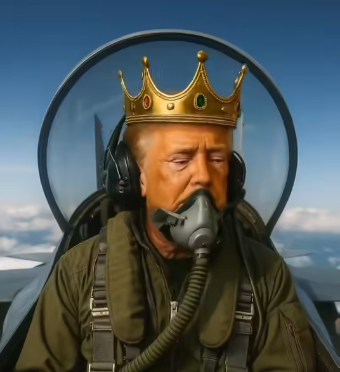
The video was, as MSNBC noted, “disgusting and a timely reminder of the incumbent president’s juvenile and classless tastes.” It was accompanied by other postings including a video featuring Trump wearing a crown – precisely the monarchical imagery the protests were designed to reject.
The following day aboard Air Force One, Trump continued characterizing the massive turnout as “very small” despite documented reality. He stated that “radical left lunatics” were responsible and that his team was “checking it out” – suggesting federal investigation into the protests.
What “Checking It Out” Actually Means
Trump’s comment that his administration is “checking it out” regarding the protests raises immediate constitutional concerns. The First Amendment protects the right to peaceful assembly and petition for redress of grievances. Suggesting federal investigation into citizens exercising those rights treats constitutionally protected activity as suspicious conduct requiring scrutiny.
What would such investigation examine? Whether protest organizers followed permit requirements? Whether foreign funding supported the demonstrations? Whether participants committed crimes? Or simply whether Americans who disagree with the president can be identified, monitored, and potentially subjected to government pressure?
The vagueness itself is troubling. Trump didn’t specify what laws he believes were violated or what federal interest justifies investigation. The statement appears designed to chill future protest activity by suggesting that mass demonstrations against the president trigger federal scrutiny.
The Message the Protests Were Sending
The “No Kings” framing explicitly invokes founding principles – America rejected monarchy and established democratic governance with institutional checks on executive power. The name itself constitutes a constitutional argument rather than merely policy opposition.
Protest signs reading “We want all of the government to work” suggest frustration with the ongoing shutdown now in its third week. Signs saying “Make America Good Again” reframe Trump’s campaign slogan to emphasize values over winning. The messaging focused on democratic governance and constitutional principles rather than specific policy disagreements.
New York Times columnist Jamelle Bouie noted that “nationwide protests with millions of people are a direct rebuke to the president’s narrative. They send a signal to the most disconnected parts of the American public that the president is far from as popular as he says he is.”
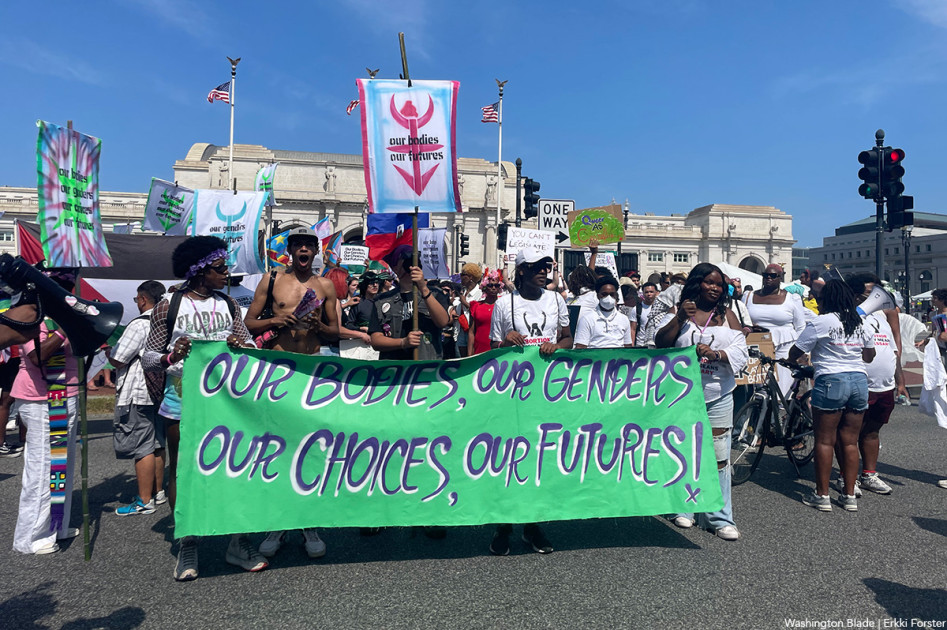
The protests were designed, according to organizers and participants, to demonstrate that Trump’s claims of universal support and political dominance don’t match reality. Millions of Americans actively oppose his administration’s direction and are willing to publicly demonstrate that opposition.
The Republican Strategy That Backfired
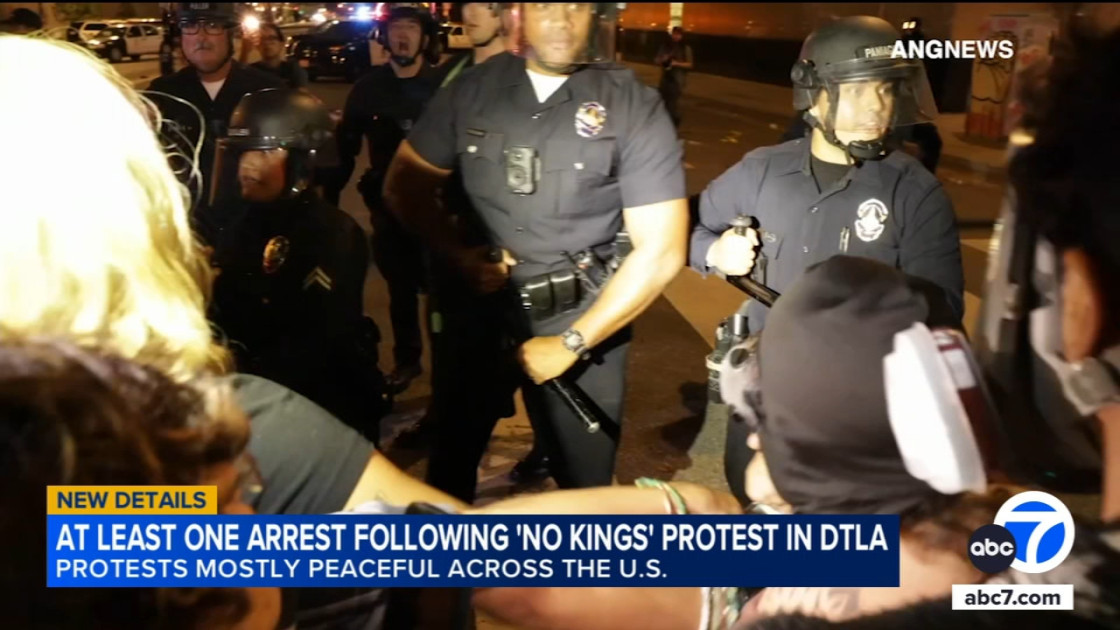
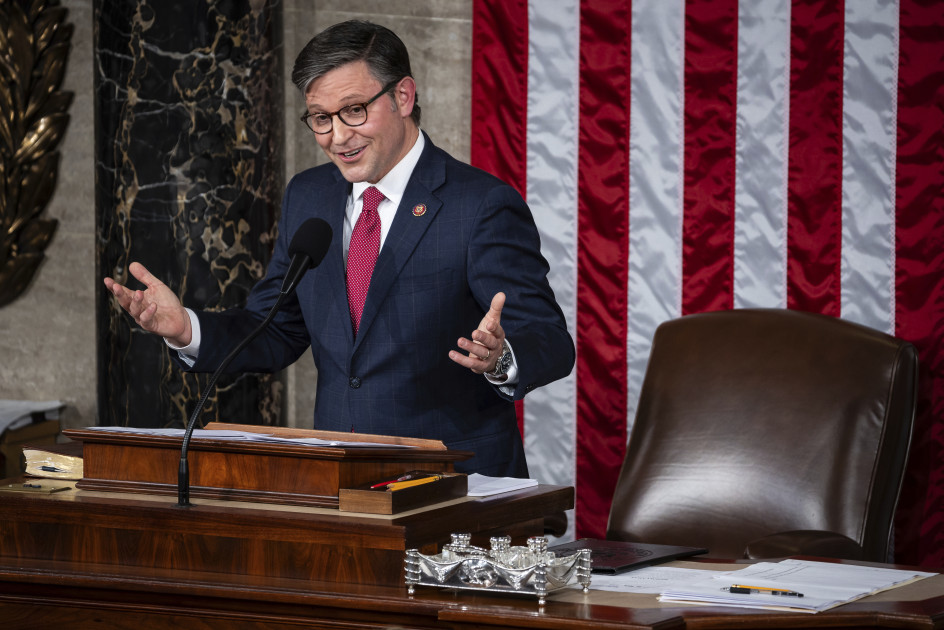
GOP leaders spent days before the protests characterizing them as “hate America” rallies that would draw “pro-Hamas” Democrats and “antifa people.” Speaker Mike Johnson deployed this language. House Republican Whip Tom Emmer claimed protesters would show “hate for America.” Senator Roger Marshall suggested the National Guard might be necessary.
The coordinated messaging appears to have been counterproductive. Rather than discouraging participation, it generated increased interest and RSVPs. Americans who might have sat out the protests apparently decided to attend specifically because Republican leaders were pre-emptively delegitimizing them.
This dynamic reveals something about how protest functions in contemporary America. When government officials attack planned demonstrations before they occur, they inadvertently validate organizers’ claims that democratic participation faces threats from those in power.
The Historical Context
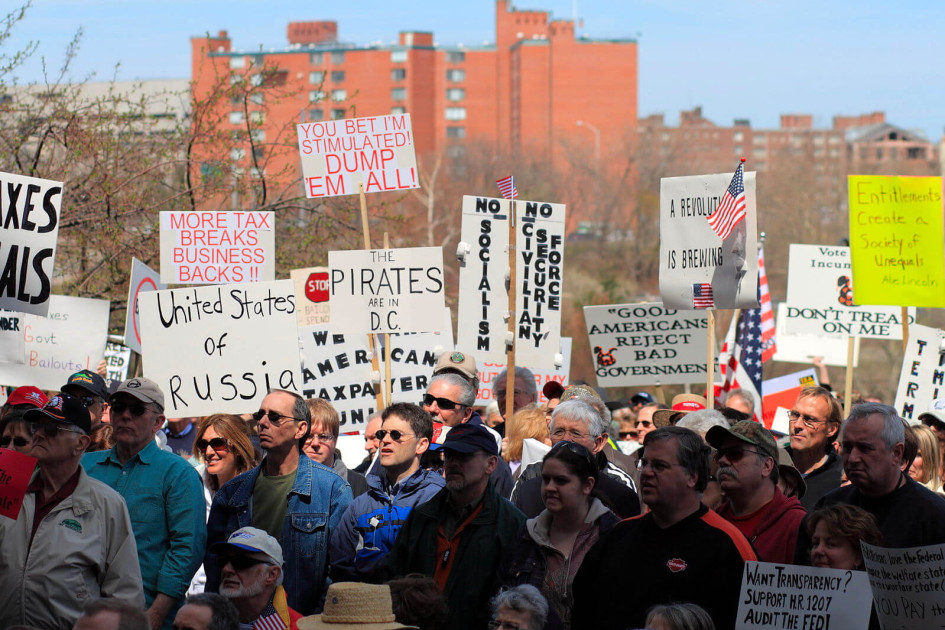
MSNBC compared the “No Kings” protests to the Tea Party movement of 2009, which drew massive participation to oppose Obama administration policies. The Tea Party demonstrations were characterized by conservatives as legitimate grassroots expression. Many of the same Republican leaders now calling “No Kings” protests “hate America” rallies previously celebrated Tea Party activism as quintessentially American.
The inconsistency reveals that characterizations of protest legitimacy often depend more on partisan alignment than on actual protest conduct or constitutional principles. When supporters protest, it’s patriotic. When opponents protest, it’s dangerous.
That double standard corrodes democratic discourse. Protest serves essential democratic functions regardless of which party it opposes. Mass demonstrations signal to elected officials that significant portions of the population oppose current direction. Officials can disagree with protesters’ positions, but treating constitutionally protected assembly as suspect or threatening undermines democratic accountability.
What the Turnout Actually Reveals
Seven million participants across 2,700 demonstrations represents extraordinary coordination and motivation. Organizing protests of that scale requires extensive planning, communication networks, and sustained commitment from participants willing to spend Saturday demonstrating rather than pursuing personal activities.
That level of participation suggests the protests weren’t primarily driven by professional activists or paid organizers – claims Trump and Republicans have made. Seven million people don’t turn out because they’re paid. They turn out because they’re motivated by genuine concerns about government direction.
Whether those concerns are justified remains contested. But the turnout itself demonstrates that millions of Americans view current administration policies as threatening enough to warrant public demonstration. That signal matters democratically regardless of whether Trump agrees with their assessment.
The AI Video People Can’t Stop Talking About
Trump’s decision to post AI-generated video depicting himself defecating on protesters from a fighter jet reveals something beyond poor taste. It demonstrates contempt for citizens exercising constitutional rights and suggests that presidential authority includes symbolic violence against dissenting Americans.
The imagery – military aircraft, presidential figure, excrement falling on citizens – communicates dominance and humiliation rather than democratic engagement. It treats protesters not as citizens with legitimate grievances but as enemies deserving degradation.
This isn’t subtle political rhetoric or harsh policy disagreement. It’s the president of the United States posting imagery depicting violence and degradation directed at millions of Americans peacefully exercising First Amendment rights.

The Contradiction Trump Can’t Resolve
Trump simultaneously claims the protests were insignificant (“very few people,” “very small”) while demonstrating through his responses that they bothered him considerably. If the protests truly were small and insignificant, he wouldn’t have posted multiple responses, created AI videos, or announced federal investigation.
The contradiction reveals that the protests succeeded in their immediate goal – getting the president’s attention and demonstrating that his claims of universal support don’t match reality. His excessive reaction confirms the protests’ effectiveness.
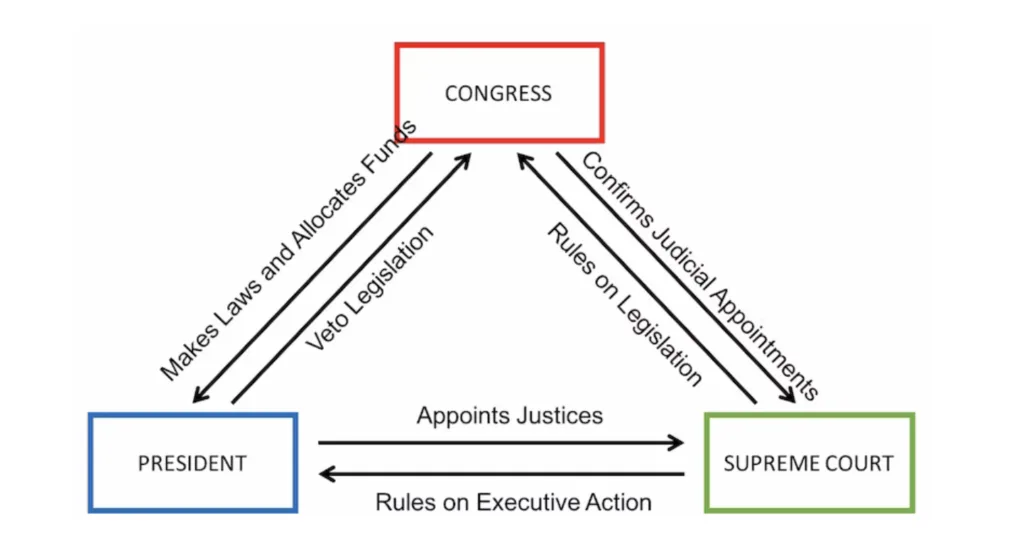
Jamelle Bouie’s observation about sending “a clear warning to those institutions under pressure from the administration” captures this dynamic. The protests weren’t designed primarily to change Trump’s mind about policies. They were designed to demonstrate to other institutions – Congress, courts, media, state governments – that resistance to presidential overreach has broad public support.
The Federal Investigation Threat
Trump’s comment about “checking it out” deserves serious constitutional attention. If the administration actually investigates protest organizers or participants for exercising First Amendment rights, that constitutes government retaliation for protected speech and assembly.
Federal investigation can chill future protest activity even if it never results in charges. Being investigated is costly, stressful, and potentially career-damaging. If Americans believe that protesting the president triggers federal scrutiny, many will choose not to participate in future demonstrations.
That chilling effect undermines democratic accountability. Mass protests serve as important feedback mechanism showing elected officials when significant portions of the population oppose their direction. If government can suppress that feedback through investigation threats, democratic signaling breaks down.