
Here’s What Both Sides Aren’t Telling You
Immigrant healthcare has become the rhetorical centerpiece of the government shutdown standoff. Republicans claim Democrats are demanding taxpayer funding for “illegal aliens.” Democrats insist they’re protecting American families’ access to affordable insurance. Both sides are talking past each other while millions of people wait to see if the government reopens and what healthcare policies survive.
The shutdown rhetoric treats all 47 million immigrants as a single category. The actual policy divides them into dozens of legal statuses – each with different eligibility rules. Whether those distinctions matter depends on whether you think a refugee who fled persecution should be treated the same as someone who overstayed a visa, or whether “lawfully present” is a meaningful category when debating healthcare access.
Here’s what the numbers show about who’s actually affected, what coverage currently exists, and what changed in 2025 that’s driving this fight.
Discussion
Democrats want open borders and free healthcare for all, that's the real truth!
Typical! Classic fake news trying to twist the narrative on immigrant healthcare. They want us to believe it's all about affordable insurance for American families, but we know the real objective: giving out free stuff to those who ain't even supposed to be here! While they package it as caring for "lawfully present" folks, they’re just sneaking benefits to illegals. Democrats are making it sound like it's crucial to reopen the government for this when in reality, they're ignoring our border security—and let's be real, they're not fooling anyone about their priorities. We need to focus on our citizens and real Americans first! MAGA!
I'm an immigrant turned naturalized citizen, I have the FIRSTHAND knowledge and experience. I came December of 1980 (legally) and processed my papers, it took 3 years to have a valid green-card. There were no benefits, no help or assistance; I wanted to live in this country so I made the sacrifices and paid the price. When I received the green-card, I paid back taxes and social security for 3 years and I was NOT ALLOWED government assistance for at least 5 years. First you pay INTO the system
Leave a Comment
Leave a Comment
Sorting Through Who’s Actually Being Discussed
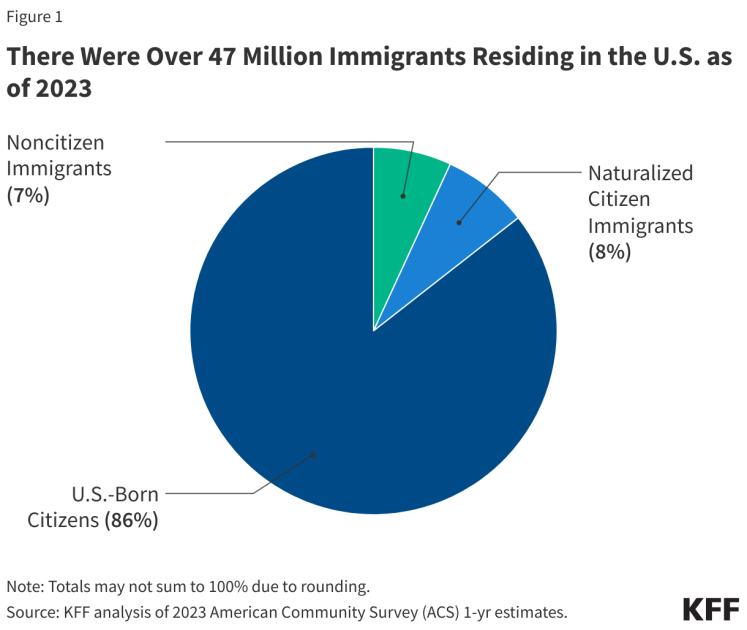
The United States had 47.1 million immigrants in 2023. That single number gets thrown around in shutdown debates as though everyone in it has identical legal status and healthcare access. They don’t.
Of that total, 24.7 million are naturalized citizens – 7% of the population with identical healthcare rights as native-born Americans. The remaining 22.4 million are noncitizens, but roughly 60% of them are lawfully present through various immigration statuses: lawful permanent residents, refugees, asylees, temporary protected status holders, work visa holders.
The approximately 40% who are undocumented – roughly 9 million people – are what most people picture when politicians say “illegal aliens.” But even there, the numbers get complicated: 12% of American children have at least one noncitizen parent, and one in four U.S. children has an immigrant parent.
That family structure creates scenarios where American citizen kids go without healthcare coverage they’re entitled to because their parents fear that enrolling them will trigger immigration enforcement.
The fear might not match legal reality, but it creates barriers just as effectively as actual policy restrictions.
The question is whether these distinctions between naturalized citizens, lawful permanent residents, refugees, asylees, temporary status holders, and undocumented immigrants actually matter for policy purposes – or whether “immigrant” is a meaningful enough category for healthcare debates.
Looking at Uninsured Rates Across Different Categories
Healthcare coverage rates vary dramatically depending on immigration status:
- U.S.-born citizens: 8% uninsured
- Naturalized citizens: 6% uninsured
- Lawfully present immigrants: 18% uninsured
- Likely undocumented immigrants: 50% uninsured
Half of undocumented immigrants lack any health insurance. But lawfully present immigrants – people legally authorized to be here – are uninsured at more than double the rate of citizens.
Those gaps stem from language barriers, fear about immigration consequences, confusion about eligibility, and lack of employer coverage in industries where immigrants work. The result is delayed care, worse health outcomes, and higher costs when untreated conditions become emergencies.
Immigrants spend less on healthcare overall despite higher uninsured rates. Per capita healthcare spending averages $4,875 for immigrants compared to $7,277 for U.S.-born citizens.
Younger, healthier populations use less healthcare, but they also delay treatment due to cost or fear – creating lower utilization numbers that mask unmet medical needs.
Whether that pattern represents immigrants being healthier or immigrants avoiding healthcare they need is probably a question worth considering when designing policy.
Connecting Employment Rates to Coverage Gaps
Roughly 70% of noncitizen adults are employed. That’s higher than the employment rate for many native-born demographic groups. But employment doesn’t guarantee health insurance when you’re working construction, agriculture, food service, or other essential jobs with low wages and minimal benefits.
Income distribution shows why coverage gaps persist even among working immigrants:
- 72% of undocumented immigrants earn under $40,000 annually
- 45% of lawfully present immigrants earn under $40,000 annually
- 32% of citizens earn under $40,000 annually

Lower incomes mean less ability to purchase private insurance in states where immigrants aren’t eligible for Medicaid or subsidized marketplace coverage. The workers contribute taxes that fund Medicare and Social Security – programs many of them won’t ever benefit from – while their own healthcare access remains limited.
That creates an interesting policy question: should immigrants who work and pay taxes have access to the same healthcare programs as citizens with equivalent incomes? Or should immigration status trump income when determining who qualifies for assistance?
Understanding the Five-Year Waiting Period Most People Don’t Know Exists
Federal Medicaid and CHIP programs impose a five-year waiting period on most lawfully present immigrants before they become eligible. Refugees who fled persecution wait five years. Asylees granted protection wait five years. Lawful permanent residents wait five years.
Citizens with equivalent incomes get coverage immediately. Lawfully present immigrants wait half a decade.
Many states have eliminated this barrier for specific groups:
- 37 states plus D.C. cover lawfully present children without the wait
- 31 states plus D.C. cover lawfully present pregnant individuals without the wait

Those state expansions recognize that children’s health affects lifelong outcomes and prenatal care prevents costly complications. Research shows the expansions reduce uninsurance and improve birth outcomes.
But in states that haven’t expanded coverage, a refugee family arriving today won’t qualify for Medicaid until 2030 – regardless of income, employment status, or medical needs during those first five years.
Whether a five-year waiting period for people fleeing persecution makes sense as policy depends partly on whether you view refugees as future Americans who should be integrated quickly or as guests who shouldn’t access benefits until they’ve been here longer.
Tracking What Changed in 2025 That’s Driving This Fight
The 2025 tax and budget law Republicans passed earlier this year restricted Medicaid, CHIP, ACA marketplace subsidies, and Medicare eligibility to only:
- Lawful permanent residents
- Some Cuban and Haitian entrants
- COFA citizens
Excluded categories no longer eligible include:
- Refugees
- Asylees
- Temporary protected status holders
- Most work visa holders
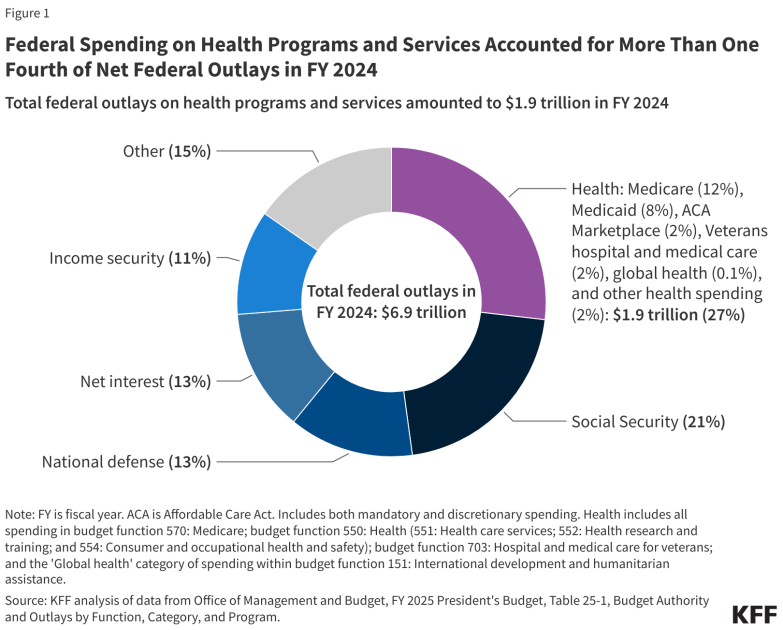
Those exclusions will cause an estimated 1.4 million lawfully present immigrants to lose healthcare coverage. Not undocumented immigrants – people legally authorized to be here who will become uninsured when the law takes full effect.
The Congressional Budget Office projects the restrictions will reduce federal spending by $131 billion through 2034. Those savings come from making 1.4 million people uninsured and shifting their healthcare costs to emergency rooms, charity care, and state budgets.
This is the core of what Democrats want to reverse in shutdown negotiations. Republicans characterize refugees and asylees as people who shouldn’t have been given legal status in the first place because the Biden administration was too lenient. Democrats argue that people who are legally here under current law shouldn’t lose healthcare coverage.
That’s a legitimately different debate than whether undocumented immigrants should get “free healthcare.” But it requires distinguishing between immigration categories that shutdown rhetoric deliberately conflates.
Identifying Where States Have Filled Federal Policy Gaps
Fourteen states plus D.C. provide coverage to children regardless of immigration status. Seven states plus D.C. extend coverage to adults regardless of status:
- California, Colorado, Illinois, Minnesota, New York, Oregon, Washington
Those state-funded programs recognize that keeping residents healthy serves public health goals regardless of immigration status. Twelve states offer state-funded postpartum coverage for immigrant mothers.
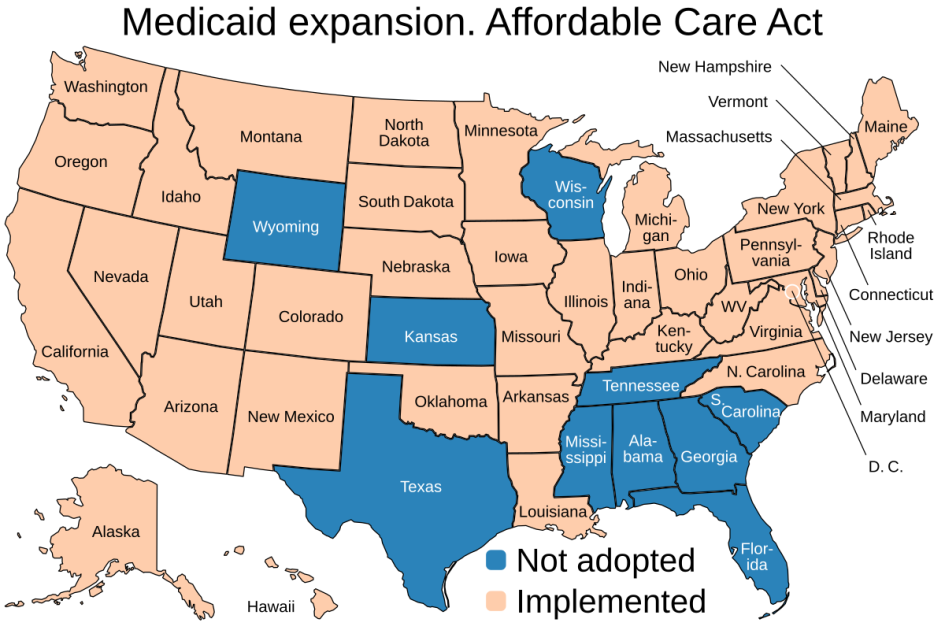
State expansions are linked to reduced uninsurance and improved birth outcomes. But they require budget commitments that make expansion politically difficult in states without large immigrant populations or progressive legislatures.
The state-federal divide means a refugee family in California has dramatically different coverage options than an identical family in Texas – despite having identical legal status under federal immigration law.
Whether states should fill gaps federal policy creates is another question that divides people based on whether they view healthcare as a state or federal responsibility and whether immigration status should determine eligibility.
Measuring How Fear Creates Barriers Beyond Policy
Policy eligibility matters less when fear prevents enrollment. Survey data shows:
- 75% of immigrant adults are uncertain about how benefit use affects immigration status
- 90% of undocumented immigrants are misinformed about “public charge” rules
- 27% of undocumented immigrants avoided healthcare assistance due to fear
- 8% of lawfully present immigrants avoided assistance due to similar fears

That last number is striking. Even people legally authorized to be here avoid programs they’re eligible for because they fear immigration consequences that don’t actually apply to them.
The fear is partly rational – immigration policies and enforcement priorities change across administrations. What’s permitted today might become grounds for deportation tomorrow. Public charge rules have changed repeatedly, creating confusion about what counts against future immigration applications.
The result is American citizen children going without healthcare coverage they’re legally entitled to because their parents are afraid enrolling them will trigger scrutiny of the parents’ status.
Whether that fear is the immigrants’ problem to manage or a policy failure the system should address depends on your view of government responsibility for ensuring eligible people can actually access programs they qualify for.
Connecting the Complexity to Shutdown Rhetoric
Republican messaging claims Democrats are demanding taxpayer funding for “illegal alien healthcare.” Democratic messaging insists they’re extending ACA subsidies for American families and reversing restrictions on refugees and asylees.
Both characterizations contain truth and distortion. Emergency Medicaid does reimburse hospitals for emergency treatment of undocumented immigrants – but that’s been federal law since Reagan signed it in 1986, and represents 0.4% of Medicaid spending.

ACA subsidy extensions don’t cover undocumented immigrants – they’re explicitly excluded. The subsidies help citizens and lawfully present immigrants afford insurance.
The Medicaid provisions Democrats want to reverse are the 2025 budget law restrictions that eliminated coverage for refugees and asylees. Republicans argue those people shouldn’t have been given legal status anyway. Democrats argue people legally here shouldn’t lose healthcare.
That’s the actual disagreement. Not whether undocumented immigrants should get “free healthcare” but whether refugees who fled persecution should qualify for Medicaid on the same terms as citizens with equivalent incomes.
The rhetoric from both sides obscures these distinctions because “protecting American families” and “stopping illegal alien benefits” work better as soundbites than explaining five-year waiting periods and differences between emergency Medicaid reimbursements and ACA marketplace subsidies.
Assessing What the Numbers Actually Show
Immigrants comprise 14% of the U.S. population but face uninsurance rates of 18-50% depending on status. The 2025 budget law will make 1.4 million lawfully present immigrants uninsured – people legally authorized to be here who’ll lose coverage when the law takes effect.
Immigrants contribute economically through employment and taxes while using less healthcare per capita than citizens. They work essential jobs, pay into systems they’re often excluded from, and delay care due to cost and fear.

State expansions show that providing coverage reduces uninsurance and improves health outcomes. But state programs can’t fully compensate for federal restrictions, especially in states without resources or political will for expansion.
The shutdown debate involves legitimate disagreements about which immigrants should access which programs. Whether refugees should wait five years for Medicaid or get immediate access like citizens. Whether temporary protected status holders deserve coverage or should remain uninsured. Whether American citizen children should go without healthcare because their parents fear immigration enforcement.
Those are real policy questions where reasonable people disagree based on different values about immigration, government responsibility, and healthcare access. The shutdown rhetoric that treats all 47 million immigrants as identical and all coverage as “free healthcare for illegal aliens” might be effective messaging, but it’s not particularly useful for understanding what’s actually being debated or what the consequences of different policy choices would be.
The data about who qualifies, who pays, and who goes without coverage exists. Whether it changes anyone’s opinion about what policy should be is a different question entirely.
In Summary: 5 Things You Should Know About Immigrants and Healthcare
- Not All “Immigrants” Are the Same:
Of the 47.1 million immigrants in the U.S., 24.7M are citizens, 13.5M lawfully present noncitizens, and ~9M undocumented. Treating all immigrants as one group hides the fact that legal status determines who can access which health programs. - Coverage Gaps Are Massive — and Legal:
Half of undocumented immigrants (50%) and one in five lawfully present immigrants (18%) are uninsured, versus 6–8% of citizens. Many work full-time in essential jobs but lack employer coverage or are barred from Medicaid and ACA subsidies. - The “Five-Year Wait” Blocks Millions:
Most lawfully present immigrants — including refugees and green card holders — must wait 5 years before qualifying for Medicaid or CHIP. While 37 states + D.C. waived this for kids and 31 + D.C. for pregnant people, others still enforce it, leaving families uninsured until 2030. - The 2025 Budget Law Cut Coverage for Legal Residents:
A new law now limits federal health benefits (Medicaid, CHIP, ACA, Medicare) to green card holders, some Cuban/Haitian entrants, and COFA citizens, excluding refugees, asylees, TPS holders, and most work-visa holders. Result: 1.4 million lawfully present immigrants will lose insurance, saving $131B on paper but shifting costs to ERs and states. - Fear Blocks Access as Much as Policy:
75% of immigrant adults don’t know if using benefits affects immigration status; 27% of undocumented and 8% of lawful residents avoid health programs out of fear. That means even U.S.-citizen children often go uninsured because their immigrant parents worry enrollment could trigger enforcement.
This article highlights something we've known all along: the immigration debate is too complex for sound bites. We need a return to reasoned policy based on law and order. It's really troubling the amount of fear and confusion being sown around healthcare for immigrants, though.