
Secretary of War Pete Hegseth stood before nearly 800 generals and admirals summoned from around the world and declared the organization they’ve spent decades serving no longer exists. “The era of the Department of Defense is over,” he announced Tuesday at Marine Corps Base Quantico. “From this moment forward, the only mission of the newly restored Department of War is this: War fighting. Preparing for war and preparing to win.”
Then he told them about the new physical fitness standards they’d all be required to meet – the highest male standard for combat personnel, mandatory testing twice yearly for everyone at every rank, and daily physical training officially codified into regulations.
The message was clear: adapt to the new warrior culture or find yourself among the casualties.
Discussion
Yes anyone in the military should have to pass physical fitness.
War monger for Captain Bone Spurs
Finally someone stepping up and making the military strong again! Enough with the political correctness garbage. If you can't pass the test, you don't deserve to wear the uniform. This is what true leadership looks like, not the woke nonsense peddled by the Dems! MAGA!
Is this what we need for readiness, or is it just aggressive posturing?
Leave a Comment
Leave a Comment
What Hegseth Actually Ordered His Generals to Do
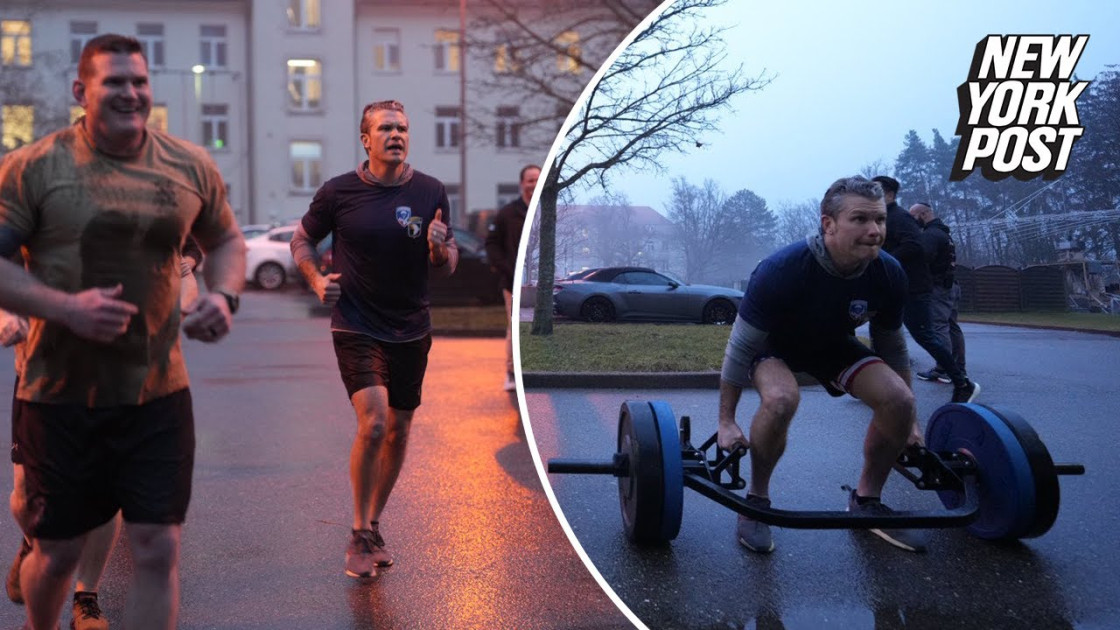
The policy changes Hegseth announced represent the most comprehensive restructuring of military standards and culture in decades. Every member of the joint force at every rank must now take a fitness test twice a year and meet height and weight requirements twice a year, every year of service. Daily physical training becomes mandatory for all personnel.
“If the Secretary of War can do regular hard PT, so can every member of our joint force,” Hegseth said, positioning himself as leading by example rather than imposing standards he won’t meet himself.

All combat personnel must now meet “the highest male standard” to maintain their positions. Any physical standards altered since 2015 – when combat arms standards were changed to allow female qualification – must be returned to their original form. Standards that Hegseth claimed were “manipulated to hit racial quotas” must also be restored.
Hegseth insisted this isn’t about preventing women from serving. “We very much value the impact of female troops. Our female officers and NCOs are the absolute best in the world,” he said. “But when it comes to any job that requires physical power to perform in combat, those physical standards must be high and gender-neutral.”
Then came the part that reveals what “gender-neutral” actually means in practice: “If women can make it, excellent. If not, it is what it is. If that means no women qualify for some combat jobs, so be it. That is not the intent, but it could be the result, so be it.”
The rhetorical construction is careful – three times saying “so be it” to emphasize acceptance rather than intent. But the policy outcome is predictable: combat roles will become overwhelmingly or exclusively male because the standards are explicitly designed around male physical capabilities.
The Fat Generals Problem That Nobody Expected Him to Say Out Loud
Hegseth didn’t limit his criticism to enlisted personnel or junior officers. He called out flag officers directly, using language that would be career-ending if it came from anyone without his authority.
“It’s completely unacceptable to see fat troops,” Hegseth said. “It’s completely unacceptable to see fat generals and admirals in the halls of the Pentagon and leading commands around the world. It’s a bad look.”
This is extraordinary for multiple reasons. First, he’s telling the assembled senior leadership – to their faces – that some of them are physically unfit for their positions. Second, he’s making it clear that rank provides no protection from the new standards. Third, he’s framing physical appearance as a leadership issue that affects military credibility.
The “broken windows theory” analogy Hegseth used reveals his broader philosophy: “When you let the small stuff go, the big stuff eventually goes. If you want a beard, you can join Special Forces. If not, then shave.”
New grooming standards now require troops to be clean-shaven with uniform haircuts, except for temporary medical exemptions or permanent religious exemptions. Special Forces operators retain beard exemptions because facial hair helps them blend with certain communities and civilians during operations.
But for everyone else, the message is conformity to traditional military appearance standards. No variations, no accommodations beyond medical or religious necessity, no room for the kind of individualized grooming policies that had been expanding in recent years.
What Trump Told the Generals While Hegseth Watched
President Trump addressed the assembled military leadership for over an hour, covering topics ranging from Nobel Peace Prizes to his love of tariffs. But the most revealing comments involved how he plans to use military forces domestically.
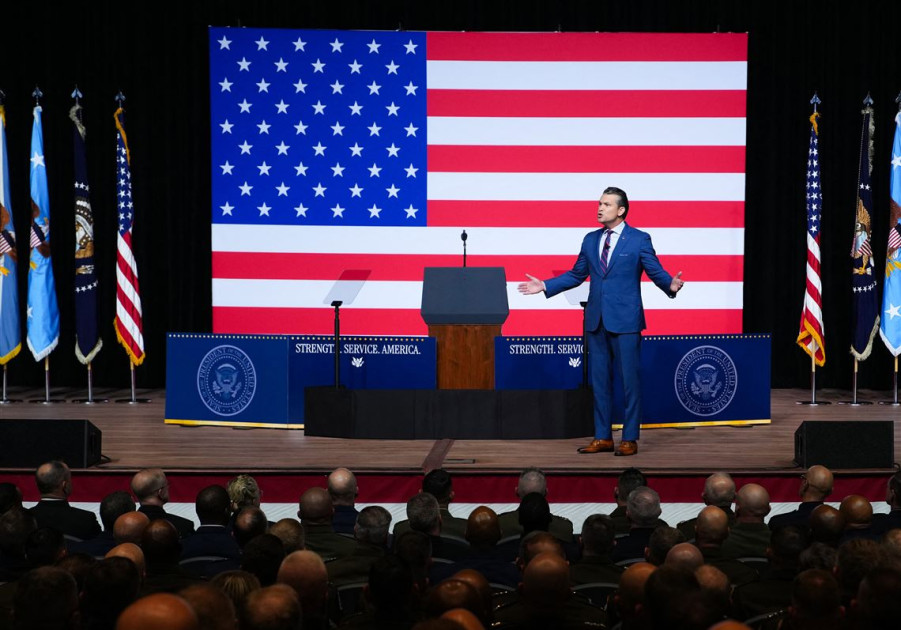
Trump raised his controversial deployment of military forces for domestic law enforcement, telling the generals that an executive order he signed in August would help the military “quell civil disturbances” and handle “the enemy within.”
“Last month, I signed an executive order to provide training for a quick reaction force that can help quell civil disturbances,” Trump said. “This is gonna be a big thing for the people in this room, because it’s the enemy from within and we have to handle it before it gets out of control.”
The executive order directs the defense secretary to ensure each state’s National Guard is resourced, trained, organized and available to help in “quelling civil disturbances.” It also requires the defense secretary to designate portions of each state’s National Guard specifically for this purpose.
Trump has already sent military forces into Washington, D.C., and plans to deploy the National Guard to Portland for law enforcement purposes – neither jurisdiction requested federal troops. He told the assembled military leaders that these cities could function as “training grounds” for troops.
“I told Pete, we should use some of these dangerous cities as training grounds for our military. National Guard, but our military. Because we’re going into Chicago very soon. That’s a big city with an incompetent governor.”
The Protest Response Policy That Changes Everything
During his remarks, Trump addressed what happens when protesters confront soldiers or federal law enforcement officers during immigration enforcement operations. His proposed solution was direct.
“She starts spitting in his face and he’s not allowed to do anything,” Trump claimed about protesters confronting federal agents. “If it’s OK with you, generals and admirals, I’ve taken that off. I say, ‘They spit. We hit.’ Is that OK? We think so.”

This represents a fundamental change in rules of engagement for domestic operations. Military personnel have traditionally operated under strict constraints when deployed on U.S. soil, with lethal force authorized only in clearly defined circumstances and physical force limited to self-defense and protecting others from immediate harm.
Trump is describing a policy where spitting – which is assault but not an imminent deadly threat – justifies physical retaliation by armed military personnel against American civilians. The casualness with which he presented this to military leadership suggests he views it as common sense rather than a dramatic expansion of authorized force.
Democratic Senator Dick Durbin responded that Trump’s remarks “offered no strategy, no operational guidance, and no plan to address real threats.” Durbin called the suggestion that American cities be used as “training grounds” for troops “a dangerous assault on our democracy, treating our own communities as war zones and our citizens as enemies.”
The Trillion Dollar Budget That Nobody’s Sure Exists
Trump announced his administration is committing $1 trillion for military spending in 2026. “That’s a lot of money. I hope you like it,” he told the assembled generals.
For context, the 2025 fiscal year defense budget was $895 billion. Trump is describing a roughly 12% increase – more than $100 billion in additional military spending.

He also promised to expand the U.S. Navy by 19 ships, including submarines, destroyers and assault ships. But then he added a caveat that reveals how he thinks about military procurement: “I do not like the look of some of the vessels. An ugly ship is not necessary.”
The president is evaluating naval vessel design based on aesthetics. Whether ships are tactically effective, strategically valuable, or operationally necessary appears secondary to whether Trump finds them visually appealing.
Neither Trump nor Hegseth addressed the looming government shutdown during their remarks. Active-duty troops will be required to report for duty if the government shuts down at midnight on October 1, but their pay will be delayed until funding resumes.
The generals and admirals sitting in that auditorium just heard about massive budget increases and expanded naval procurement while knowing their troops might not receive paychecks starting tomorrow.
The Wokeness Purge That’s Already Happened
Hegseth’s announcement included policy changes already implemented over recent months, but he framed them as part of the broader transformation from Department of Defense to Department of War.
“No more identity months, DEI offices, dudes in dresses. No more climate change worship. No more division, distraction or gender delusions,” Hegseth said. “As I’ve said before, and I’ll say again, we are done with that s—.”
The profanity punctuates his rejection of what he characterizes as “toxic ideological garbage” that has infected military culture. Diversity, equity and inclusion programs are eliminated. Gender identity accommodations are gone. Climate change considerations in military planning are dismissed as worship rather than strategic analysis.
But Hegseth also announced a policy change designed to protect officers implementing these new directives: the Department of War will change how it retains adverse information on personnel records. Leaders with “forgivable, earnest, or minor infractions” won’t spend the rest of their careers paying for those mistakes.
This is significant because it creates protection for officers who might violate existing policies while transitioning to new standards. If enforcing gender-neutral combat standards results in discrimination complaints, those complaints become “minor infractions” rather than career-ending investigations. If rejecting climate change planning violates environmental compliance requirements, that becomes a “forgivable” mistake in service of the new mission.
The policy shields officers from accountability while they implement controversial changes that may violate regulations still technically in force.
What Warriors Do Versus What Defenders Do
Hegseth’s address was built around a linguistic distinction that signals deeper ideological transformation. The military doesn’t defend anymore – it fights wars to win them.
“We’re training warriors, not defenders. We fight wars to win, not to defend,” Hegseth said. “Defense is something you do all the time, it’s inherently reactionary and can lead to overuse, overreach, and mission creep. War is something you do sparingly, on our own terms and with clear aims.”
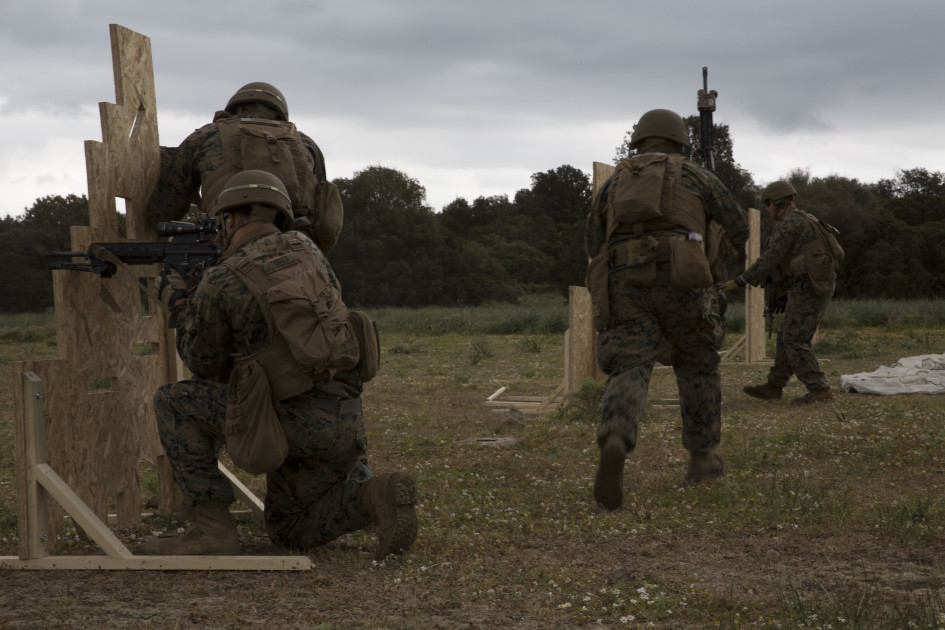
This framing positions defense as passive, reactive and prone to mission creep. War is active, controlled and purposeful. The rhetorical shift is designed to change how military personnel think about their role – not as protectors maintaining peace through deterrence, but as warriors preparing to unleash violence when directed.
“We fight to win. We unleash overwhelming and punishing violence on the enemy,” Hegseth continued. “We also don’t fight with stupid rules of engagement. We untie the hands of our warfighters to intimidate, demoralize, hunt and kill the enemies of our country.”
The emphasis on intimidation and demoralization alongside hunting and killing reveals an approach to warfare that prioritizes psychological impact and unrestricted lethality over precision and proportionality. Rules of engagement that limit civilian casualties or protect non-combatants become “stupid” constraints on warrior effectiveness.
Trump reinforced this messaging when he praised the Department of War name change and predicted it would actually deter conflicts. “The Department of War is going to stop wars,” he said, arguing that projecting overwhelming military capability and willingness to use it prevents adversaries from challenging American interests.
The Historical Context Nobody Mentioned at Quantico
The “Department of War” isn’t a Trump administration innovation – it’s American history. The United States had a Department of War from 1789 until 1947, when the National Security Act reorganized military command structure and renamed it the Department of Defense.
That name change reflected post-World War II thinking about American military posture. Defense suggested the military existed to protect the nation and its interests, not to wage offensive wars of conquest. It signaled that American military power would be used defensively unless circumstances required otherwise.

Reverting to “Department of War” signals a rejection of that philosophy. But Congress hasn’t actually changed the name – Trump and Hegseth are using it without legislative authorization, which means it’s branding rather than official policy.
The distinction matters because legal statutes, regulations and international agreements reference the “Department of Defense” by name. Changing the name requires changing those documents, which requires Congressional action that hasn’t happened.
So Hegseth is announcing the “era of the Department of Defense is over” while the legal entity he leads is still technically the Department of Defense. It’s symbolic transformation presented as accomplished fact.
The Second Chances That Only Apply Going Forward
Hegseth’s announcement about changing how adverse information is retained on personnel records creates an interesting dynamic. Past infractions under old standards remain career-limiting. Future infractions under new standards become forgivable if they’re “earnest” attempts to implement the warrior culture Hegseth demands.
This means officers who previously faced discipline for discriminatory behavior, hostile work environment complaints, or equal opportunity violations still carry those marks. But officers who face similar complaints going forward while implementing gender-based combat exclusions or eliminating diversity programs get protected as making “earnest” attempts to follow new policy.
The policy doesn’t erase past records – it creates a two-tier system where infractions are judged differently depending on whether they occurred before or after the cultural transformation Hegseth is imposing.
Officers who enforced diversity standards or supported gender integration now have permanent career damage. Officers who resist diversity or reimpose gender barriers get forgiveness and protection. The incentive structure is explicit: adapt to the new culture or accept that your career is finished.
What Happens to Female Combat Personnel Starting Today
The immediate impact of Hegseth’s “highest male standard” policy will be female personnel in combat roles who cannot meet physical requirements designed around male physiology. Some will meet the standards – Hegseth acknowledged this possibility. Many won’t.
Those who don’t meet standards face reassignment out of combat specialties they’ve spent years training for and building careers around. Infantry officers become logistics officers. Combat engineers become civil engineers. The skills and experience they’ve developed become irrelevant because their bodies can’t perform at male capability levels.
This isn’t speculative. When the Marine Corps studied gender integration in combat roles, they found that even the highest-performing female Marines couldn’t match the physical performance of average male Marines in tasks requiring upper body strength and load-bearing endurance.
Hegseth is implementing policy based on that physiological reality while insisting it’s not intended to exclude women – it’s just that exclusion is the inevitable result of objective standards. The distinction provides political cover while achieving the same outcome as an explicit ban.
Female service members who’ve proven themselves in combat deployments, earned combat ribbons, and led troops under fire will now be told those accomplishments are insufficient because they can’t meet physical standards their male peers barely exceed.
The talent loss is real. The signal it sends about who belongs in military leadership is unmistakable.
The Meeting That Was Really About Compliance
Nearly 800 generals and admirals were summoned from around the world on short notice for what Hegseth and Trump framed as a policy briefing and morale event. But the real purpose was demonstrating who’s in charge and what happens to military leadership that doesn’t comply.
Hegseth has already dismissed roughly two dozen senior officers since becoming War Secretary. His pledge to cut the general officer corps by 20% means more firings are coming. The Quantico gathering allowed him to address everyone simultaneously – explain the new standards, announce the new policies, and make clear that flag rank provides no immunity from forced retirement if you don’t adapt.

Trump’s hour-long address reinforced the message. He’s committing a trillion dollars to the military, expanding the Navy, and empowering troops to use force against domestic protesters. But he’s also using American cities as “training grounds” and treating civilian protesters as enemies to be hit when they spit.
The generals and admirals sitting in that auditorium understand what’s being asked of them. Embrace the warrior culture Hegseth demands. Implement combat standards that exclude most women. Deploy troops domestically against American civilians when ordered. Ask no questions about whether ugly ships serve operational purposes or whether climate change affects military planning.
In exchange, they get bigger budgets, more ships, and protection from adverse action if they make “earnest” mistakes while implementing controversial policies.
What they don’t get is a choice about whether to participate in this transformation. Hegseth made that clear: “The era of the Department of Defense is over.” Either you’re building the Department of War, or you’re retiring early to make room for officers who will.
The meeting wasn’t really about unveiling new policies. It was about compliance testing – seeing who nods along, who asks uncomfortable questions, and who starts exploring retirement options because they can’t reconcile these directives with the oath they swore to support and defend the Constitution.
Secretary of War Pete Hegseth restored a name from 1789 and declared the modern military’s defensive posture finished. President Trump promised trillion-dollar budgets while planning to deploy troops against American protesters in American cities. And 800 generals and admirals sat listening, knowing their careers depend on enthusiastic implementation of policies many of them likely find deeply troubling.
The era of the Department of Defense may be over. What replaces it is still being determined by officers who now understand exactly what’s expected of them – and exactly what happens if they fail to deliver.
Finally, leadership with guts! Hegseth isn't playing games – prepare or pack up!