
Tyler Robinson’s new defense attorney walked into a Utah courtroom Monday and immediately asked for more time. Not to prepare a defense strategy or interview witnesses – just to comprehend the sheer volume of evidence prosecutors have compiled against her client in the assassination of conservative activist Charlie Kirk.
The mountain is so large that deciding whether to force an evidence hearing has become too complex a question to answer.
When Voluminous Becomes an Understatement
Utah County Chief District Attorney Chad Grunander chose his words carefully during Monday’s hearing. The evidence is “voluminous, to say the least,” he told the court. Prosecutors are working on a process to exchange information “as quickly as possible and be efficient.”
Defense attorney Kathryn Nester responded with the kind of request that signals just how overwhelming the prosecution’s case appears. She asked to delay even deciding whether to force a preliminary hearing where her team could cross-examine witnesses.

“Until we can kind of get our heads around exactly what we’re dealing with and how much we need to process it, it’s going to be difficult for us to give you a reasonable expectation of when we will be ready,” Nester told Judge Tony Graf.
The judge set another hearing for October 30. Robinson will be present – a detail worth noting given that defendants sometimes waive appearance rights in high-profile cases where their safety or the proceedings’ integrity might be compromised.
But Robinson’s lawyers apparently want him there. That suggests strategy discussions are underway about how to present their client to the court and, eventually, to a jury that will decide whether he lives or dies.
The Death Penalty Calculation That Changes Everything
Maryland attorney Randolph Rice, who’s following the case, framed the defense team’s ultimate goal bluntly: “Keep him off of death row.”
That objective shapes every decision from this point forward. Whether to force a preliminary hearing. Whether to seek a plea deal. Whether to pursue an insanity defense. Whether to challenge evidence or accept its validity while arguing for mitigation.

Robinson faces aggravated murder charges, which carry potential capital punishment. For prosecutors to secure a death sentence, they must prove Kirk’s murder included aggravating factors that warrant execution.
Rice identified a potential defense strategy: “What the defense may be able to argue is to say, this was a single sniper bullet that had a single intended target – and therefore it posed no other danger to anyone else. And if they can prove that to a jury or they can convince a jury of that, then they won’t get the aggravating murder, and therefore they won’t have the death penalty on the table.”
It’s a narrow argument. A single, calculated assassination versus indiscriminate violence. The difference could be life in prison versus lethal injection.
The Evidence Trail That Leaves Little Room for Doubt
Prosecutors haven’t revealed everything they have, but what’s already public paints a damning picture. Authorities recovered a rifle at the scene with Robinson’s DNA on it. Surveillance video captured activity on campus and nearby roads. A footprint was found on the rooftop where the sniper fired.
Robinson allegedly used his phone on school grounds – on video. That provides location data, timestamps, and potentially communications that place him at the scene. Police identified a suspect vehicle matching Robinson’s gray Dodge Challenger.
Then there are the confessions. Robinson allegedly told his roommate and romantic partner that he killed Kirk because he “had enough of [Kirk’s] hatred. Some hate can’t be negotiated out.” The partner, identified as transgender, is cooperating with investigators.
Authorities say they’ve recovered messages to the romantic partner and other friends taking responsibility for the shooting. According to the probable cause affidavit, Robinson “confessed or implied” guilt to a close family friend.
When Fox News Digital reported Thursday that an officer guarding the campus perimeter “made contact” with Robinson near where police recovered the suspected murder weapon – as he was allegedly texting his roommate about wanting to retrieve it before leaving town – the evidence pile grew taller.
What the Kohberger Case Teaches About Death Penalty Negotiations
Bryan Kohberger’s recent plea deal in the Idaho student murders provides a potential roadmap. Kohberger accepted life in prison without parole in exchange for avoiding capital punishment.
But Staten Island defense attorney Louis Gelormino noted a critical difference in how that plea was structured. “One of the things that surprised me out there in Kohberger was they didn’t let him allocute to the crimes,” he told Fox News Digital. “Usually, when you take a plea, you have to confess to your crimes.”
If Robinson’s team negotiates a similar deal, prosecutors may demand full allocution – a public confession detailing exactly what happened and why. That serves multiple purposes: it provides closure for victims’ families, creates an official record, and ensures the defendant acknowledges responsibility.
Erika Kirk, Charlie’s widow, has already stated she’s forgiven Robinson “because it was what Christ did, and it’s what Charlie would do.” But she also told the New York Times she doesn’t want to be involved in the capital punishment decision.
“I do not want that man’s blood on my ledger,” she said. “Because when I get to heaven, and Jesus is like: ‘Uh, eye for an eye? Is that how we do it?’ And that keeps me from being in heaven, from being with Charlie?”
Her position removes one potential obstacle to a plea deal, but it doesn’t eliminate the political pressure prosecutors face to seek maximum punishment in a politically charged assassination.
The Insanity Defense That Probably Won’t Work
Gelormino expects Robinson’s team to explore an insanity defense, but he acknowledges the challenge. Robinson allegedly fled Orem after the shooting and spent a week plotting before surrendering. That demonstrates planning, awareness of consequences, and rational decision-making – all factors that undermine insanity claims.
Utah law requires defendants claiming insanity to prove they couldn’t distinguish right from wrong at the time of the crime. A calculated assassination with advance planning, escape, and attempted evidence retrieval doesn’t fit that profile.

Salt Lake City criminal defense attorney Skye Lazaro noted it’s “not common” for state courts to waive a defendant’s appearance, suggesting Robinson’s legal team is carefully managing every aspect of his public presentation. An insanity defense requires portraying the defendant as mentally incapacitated – difficult to reconcile with strategic court appearances and coherent legal decision-making.
But exploring the option serves another purpose: it forces prosecutors to prepare for multiple defense theories, stretching their resources and potentially revealing weaknesses in how they’ll present Robinson’s mental state.
The Personal Safety Concerns Nobody Wants to Discuss
Rice raised an issue that defense attorneys rarely acknowledge publicly: personal safety concerns for Robinson’s legal team.
“This certainly is a political assassination,” Rice said. “There are a lot of individuals who are emotional about this. People on the left are certainly emotional about it. People on the right are certainly emotional about it. And so there are concerns from the defense team’s perspective about their personal safety.”

Defending an alleged political assassin means becoming a target for people who view providing that defense as complicity. Death threats, online harassment, and physical confrontations become occupational hazards when your client killed someone millions of Americans admired or despised based on their political alignment.
Nester has 30 years of experience defending capital cases in California and Utah. Her recent high-profile clients include Kouri Richins, a Utah mother accused of killing her husband and then writing a children’s book about grief. She knows how to handle media attention and public scrutiny.
But defending someone accused of assassinating Charlie Kirk places her in the center of America’s political war – where both sides are armed with anger and social media platforms to direct it.
The Prosecution Team That Signals No Mercy
Utah County Attorney Jeff Gray assembled a six-attorney prosecution team that reads like an all-star lineup designed to secure a death sentence.
Gray himself spent 23 years with the state attorney general’s office and has argued before the U.S. and Utah Supreme Courts. Chad Grunander prosecuted Utah’s first-ever televised trial. Christopher Ballard has argued more than 175 appellate cases. Ryan McBride was named Utah Prosecutor of the Year last year.

This isn’t a team you assemble for a plea deal. This is a team built to win a death penalty case in front of cameras with the nation watching.
Robinson faces seven counts: aggravated murder, felony firearms charges, obstruction of justice, witness tampering, and committing violence in the presence of a child. Each charge adds layers to the prosecution’s narrative of a calculated, remorseless killer who endangered others while executing his political target.
The child present during Kirk’s assassination adds an aggravating factor that strengthens the death penalty argument. The obstruction and witness tampering charges demonstrate consciousness of guilt and attempts to evade justice. The firearms charges establish premeditation and illegal weapon possession.
Prosecutors structured the charging document to tell a story that makes capital punishment seem proportionate – perhaps inevitable.
The Funding Fight That Could Handicap the Defense
Rice identified a critical challenge that defense attorneys face in capital cases: securing adequate funding for expert witnesses, forensic specialists, mental health evaluators, and jury consultants.
“His lawyers may have to fight for funding or risk being ‘hamstrung’ before the case goes to trial,” Rice said.
Public defenders’ offices operate on limited budgets. High-profile capital cases require resources that dwarf typical criminal defense expenses. Forensic analysis to challenge DNA evidence. Ballistics experts to dispute weapon identification. Mental health professionals to evaluate insanity claims or mitigation factors.
Without adequate funding, Robinson’s defense team can’t match the prosecution’s resources. They’ll be forced to accept prosecution evidence they might otherwise challenge, skip expert testimony that could create reasonable doubt, and present a mitigation case without the psychological evaluations that humanize defendants to juries deciding life or death.
The constitutional right to effective counsel means little if defense attorneys can’t afford the experts necessary to provide it.
What Happens When Political Assassination Meets the Justice System
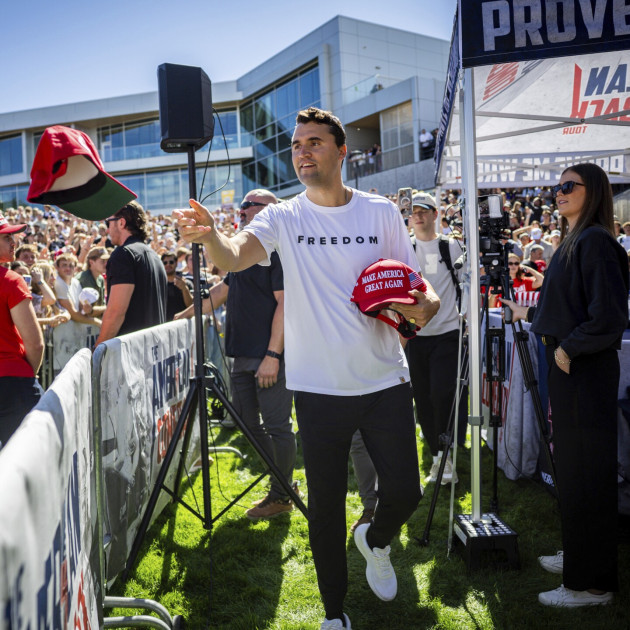
Charlie Kirk was shot in the neck with a hunting rifle while speaking at a Turning Point USA event at Utah Valley University on September 10. Robinson allegedly surrendered to police a week later after his parents convinced him not to take his own life.
The Washington County Sheriff’s Office described a suspect who knew exactly what he’d done and was prepared to die rather than face consequences. That’s not the profile of someone who can claim temporary insanity or diminished capacity.
But it is the profile of someone who believed his actions served a higher purpose – political violence justified by ideological conviction. And that’s what makes this case so dangerous for the justice system to navigate.
If prosecutors secure a death sentence, Robinson becomes a martyr to some segment of the population that views Kirk as a hate-monger who deserved assassination. If defense attorneys secure acquittal or a lenient sentence, Robinson becomes proof that political violence against conservatives carries no real consequences.

There’s no outcome that depoliticizes this case. There’s no verdict that satisfies everyone. There’s only the grinding machinery of the criminal justice system attempting to process an act of political violence that half the country will applaud and half will condemn regardless of what evidence proves.
Tyler Robinson is presumed innocent until proven guilty – that’s the foundation of American jurisprudence. But the mountain of evidence prosecutors describe suggests his legal team isn’t fighting for acquittal. They’re fighting for his life.
And they just asked for more time to figure out how to climb that mountain before it buries their client.
Discussion
Absolutely agree with you, it's frustrating how the media always spins things against conservatives.
Always the Dems making a mountain outta molehill to smear conservatives!
Fake news tryin' to spin another hit on a good conservative!