
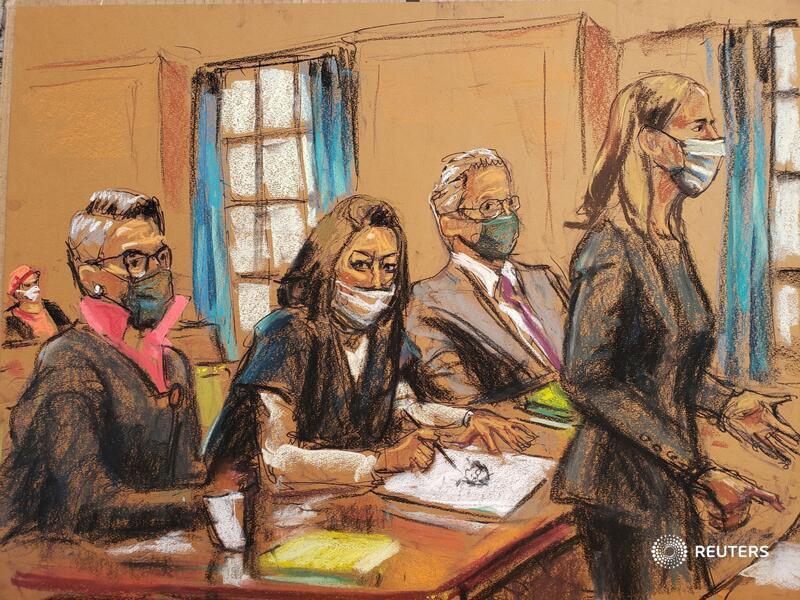
In a dramatic new move in the escalating war over the Jeffrey Epstein files, the Department of Justice has publicly released the full transcript of its recent prison interview with the convicted sex trafficker Ghislaine Maxwell.
Hailed by the administration as an act of “transparency,” this is a calculated and constitutionally significant maneuver.
Blocked by the judicial branch from unsealing secret grand jury records, the executive branch has now pivoted, choosing to release a document of its own creation.
This is not just a document release; it is an end-run around the courts and an attempt to seize control of a political narrative that has been spinning out of the White House’s control, raising profound questions about the nature of justice and truth in our republic.
A New Tactic in a Political War
To understand this event, one must recall the “how we got here.” The Trump administration, after facing a furious backlash from its own supporters over a DOJ memo that debunked popular Epstein conspiracy theories, began a campaign to release more information.
This campaign, however, collided with a wall of judicial independence.
On three separate occasions, federal judges rejected the administration’s requests to unseal secret grand jury transcripts, citing the foundational legal principle of secrecy that protects the integrity of the justice system. Blocked by the courts, the executive branch has now chosen a new tactic.
If it cannot release court records, it will release its own – the transcript of a “proffer” interview with a convicted felon.
The Danger of “Proffer” Transparency
This is where the act of “transparency” becomes constitutionally perilous. It is crucial for the public to understand what a “proffer” is. It is not sworn testimony from a trial. It is a formal interview with a defendant or a subject of an investigation who provides information, often in the hopes of receiving a lighter sentence or some other form of leniency.
The information provided in a proffer is, by its nature, un-cross-examined, uncorroborated, and deeply self-serving. Ghislaine Maxwell, a convicted master manipulator, has every incentive to lie, to minimize her own role, and to implicate others to her own benefit.
To release this raw, unverified narrative into the public square is not a genuine pursuit of truth.
It is the injection of potentially toxic and defamatory information under the guise of transparency, a move that risks becoming a form of trial-by-media that undermines the due process rights of anyone she may have named.
Bypassing the Other Branches
This maneuver is also a direct challenge to the separation of powers.
It is, first, an end-run around the judicial branch. The three federal judges who upheld the principle of grand jury secrecy did so to protect the legal process from political pressure. By releasing this transcript, the DOJ is bypassing that judicial check and achieving a similar political goal through different means.
Second, it appears designed to preempt the legislative branch. This public release comes at the same time the DOJ is transmitting records to the House Oversight Committee in response to a subpoena.
By releasing this dramatic transcript to the public now, the administration gets to shape the public narrative before Congress has a chance to conduct its own, more orderly investigation through hearings and depositions.
The release of the Maxwell transcript is a masterstroke of political theater, but it is a questionable act of legal stewardship. True transparency in a constitutional republic is achieved through the sober, evidence-based processes of our judicial and legislative systems.
The public release of a raw, unverified interview with a convicted felon, while seeming like an act of openness, may ultimately serve only to create more chaos, more conspiracy, and a deeper distrust in the very idea that a shared, factual truth is still possible.
How Maxwell’s Defense Evolved
1. Escalation from Personal Denial to Denying the Entire Conspiracy
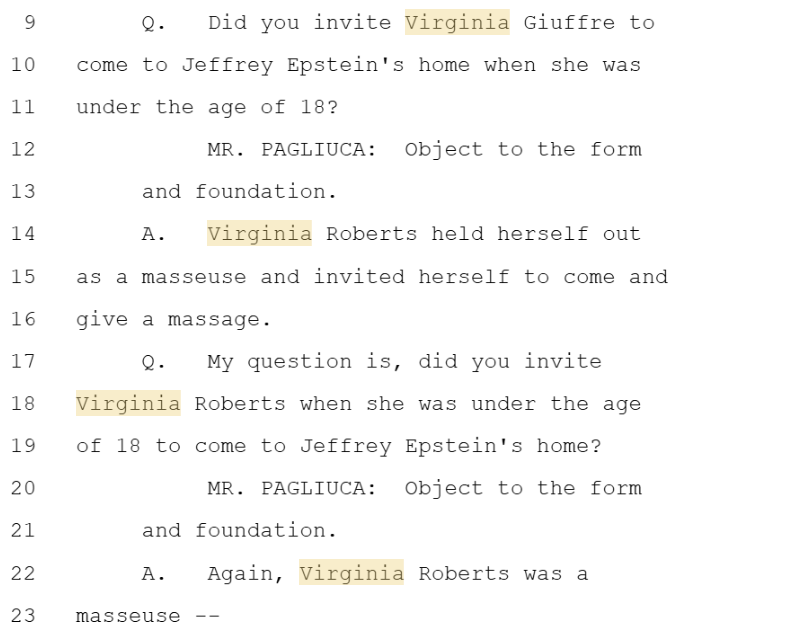
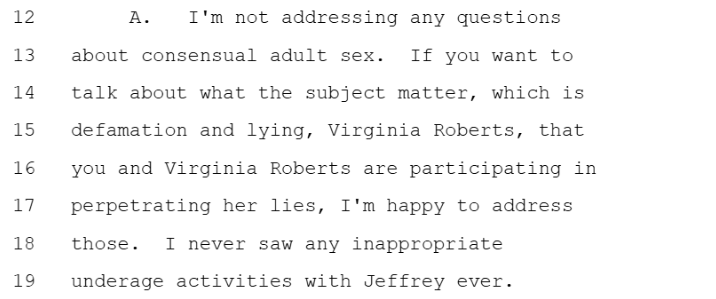
Original Highlight (2016 Deposition): Maxwell’s testimony focused on a personal defense, denying specific allegations and aggressively discrediting her accuser, Virginia Giuffre, calling her an “awful fantasist.”
Update (2025 DOJ Interview): The new information shows Maxwell has dramatically escalated her denial. She has moved beyond discrediting a single accuser to denying the entire premise of a wider criminal enterprise.
She told the Deputy Attorney General that there was no client list, no blackmail scheme, and no high-profile associates who committed any illicit acts. By claiming the search for others complicit in Epstein’s crimes is like the “Salem witch trials,” she attempts to reframe the entire public understanding of the Epstein operation as a baseless conspiracy theory, a significant expansion of her original, more limited denials.
2. A Strategic Shift from “No Comment” to Proactive Exoneration
Original Highlight (2016 Deposition): Maxwell and her lawyer repeatedly refused to answer questions about any “consensual adult” sexual activity involving herself or Epstein. This “no comment” strategy created a wall of silence around key events.
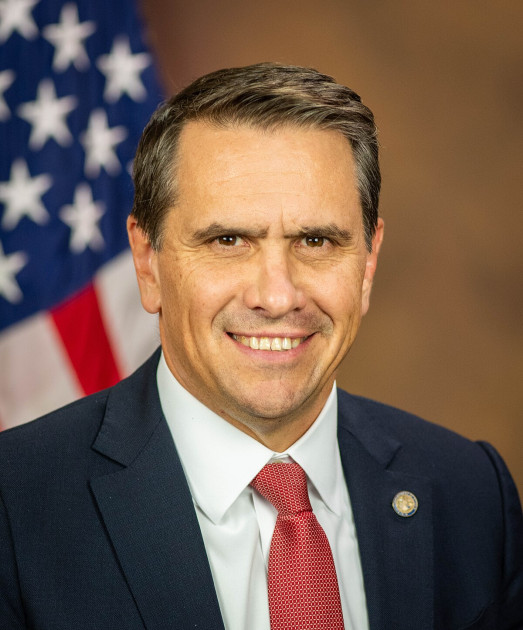
Update (2025 DOJ Interview): Maxwell has abandoned her previous stonewalling tactic. Instead of refusing to answer, she is now proactively exonerating prominent individuals. The article states she was quizzed about dozens of famous people—including Donald Trump and Bill Clinton—and in each case, she claimed she “never witnessed nor heard of any inappropriate or criminal activity.”
This represents a major strategic shift from evading questions under oath to providing definitive, albeit self-serving, answers to the highest levels of the DOJ, likely in the hopes of gaining leniency or a potential pardon.
3. A Consistent Pattern of Questionable Credibility
Original Highlight (2016 Deposition): Maxwell’s credibility was directly challenged when an email she wrote contradicted her sworn testimony about how she first met Virginia Giuffre, revealing a significant inconsistency in her account.
Update (2025 DOJ Interview): The new reporting reinforces this theme of her questionable credibility. Federal prosecutors previously charged Maxwell with perjury for the lies she told in that same 2016 deposition. Although those charges were dropped after her more serious convictions, the U.S. government has already successfully argued in court that she has a “willingness to lie brazenly under oath.”
Her new claims of being “wrongly accused” and having an unfair trial are made to the very same Department of Justice that convinced a jury of her guilt and officially labeled her an untrustworthy witness.