
A sitting Supreme Court Justice has, in a formal written opinion, accused her own colleagues of playing a child’s game with the law of the land. In a scathing dissent to an emergency ruling, Justice Ketanji Brown Jackson declared that the Court’s majority seems to be operating under the rules of “Calvinball” – a game from a comic strip whose only rule is that the rules can be made up as you go.
This is not a simple legal disagreement. It is an unprecedented public schism at the nation’s highest court, a direct accusation from one justice that the majority is abandoning legal principle to ensure that “this Administration always wins.”
This moment is a profound constitutional stress test, one that threatens the very legitimacy of the Court itself.

A Scathing Dissent from Within
The case that prompted this extraordinary dissent involved the Trump administration’s move to cancel nearly $800 million in National Institutes of Health (NIH) grants. In a complex, fractured 5-4 ruling on its “shadow docket,” the Court gave the administration a partial victory, allowing existing grant cancellations to proceed.
Justice Jackson’s dissent was a direct assault on the majority’s reasoning and, more broadly, its recent pattern of rulings.
“This is Calvinball jurisprudence with a twist,” Jackson wrote. “Calvinball has only one rule: There are no fixed rules. We seem to have two: that one, and this Administration always wins.”
She accused her colleagues of “[bending] over backwards to accommodate” the executive branch, arguing that their decision has “real consequences, for the law and for the public,” by endangering “life-saving biomedical research.”
The Constitutional Role of the Dissent
To understand the gravity of this moment, one must understand the constitutional role of a dissenting opinion. A dissent is not merely a complaint from the losing side. It is a formal, powerful, and constitutionally significant act.
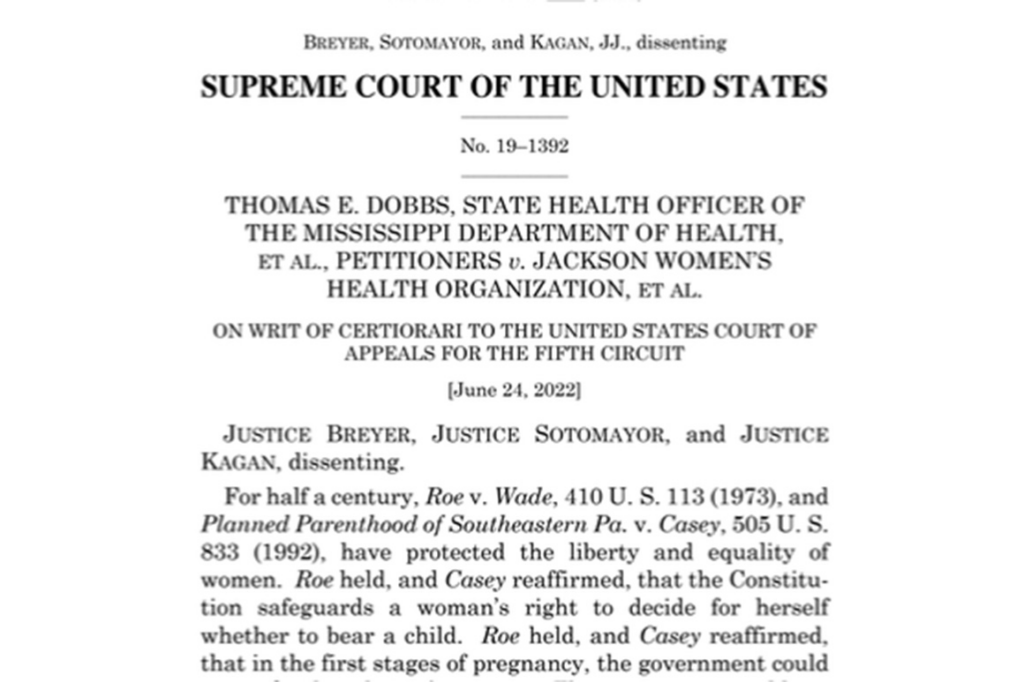
Throughout our history, some of the most famous dissents – like Justice John Marshall Harlan’s lone dissent in the infamous Plessy v. Ferguson “separate but equal” case – have served as a moral and legal appeal to the future.
They are arguments, written for the historical record, that the Court has taken a profoundly wrong turn. Justice Jackson is now adding her own voice to this powerful tradition, arguing that the Court is abandoning its duty of impartiality.
A Crisis of the “Shadow Docket”
Justice Jackson’s critique is inextricably linked to the process by which this decision was made. The ruling was issued on the Court’s emergency “shadow docket,” a procedural tool that has become increasingly controversial.
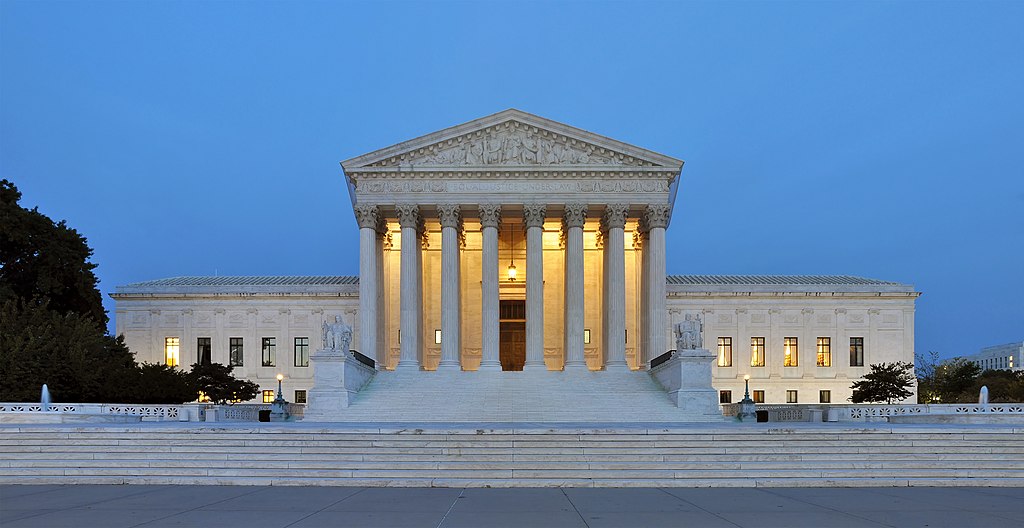
Historically used for minor, time-sensitive matters, the shadow docket is now where the Court makes rapid, high-stakes decisions on major government policies, often without the full public briefing and oral arguments that accompany a regular case.
Justice Jackson is arguing that the majority is using this non-transparent, fast-tracked process to deliver victories for the administration, undermining the deliberative and public nature of the law.
This dissent is one of the most significant and alarming statements to come from a sitting justice in modern history. The Supreme Court’s ultimate power rests not on an army or a police force, but on its legitimacy and the American people’s faith in its impartiality.
When a justice from within the institution itself makes a public charge that the majority is abandoning the rules to favor a political party, it inflicts a grievous wound on that legitimacy. This is about more than a single case; it is a constitutional alarm bell about the health of our republic’s final arbiter.