
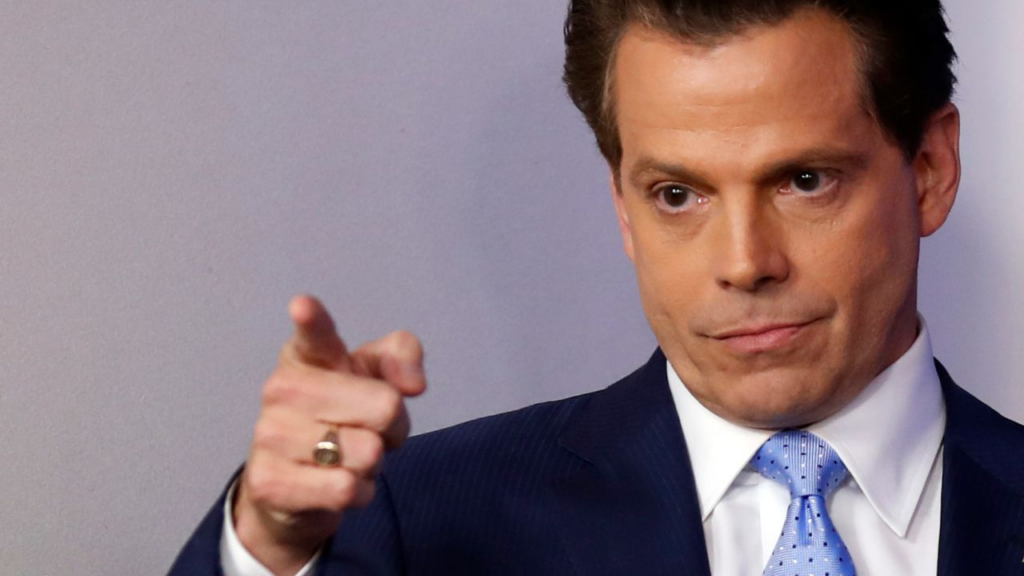
“Do you know anybody who builds a $200 million ballroom onto their house and moves out in three and a half years?” This was the provocative question posed by former White House Communications Director Anthony Scaramucci in a stark warning to Wall Street and the nation.
This is not a literal question about White House renovations. It is a metaphorical warning about the future of the American presidency. While President Trump has publicly stated he will adhere to term limits, Scaramucci’s comments force us to confront a deeply uncomfortable constitutional question:
Is the written text of the 22nd Amendment a strong enough guardrail to constrain a president who, he argues, may not feel bound by it?
The 22nd Amendment
To understand this debate, we must begin with the clear, unambiguous law of the land. The 22nd Amendment to the Constitution states:
“No person shall be elected to the office of the President more than twice…”
Ratified in 1951 after Franklin D. Roosevelt’s four terms, its purpose is to prevent the rise of an imperial, life-long presidency.
The President himself has publicly affirmed this limit. In a May interview, he stated he would be a “two-term president” and intends to “pass the torch” to another Republican. This is the official, on-the-record reality.
A Ballroom and a “Personality Cult”
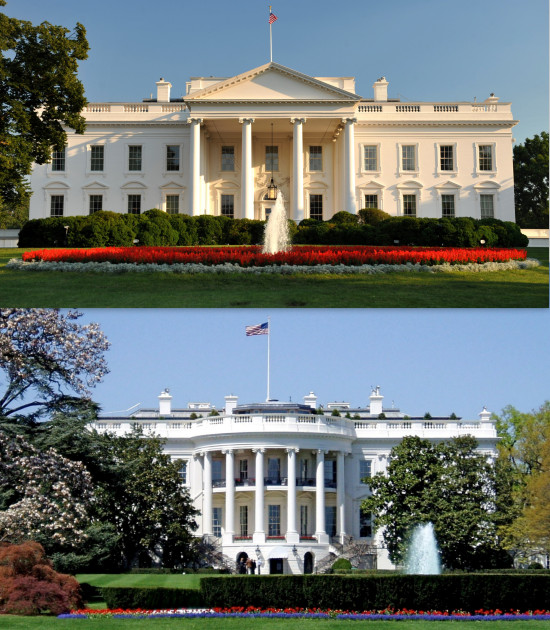
Anthony Scaramucci’s warning, however, is not based on legal analysis. It is based on an interpretation of the President’s actions and the political movement that surrounds him. He argues that the President’s “expansive renovations to the White House” are the actions of a man who “doesn’t smell like a guy that wants to leave anytime soon.”

The ballroom, in this context, is a symbol. It represents a leader who is making permanent plans and embedding himself in the institution of the presidency.
Scaramucci argues that this, combined with what he calls a growing “personality cult,” presents a potential threat to the peaceful transfer of power.
His warning is that a movement built on loyalty to a man, rather than to a set of principles, may not accept the constitutional limits placed upon that man.
A Constitutional System Built on More Than Words
This is where the debate moves to the heart of our constitutional order. Our system of government is built on two foundations: the written text of the Constitution and a set of unwritten norms and assumptions. Perhaps the most important assumption is that a defeated or term-limited president will voluntarily and peacefully relinquish power.
Scaramucci’s warning is a direct challenge to that fundamental assumption. It forces us to consider a scenario, however unlikely, where a popular, term-limited president, backed by a fervent movement, might refuse to accept the end of his term.
Such an event would trigger a constitutional crisis of the highest order, testing the allegiance of the military, the Secret Service, the courts, and the entire federal government. It would force them to choose between their loyalty to a person and their oath to the Constitution.
While many in Washington may dismiss Scaramucci’s warning as hyperbole, it serves as a necessary and sobering thought experiment.
The 22nd Amendment is a powerful guardrail, but it is not self-enforcing. Its power relies on the consent of the governed and, most importantly, on the willing acceptance of the person in the Oval Office. Scaramucci’s warning is a reminder that in a constitutional republic, the ultimate defense against a “personality cult” is not just the text of the law, but the civic virtue and unwavering commitment to the rule of law of both its leaders and its people.