
As of this weekend, it is unclear who is in charge of the powerful U.S. Attorney’s office for the District of New Jersey. An interim prosecutor’s term is expiring, her court-appointed successor was just fired by the Attorney General, and the President’s permanent choice is blocked in the Senate.
This chaotic standoff is more than just a personnel dispute. It is a raw constitutional power struggle between the President, the Senate, and the federal judiciary, all centered on one of President Trump’s most loyal former attorneys.
The crisis in New Jersey has become a stark and dramatic test of the Constitution’s system of checks and balances.
A Three-Way Collision of Power
The conflict exploded into public view through a rapid-fire series of events.
First, the 120-day term for Alina Habba – President Trump’s former personal lawyer whom he appointed as interim U.S. Attorney in March – was set to expire.
Second, the federal judges of the New Jersey district court, exercising a specific power granted to them by federal law, convened and appointed a replacement: Desiree Grace, a respected, long-serving career prosecutor.
Third, in an immediate and forceful response, Attorney General Pam Bondi fired Grace, accusing the judges of infringing on the President’s authority and vowing that the court’s choice would not stand.
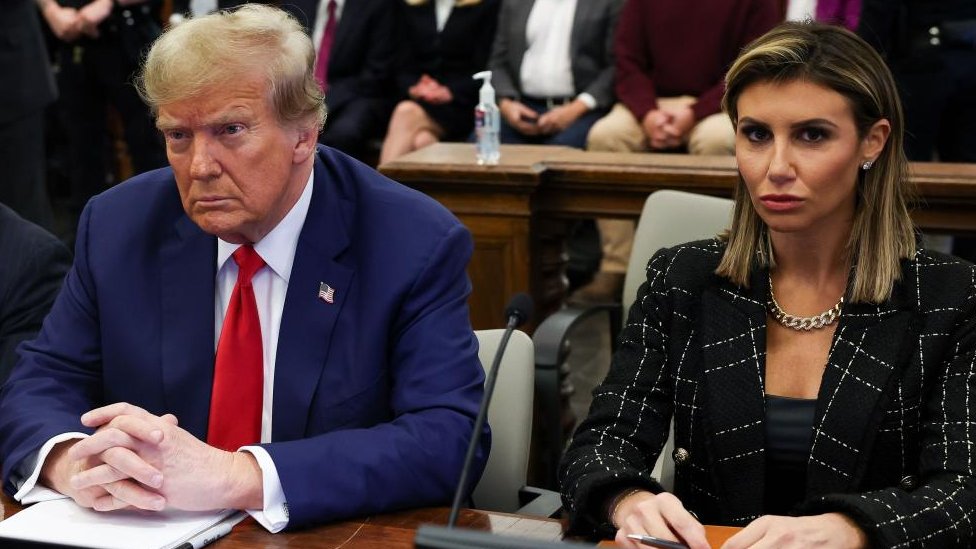
This has created a genuine power vacuum and a legal crisis with no clear, immediate resolution.
The ‘Advice and Consent’ Roadblock
This entire standoff was sparked by one of the Constitution’s most important checks on presidential power: the Senate’s role of providing “Advice and Consent” on major appointments.
Under Article II, a U.S. Attorney must be nominated by the President and confirmed by the Senate. President Trump has nominated Alina Habba for the permanent role, but her path is blocked by New Jersey’s two Democratic senators, Cory Booker and Andy Kim.
They are using the “blue slip,” a long-standing Senate tradition that effectively gives home-state senators a veto over judicial and prosecutorial nominees from their state. Citing Habba’s lack of prosecutorial experience and accusing her of politicizing the office, they have refused to return their blue slips, grinding her confirmation process to a halt.
“This entire crisis was sparked by the Senate’s constitutional role of ‘Advice and Consent,’ with two home-state senators using a long-standing tradition to halt the President’s nominee.”
The Arcane Laws of Vacancies
With the Senate confirmation process frozen, the battle has shifted to a series of obscure but powerful federal laws that govern who fills a vacant office.
Federal law allows the Attorney General to appoint an interim U.S. Attorney for 120 days. That is how Alina Habba was first appointed.
A separate law (28 U.S.C. § 546) anticipates a long-term vacancy and explicitly gives the district court’s judges the power to appoint an interim replacement after that 120-day period expires. This is the authority the New Jersey judges were using when they appointed Desiree Grace.
The administration’s counter-move relied on a different, more fundamental power: the President’s broad authority to fire most executive branch employees. The firing of Grace was a direct assertion of this power against the judiciary’s appointment.
“This is a battle fought in the footnotes of federal law, where obscure statutes governing vacancies become the weapons in a high-stakes constitutional showdown.”
A Test of Loyalty vs. Independence
The conflict also highlights a deep philosophical divide over the role of a U.S. Attorney.
President Trump and his allies view the position as a political one, which should be filled by a loyal ally who will carry out the President’s “America First” agenda. Alina Habba, his former personal lawyer, fits this mold perfectly.
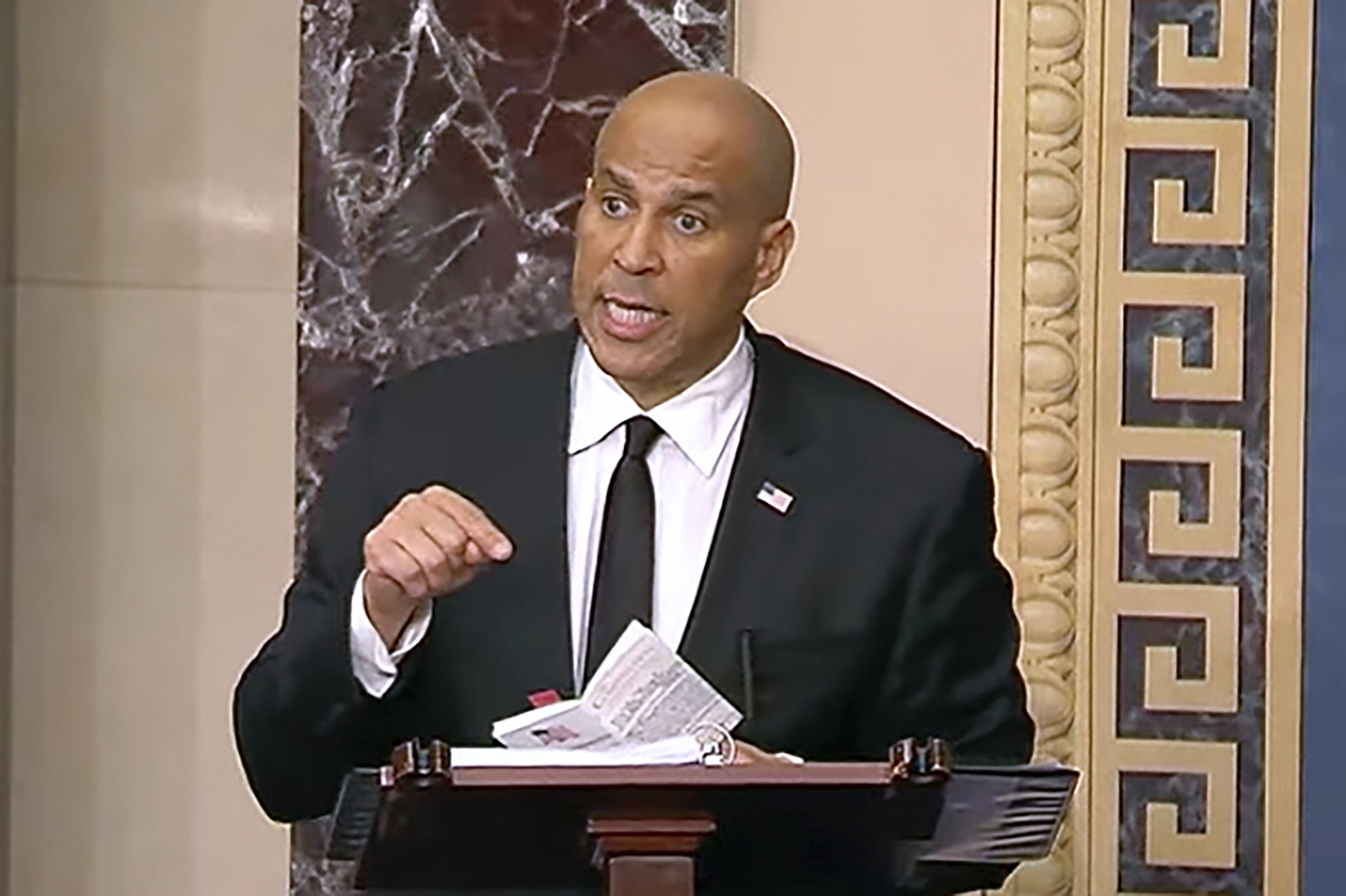
The federal judges and critics of the administration see the role differently. They argue a U.S. Attorney must be an independent, non-partisan administrator of justice. Their choice of Desiree Grace, a career prosecutor who has served under multiple administrations, reflects this view.
A Constitutional Power Vacuum
The clash of powers has left a critical federal law enforcement office in limbo. It is a direct result of the checks and balances system operating under extreme stress: the President’s appointment power has been checked by the Senate, and his attempt to use an interim appointment has been checked by the judiciary, leading him to use his removal power in a stunning response.
The immediate question is who will lead the office on Monday morning. The larger constitutional question – how to resolve a direct conflict between the judiciary’s statutory appointment power and the President’s removal power – will set a major precedent for all future administrations.