
A deeply divided House of Representatives has just failed, by the narrowest of margins, to formally rebuke one of its own members for her controversial speech. But this legislative battle has now been eclipsed by a furious attack from the President of the United States – an attack aimed not just at the congresswoman’s words, but at her very legitimacy to serve.
This is not just another round of political mudslinging. It is a multi-front constitutional conflict over the nature of free speech, the power of Congress to police its members, and the very definition of who is qualified to be an American leader.
A Failed Censure, A Fierce Debate
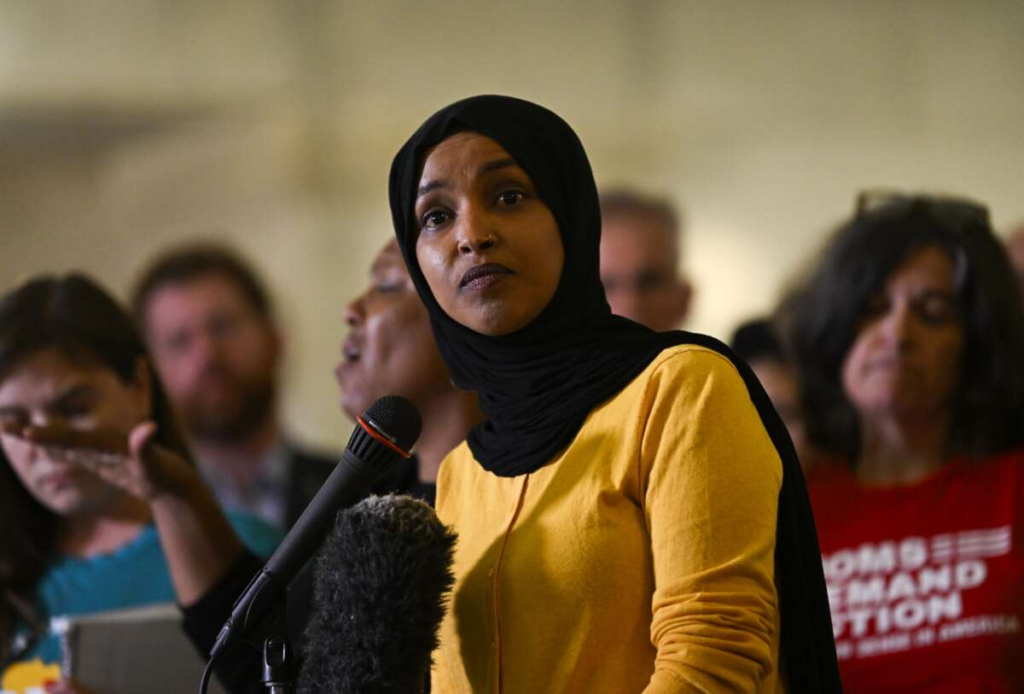
The battle began on the House floor. A resolution was brought forward to censure Democratic Representative Ilhan Omar for what her Republican colleagues argued was an effort to smear the late Charlie Kirk and blame him for his own murder.
After a tense vote, the resolution was tabled – or killed – by a single vote, with four Republicans joining all Democrats.
This was a direct, if narrow, test of a power granted to each house of Congress by Article I, Section 5 of the Constitution: the power to “punish its Members for disorderly Behaviour.” Censure is a formal, public reprimand, and the House ultimately decided that Rep. Omar’s speech, however controversial, did not rise to a level deserving of this rare institutional rebuke.
The Constitutional Shield of a Legislator
In her response, Rep. Omar thanked her colleagues for “safeguarding first amendment protections.” This is a reference to another, equally important constitutional principle: the Speech or Debate Clause of Article I. This clause provides a powerful shield for lawmakers, allowing for robust, and even deeply offensive, debate on matters of public concern without fear of punishment.

The failure of the censure vote can be seen as the House, in a moment of rare bipartisan agreement, choosing to honor this principle of free and open debate, even for speech that many of its members found repugnant.
An Unconstitutional Test for Service
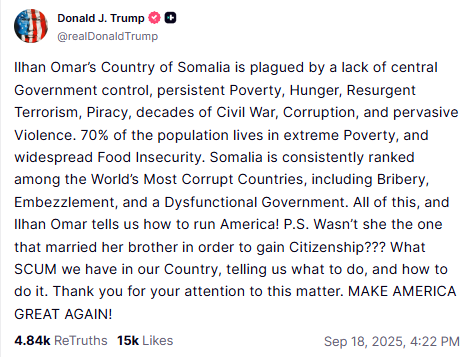
The President’s reaction, however, shifted the battle to a new and more dangerous constitutional ground. He attacked not just Omar’s speech, but her very right, as a naturalized citizen from Somalia, to participate in our government.
“They come from a place with nothing, nothing, no, anything, and then they tell us how to run our country,” Trump said.

This is a direct assault on the Qualifications Clause of Article I and the core principles of our diverse republic. The Constitution sets only three requirements to serve in the House of Representatives: be at least 25 years old, a U.S. citizen for seven years, and a resident of the state you represent. Rep. Omar, a naturalized citizen, meets all of these qualifications.
The President’s rhetoric seeks to impose an unwritten, nativist litmus test for public office – a test of one’s country of origin that is a profound and direct contradiction of the plain text of the Constitution and the promise of American citizenship.
The House of Representatives has narrowly affirmed the principle of free speech for its members. But the President’s subsequent attack has raised an even more fundamental question. Our Constitution makes it clear that any citizen who meets the requirements can become a representative and help “run our country.” The President’s rhetoric suggests a different, and constitutionally baseless, standard, a test of origins that is a betrayal of the very ideals of equality our nation is supposed to represent.