
In the world of public corruption investigations, an undercover recording of a cash exchange is the kind of evidence that builds careers and ends them. It is the beginning of a story that almost always concludes in a courtroom.
But in the case of Tom Homan, the President’s current border czar, that damning evidence appears to have marked the end – not of a career, but of the investigation itself.
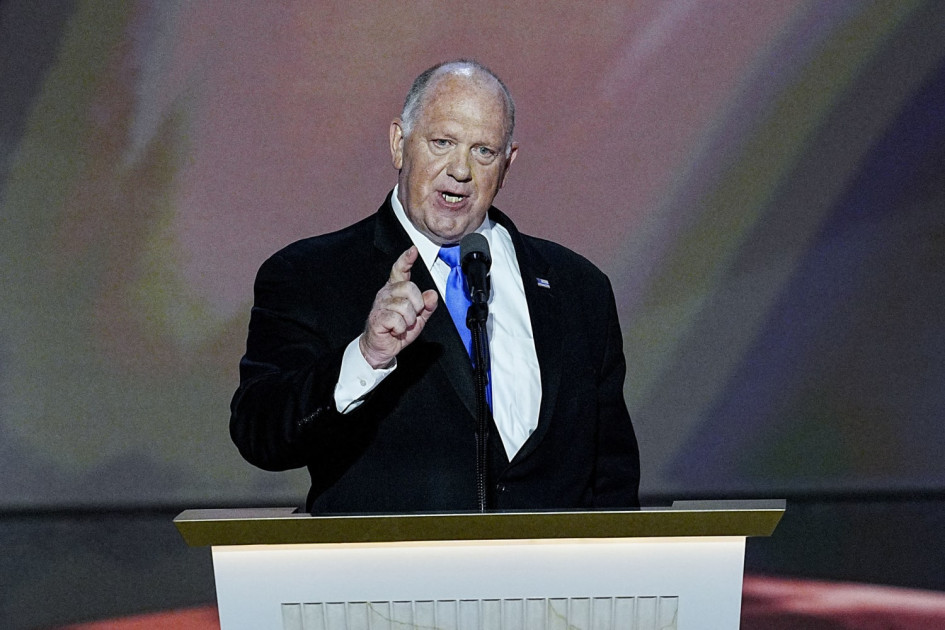
What Was on the FBI’s Hidden Camera?
According to internal documents and multiple sources familiar with the probe, the facts are stark. In September 2024, when he was a private citizen consulting for border security firms, Tom Homan allegedly accepted $50,000 in cash from undercover FBI agents.
The agents were posing as business executives, and the payment was allegedly in exchange for Homan’s promise to help them win government contracts once he returned to power in a new Trump administration.
The investigation, a joint effort between the U.S. Attorney’s office in Texas and the Justice Department’s elite Public Integrity Section, was not a fishing expedition. It was an undercover sting that reportedly produced direct, videotaped evidence of a cash transaction.
The plan was to wait and see if Homan, upon taking office, would make good on his alleged promise.
The Legal Case That Could Have Been
While Homan was not a public official at the time of the sting, that does not mean a crime was not committed. Legal experts are clear: even if a standard bribery charge is difficult, the act of accepting money in exchange for a promise to take official action in the future can be prosecuted as conspiracy to commit bribery.
The crime is the corrupt agreement itself. The fact that the official acts had not yet taken place is not a defense. The evidence of an agreement, memorialized on tape, is what would have formed the heart of the prosecution’s case.

How Does a Criminal Investigation Disappear?
After the presidential inauguration in January 2025, the once-promising investigation “indefinitely stalled.” According to sources, a senior Trump appointee at the Justice Department dismissed the case as a “deep state” probe, and no further investigative steps were taken.
In recent weeks, the case was officially closed. The White House, FBI, and DOJ now uniformly describe the investigation as a baseless and political attack originating under the previous administration.
“This matter originated under the previous administration and was subjected to a full review by FBI agents and Justice Department prosecutors. They found no credible evidence of any criminal wrongdoing… As a result, the investigation has been closed.”
A Constitutional Duty Under Threat
This is more than a story about one man’s alleged corruption. It is a profound litmus test for the rule of law and the independence of the Department of Justice.
The President, under Article II of the Constitution, has a solemn duty to “take Care that the Laws be faithfully executed.”
This clause is the bedrock of equal justice, implying that the law must be applied impartially, without fear or favor.
When an investigation into a top White House official – one reportedly backed by undercover video evidence – is labeled “deep state” and quietly shut down by political appointees, it raises the gravest questions about that duty.
It suggests a two-tiered system of justice: one for the politically unconnected, and another for the allies of those in power. This is the very definition of the law not being faithfully executed.