
In a dramatic attempt to quell a political firestorm over the Jeffrey Epstein case, the Department of Justice has released the transcripts of its recent, highly unusual interview with convicted sex trafficker Ghislaine Maxwell.
Her words, delivered from a federal prison, offer a staunch and unwavering defense of President Donald Trump.
But the extraordinary context of this interview – a witness actively seeking a presidential pardon, speaking directly to one of the President’s top political appointees – has ignited a new and even more profound controversy. This is a story about a President’s most absolute power, a prisoner’s last hope, and the constitutional guardrails designed to keep the two apart.
At a Glance: The Maxwell Interview
- What’s Happening: The DOJ has released transcripts of a recent interview with convicted sex trafficker Ghislaine Maxwell.
- Her Key Statement: Maxwell claims she never saw President Trump “in any inappropriate setting in any way” and that he was a “gentleman in all respects.”
- The Controversy: The interview was conducted by a top political appointee, Deputy AG Todd Blanche, not career prosecutors. Maxwell is known to be seeking ways to overturn her 20-year sentence, including a potential presidential pardon.
- The Constitutional Issue: The event places a harsh spotlight on the President’s nearly absolute Pardon Power under Article II and raises serious questions about the separation of powers and the politicization of the Justice Department.
‘A Gentleman in All Respects’: Maxwell’s Defense of Trump
The transcripts, released Friday, detail an interview conducted last month by Deputy Attorney General Todd Blanche. In it, Maxwell makes a series of unfailingly positive statements about the President.
“I actually never saw the President in any type of massage setting. I never witnessed the President in any inappropriate setting in any way. The President was never inappropriate with anybody. In the times that I was with him, he was a gentleman in all respects.” – Ghislaine Maxwell
Maxwell, who is serving a 20-year sentence for her role in Epstein’s sex trafficking ring, told the DOJ that while she saw Trump and Epstein together and they “seemed friendly,” she had no knowledge of how they met.
The Constitutional Elephant in the Room: The Pardon Power
It is impossible to analyze Maxwell’s statements without understanding the immense constitutional power that looms over this entire affair: the President’s power to grant pardons.
Article II, Section 2 of the Constitution gives the President the authority “to grant Reprieves and Pardons for Offenses against the United States.” This power is one of the broadest and least checked in the Constitution.
President Trump has not ruled out a pardon for Maxwell, who is actively pursuing every legal avenue to have her conviction overturned.
“This entire interview is shadowed by the immense and largely unchecked power of a presidential pardon. It creates a dynamic where the line between a factual interview and a plea for clemency becomes dangerously blurred.”
This dynamic – a convicted felon providing politically helpful statements about the one person on earth who can set her free – is what critics find so constitutionally troubling.
A Question of Process: The Role of the DOJ
Adding fuel to the fire is the controversy over who conducted the interview.
Senior Democratic senators, like Dick Durbin and Sheldon Whitehouse, have blasted the decision to have a top political appointee like Deputy AG Todd Blanche conduct the interview, calling it “highly unusual, if not unprecedented.”
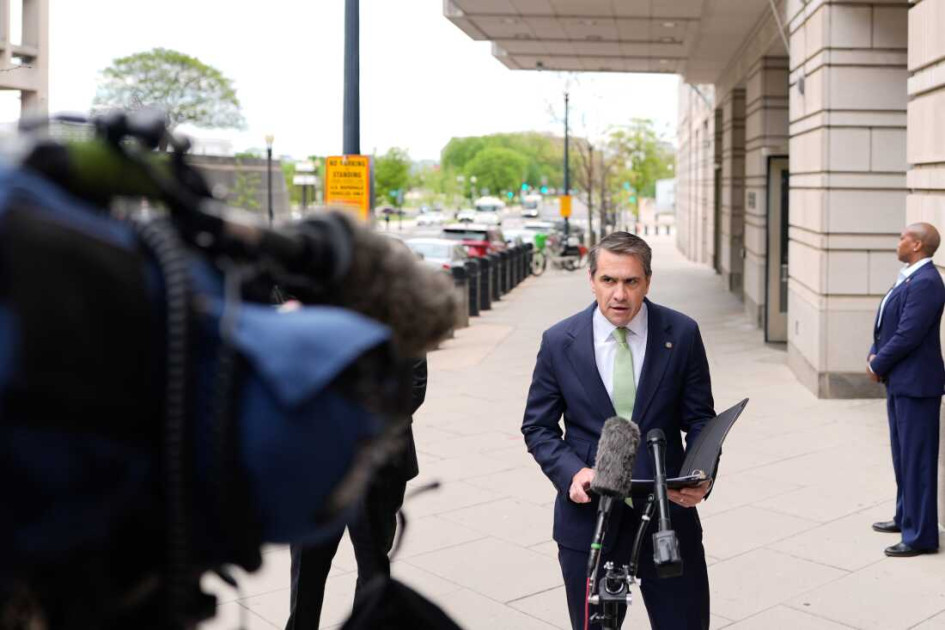
Typically, such a sensitive witness interview would be handled by career, non-partisan line prosecutors who are intimately familiar with the facts of the case. The decision to have a member of the administration’s political leadership conduct the interview has fueled accusations that the Justice Department is being used not for impartial fact-finding, but to serve the President’s personal and political interests.
This raises serious separation of powers questions about the independence of the Justice Department from the White House.
A Crisis of Credibility
The release of the Maxwell transcripts was likely intended to be the final word to calm the political storm among the President’s base over the Epstein case. Instead, it has created a new one.
The incident is a stark illustration of how the awesome constitutional power of the presidency – particularly the pardon power – can create the appearance of impropriety, even if none is proven.
It has now put the credibility of the Department of Justice itself on the line, forcing a debate over its independence and its constitutional duty to “take Care that the Laws be faithfully executed” without political fear or favor.