
In the highest office in the land, words have immense power. They can start wars, calm markets, and unite a nation. But what happens when those words are used to repeat claims that have been proven, time and again, to be false?
In the last week alone, President Donald Trump has deployed a familiar barrage of debunked statements on everything from the price of gas to the integrity of our elections.
This relentless pattern is more than just a series of gaffes. It is a communication strategy that raises profound questions about the nature of truth, public trust, and the constitutional responsibilities of the American presidency.
At a Glance: A Week of False Claims
- What’s Happening: An analysis of at least 10 debunked, false claims that President Trump has repeated in public statements in the past seven days.
- The Claims: They range from the economy (gas prices, inflation, drug prices) and elections (mail-in voting, the 2020 election) to foreign policy (Ukraine aid) and the law.
- The Pattern: The repetition of claims long after they have been proven false is a hallmark of the President’s communication strategy.
- The Constitutional Issue: This pattern tests the norms of presidential communication and the executive’s duty to “faithfully execute the Office of President,” which includes being a steward of the public trust. It also highlights a direct conflict with the Elections Clause of the Constitution.
A Pattern of Disproven Claims
The President’s recent remarks have been filled with recycled falsehoods. A look at just a few demonstrates the pattern.
On the economy, the President claimed Tuesday that gas is “even – it broke $2 in a couple of locations” and that “there’s no inflation.” At the time he spoke, no state had an average gas price below $2.69, and the most recent data showed an annual inflation rate of 2.7%. He also repeated a mathematically impossible claim to have cut prescription drug prices by “1,500%.”
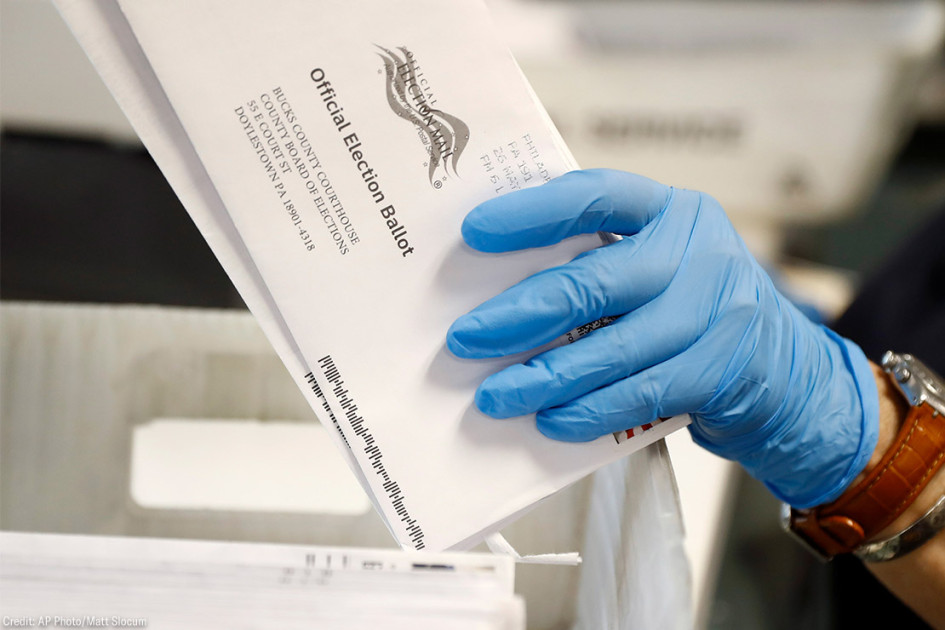
On elections and the law, he revived his false claim that the U.S. is the “only Country in the World that uses Mail-In Voting” – dozens of other democracies do – and repeated the fiction that he signed a “law” in 2020 imposing an automatic 10-year prison sentence for damaging monuments. He signed an executive order encouraging prosecutors to use existing laws.
The Presidency vs. The Constitution: Who Runs Elections?
Of all the repeated falsehoods, the President’s claim of authority over state-run elections is the most constitutionally significant. He recently asserted that states “must do what the Federal Government, as represented by the President of the United States, tells them… to do.”
This is in direct contradiction to the plain text of the U.S. Constitution.
The Elections Clause (Article I, Section 4) explicitly gives the power to run federal elections to state legislatures, with Congress having the ultimate power to make or alter those rules.
“The President’s claim of authority over state elections is not a matter of interpretation; it is in direct contradiction to the plain text of Article I, Section 4 of the U.S. Constitution.”
The President is given no role in this process. His assertion of personal authority over the states’ administration of elections is a challenge to the foundational principles of both federalism and the separation of powers.
The ‘Bully Pulpit’ and Public Trust
Why does this pattern of repeating falsehoods matter so much? Because of the unique power of the presidential “bully pulpit.”
The presidency is more than an office; it is a position of immense public trust and a platform with an unparalleled ability to shape public opinion and the national conversation. The constitutional duty to “faithfully execute the Office of President” implies a responsibility to be a steward of that public trust.
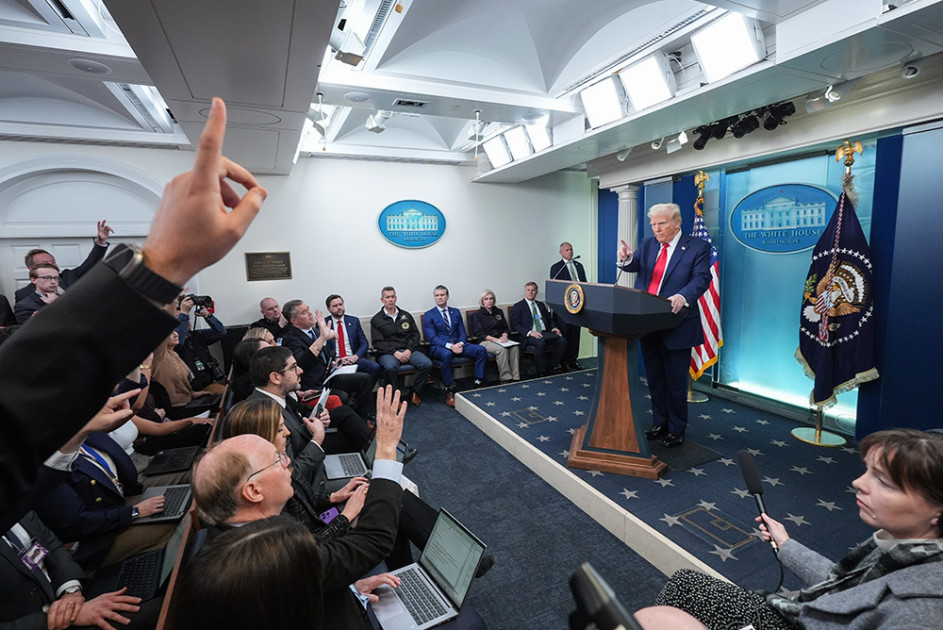
When that powerful platform is used to systematically spread misinformation, it erodes public trust not just in the President, but in the very institutions of government. It undermines the shared set of facts that is necessary for a self-governing republic to function.
“The presidency is more than an office; it is a position of immense public trust. The systematic repetition of debunked claims corrodes that trust and undermines the factual basis on which a constitutional republic depends.”
A Test of a Free Press
The President’s strategy of relentless repetition is effective, in part, because the news cycle is short and public attention moves on.
The ongoing, and often exhausting, task of fact-checking these claims – even when they are old and familiar – has become a critical function of the First Amendment’s guarantee of a free press.
It serves as an essential check on executive power and a defense of the “informed citizenry” that the Founders believed was absolutely necessary for the survival of the republic.