
The first shot was fired in Texas. Now, the counter-attack has been launched in California.
In a dramatic escalation of a national political war, the California Legislature on Thursday approved a new congressional map explicitly designed to eliminate up to five Republican seats. The move is a direct and unapologetic retaliation against the Republican Party’s successful effort to gerrymander Texas for its own political gain.
The plan, championed by Governor Gavin Newsom, now heads to the voters for a high-stakes referendum. It sets the stage for a profound debate over whether the battle for control of Congress has devolved into a state-by-state, tit-for-tat war over redrawing the political map.
At a Glance: The California Redistricting Plan
- What’s Happening: The California Legislature has passed a new, Democratic-drawn congressional map.
- The Goal: To eliminate up to five Republican-held seats and increase the Democratic majority in the state’s U.S. House delegation from 43-9 to a dominant 48-4.
- What’s Next: The map is not yet law. It must be approved by California voters in a special referendum.
- The Constitutional Issue: A major Federalism showdown, with states engaging in a “redistricting arms race.” It also pits two forms of direct democracy against each other: a new referendum versus the state’s voter-approved independent commission.
The Anatomy of a Political Counter-Attack
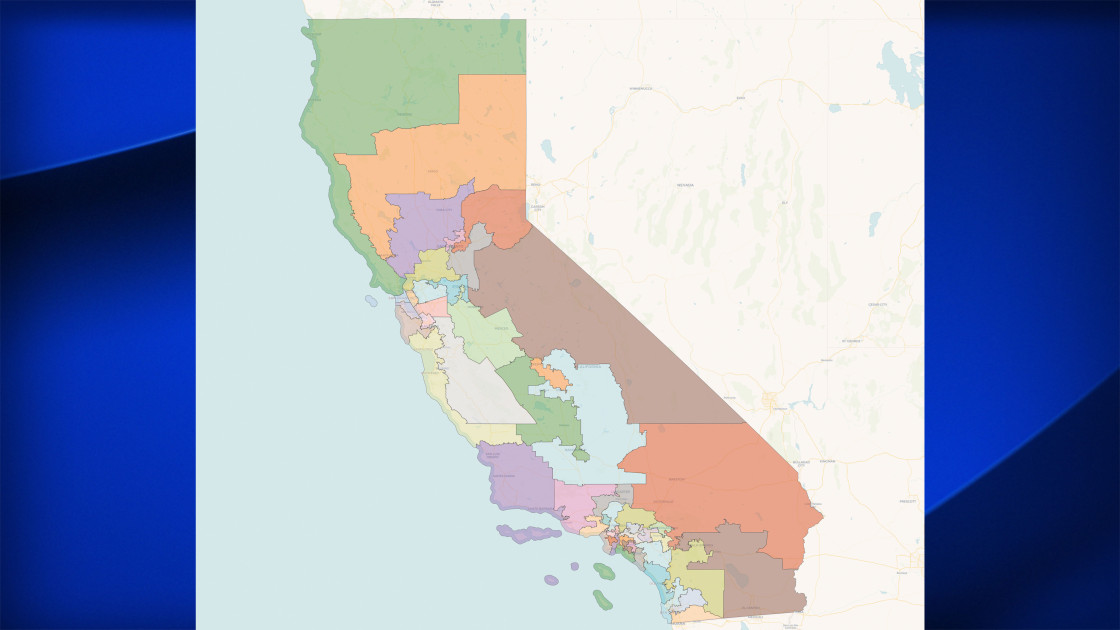
The new map, drafted behind closed doors by Democratic strategists, is a masterclass in partisan gerrymandering. It surgically targets the few remaining competitive and Republican-held districts in the state. Here is a breakdown of the key changes:
Orange County: The map takes direct aim at the competitive, suburban districts held by Republican Representatives Michelle Steel and Young Kim.
- The Strategy: The new lines “crack” apart the coastal, more conservative areas of their current districts, attaching them to safely Democratic seats nearby. At the same time, the map “packs” their new districts with more Democratic-leaning inland communities, transforming them from toss-ups into likely Democratic wins.
The Central Valley: The historically Republican, agriculture-focused district of Rep. David Valadao is dismantled.
- The Strategy: The new map carves out conservative rural towns from his current district and replaces them with heavily Democratic, majority-Hispanic neighborhoods from the city of Bakersfield, making it nearly impossible for a Republican to win.
A Battle of Direct Democracy
What makes the situation in California so constitutionally fascinating is how the maps are drawn.
Unlike in Texas, where the legislature has direct power over maps, California’s current districts were drawn by an independent, citizen-led commission. This commission was created by the voters themselves in 2008 when they passed Proposition 11, an initiative designed specifically to end partisan gerrymandering by taking the power away from politicians.
Now, the Democratic-led legislature is using another tool of direct democracy – a special referendum – to ask voters to override the very commission they created.
“This sets up a fascinating constitutional showdown in California: a battle of direct democracy versus direct democracy. Will voters choose to override the independent commission they themselves created for the sake of partisan gain?”
The National “Arms Race”
This “eye for an eye” approach has turned a state-level process into a national conflict. The actions in Sacramento are a direct response to the actions in Austin.
For years, political scientists have warned of a “race to the bottom,” where each party uses its power in the states it controls to create uncompetitive, partisan maps. That fear is now becoming a reality.
“The fear in Washington is that this is the beginning of a perpetual ‘redistricting arms race,’ where control of Congress is determined not by voters in November, but by which party can more ruthlessly gerrymander the states it controls.”
The battle between Texas and California is seen as a dangerous precedent that could encourage other states to engage in similar mid-decade, retaliatory redistricting efforts, making Congress even more polarized and dysfunctional.
A Choice for the Voters
The California Legislature has approved the new maps, but the decision now rests with the people.
The upcoming special referendum will ask the voters of California to make a profound choice. Will they uphold the “good government” principle of their independent commission, a model they once championed for the rest of the nation?
Or will they embrace a raw political power play, deciding that in a bare-knuckle fight for the future of the country, they must use every weapon at their disposal? The answer they give in November will have consequences that echo far beyond their state’s borders.